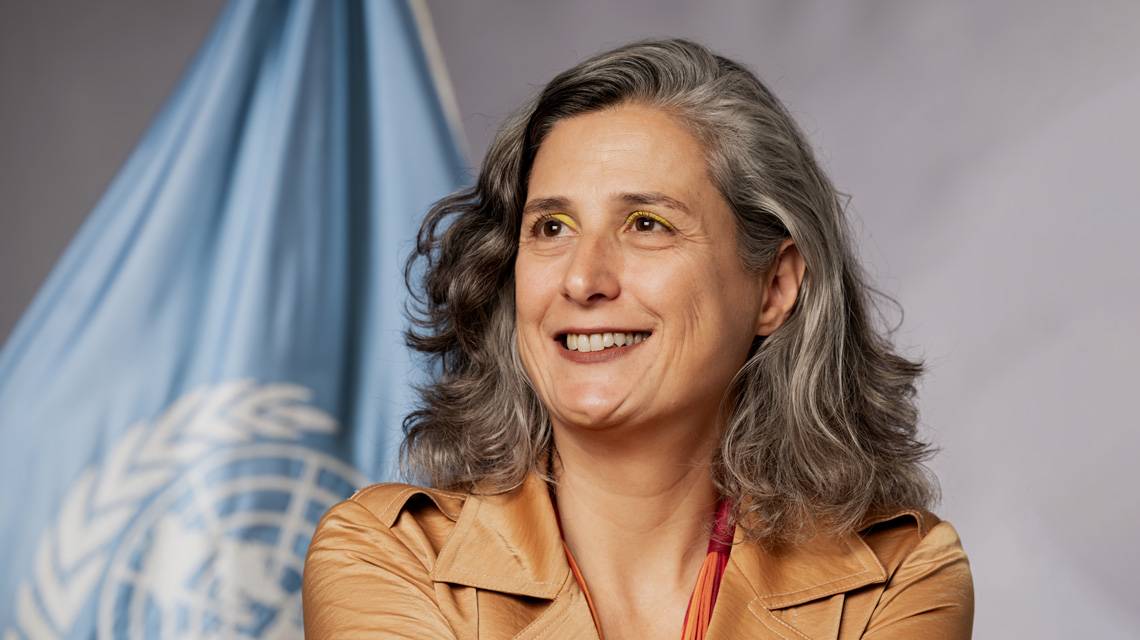
Almost 60% of the Earth’s eight billion inhabitants currently live in urban areas. The proportion is forecast to grow by another 10 percentage points by 2050. The most recent report by the Intergovernmental Panel on Climate Change (IPCC) indicates that cities are responsible for around 70% of all greenhouse gas emissions, raising the planet’s temperature. Despite their large carbon footprint and the fact that they are particularly vulnerable to the effects of global warming, towns and cities also represent a key opportunity to adapt to and mitigate climate change. So says Brazilian economist Anacláudia Rossbach, 54, who has been executive director of the United Nations Human Settlements Programme (UN-Habitat), based in Nairobi, the capital of Kenya, since August 2024.
Rossbach has over 20 years of experience in urban policy and social housing. She earned her degree from the Pontifical Catholic University of São Paulo (PUC-SP) and has worked at the São Paulo City Hall, the World Bank, and the Cities Alliance (an international partnership to help cities tackle urban poverty and support sustainable development). At the 29th United Nations Climate Change Conference (COP29), held in Baku, Azerbaijan, in November, UN-Habitat released the “World Cities Report 2024.” The document contains data on climate resilience, urban sustainability, socioeconomic impacts, and policy interventions, combining national and municipal information from government and academic sources. In this email interview with Pesquisa FAPESP, Rossbach discusses some of the key points of the document.
Are cities more exposed to the effects of climate change than nonurban areas?
The high concentration of people, businesses, institutions, and infrastructure in urban areas makes them vulnerable to extreme events. Based on an article published in the journal Environmental Research Letters in 2018, the UN-Habitat report indicated that a two-degree-Celsius (°C) increase in global temperature by 2050 will expose 2.7 billion people—the vast majority located in Africa and Asia—to moderate or high climate-related risks. According to a 2018 report by the Urban Climate Change Research Network and other institutions, there will be more than 800 million people living in 570 coastal cities where sea levels could rise by at least 0.5 meters by the middle of this century. The same document highlights that in the 2050s, more than 1.6 billion urban residents will be exposed to extreme temperatures of at least 35°C for three consecutive months. This is why cities must be on the frontline when it comes to addressing the issue of climate change, in terms of mitigation, adaptation, and developing resilience. While many international climate change agreements reflect national commitments, including the Paris Agreement and the United Nations Sustainable Development Goals [SDGs], any decisions have to be implemented locally. But cities must not act alone. Local governments need to be supported by a network of stakeholders operating at different scales.
Urban areas have the potential to be more carbon efficient
While cities represent a risk, they can also be a solution to climate change. What is the reason for this apparent contradiction?
Until recently, cities were seen as part of the problem, due to disorganized expansion, informal settlements, and climate inaction. But the discourse is slowly changing. Although cities still emit a lot of pollutant gases, data from the report show that emissions per capita in urban areas are often lower than the national per capita average, particularly in well-planned and managed cities. This shows that urban areas have the potential to be more carbon efficient. The problem is that globally, the share of green spaces in urban areas has decreased from 19.5% in 1990 to 13.9% in 2020. According to a 2020 study published in the journal International Journal of Digital Earth, only a few major cities, mostly in North America and Europe, have managed to reverse this reduction of green urban areas. This suggests that with regulatory policies and proper planning, urban areas can play a significant role in regenerating the planet. Cities can implement specific urban policies to reduce emissions. They can act as centers of innovation and defense against climate change. There are potential urbanization measures that benefit the planet rather than harming it, such as more efficient transport networks, conservation or restoration of ecosystems, smarter urban constructions that are better adapted to the climate, and initiatives that encourage recycling.
What other sectors can help mitigate the emission of gases that cause global warming?
The energy transition is currently a national and global success story in terms of mitigating climate change. In 2023, renewable energies, such as solar, wind, hydro, and others, accounted for 30% of electricity production worldwide for the first time. However, many measures need to be implemented on both the supply and demand sides to achieve the carbon neutrality goals of cities and national governments, such as greater energy efficiency in building construction and operation, mobility incentives that promote walking, cycling, and the use of public transport, and the adoption of electric vehicles. We also need to encourage a circular economy that promotes the return, reuse, and recycling of various materials and includes waste pickers. In the report, we cited Belo Horizonte as an example. In 2011, the state of Minas Gerais established the Bolsa Reciclagem (recycling grant) program, which offers financial incentives to waste-picker cooperatives.
What climate change adaptation measures should cities prioritize?
I always emphasize the need to create resilience. At UN-Habitat, we are used to working with informal settlements and socially vulnerable places to establish climate resilience through adaptation. Ensuring urban infrastructure is climate-resilient, particularly with the provision of basic services such as water and sanitation, is a priority. At the same time, cities must encourage the use of nature-based solutions and align the issues of climate change and biodiversity conservation. These measures can offer relatively inexpensive responses to climate change, particularly when combined with food security and subsistence opportunities for the most vulnerable populations. Another important aspect is that projects aimed at boosting resilience and maintaining local ways of life may include urban resettlement, such as in the event of flooding caused by rising sea levels. This was done in the Fiji archipelago in Oceania, where families living in Natewa Bay were relocated further inland in 2009. However, the residents were not properly consulted during the technical planning stage of the project. This is a clear example of the challenges of resettlement, even if it is often a necessity.
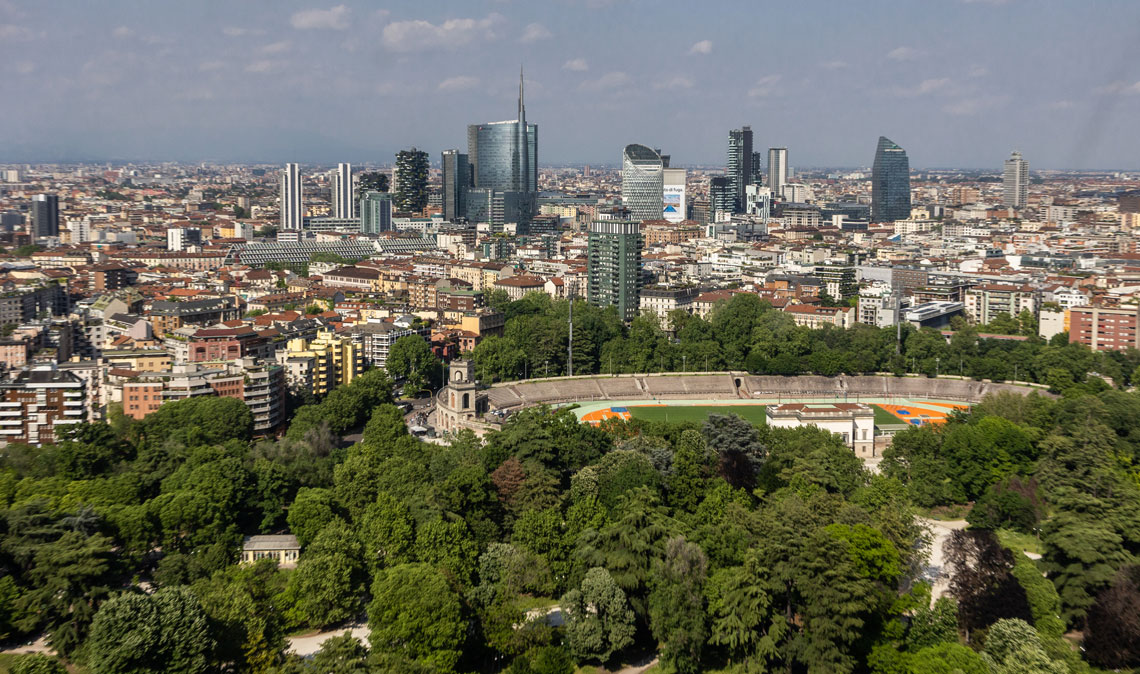
Emanuele Cremaschi/Getty ImagesGreen urban spaces are only growing in a few major cities in the USA and Europe, such as in Milan, ItalyEmanuele Cremaschi/Getty Images
Are the risks associated with climate change greater in cities on the coast or inland?
The report’s findings suggest that almost no urban residents will be immune to climate change. It is important to note that inland cities are also exposed to flooding due to inadequate rainfall drainage as a result of the high coverage of concrete, asphalt, and other impermeable materials. Other impacts of climate change specific to urban areas include the formation of heat islands, a climate phenomenon characterized by higher temperatures within cities than in nearby rural areas. As with rising sea levels and coastal flooding, the poorest and most vulnerable people tend to suffer disproportionately from extreme heat.
The report also warns that we need to do more than simply measure exposure to risk. Investigating vulnerabilities at a local level is also important. How should these two variables converge in a good climate action plan?
Understanding exposure to risk—particularly to rising sea levels, heat, droughts, and floods—is important. But understanding how specific groups are affected is the first step towards climate action. A family with a strong home is less vulnerable than a family in an informal settlement. People with reduced or no mobility are more vulnerable than those who can easily move out of at-risk areas. The topography, infrastructure, and services available to communities make a difference. Those most vulnerable to economic shocks—often girls, women, and the elderly—are also most vulnerable to climate change. Specific support is needed to improve their resilience and protect them.
Understanding how specific groups are affected is the first step towards climate action
Could poorly designed climate action plans worsen inequality?
Despite the good intentions of some climate adaptation and mitigation actions, we have seen that some interventions can create new vulnerabilities and inadvertently exacerbate social inequalities when they are not planned and implemented in an inclusive way, especially for the poorest urban residents, Indigenous peoples, and migrant communities. In the report, we highlight some of the unintended outcomes of flood mitigation measures in cities across the world, which have resulted in the gentrification of certain regions and inadequate adaptation. This occurred, for example, with the Big U project in New York City, USA, which tried to create a U-shape of flood-preventing parks around the southern perimeter of Manhattan after Hurricane Sandy in 2012. The original project was based on consultations with residents, but it was arbitrarily changed in 2018. Cities are only as resilient as their most vulnerable inhabitants.
Can you give any examples or suggestions of how public policies could be improved to prevent an increase in inequality?
They must be inclusive and they must recognize the contribution of informal governance and the perspectives of communities with local experiences of climate change risks. It is also essential to have robust data systems in place to inform evidence-based decision-making. City governments must invest in measuring and monitoring the inclusion and equity impacts of climate actions. Data broken down by neighborhood, income, gender, and other indicators should be used to inform decision-makers whether their policies are well designed and whether the impacts of actions are equitably distributed.
This interview is part of the Climate Change Media Partnership 2024, a journalism fellowship organized by the Internews Earth Journalism Network and the Stanley Center for Peace and Security.
Republish