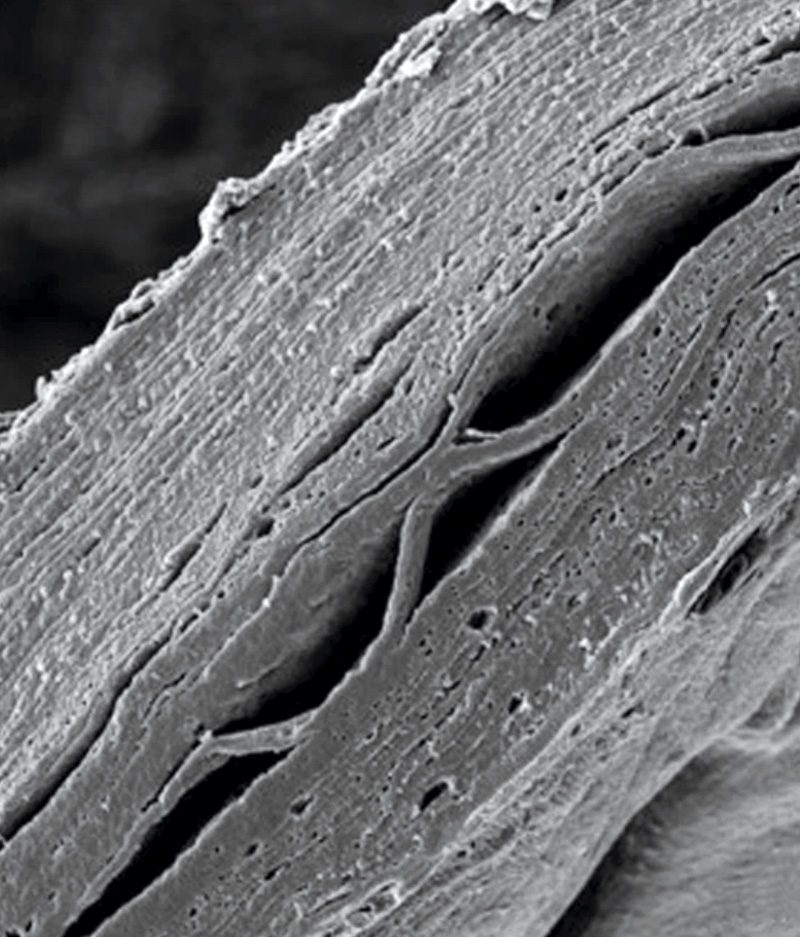
AVELINO, T. M. et al, Communications Biology, 2024Epidermis: functional layers were bioprinted in a laboratoryAVELINO, T. M. et al, Communications Biology, 2024
Another step has been taken towards replacing animals in the testing of cosmetics and drugs. Researchers from the National Laboratory of Biosciences (LNBio) at the Brazilian Center for Energy and Materials Research (CNPEM) in Campinas have produced an equivalent of complete human skin. Biologist Ana Carolina Figueira and her team used a combination of three human cell types (keratinocytes, fibroblasts, and mesenchymal stem cells). The skin was printed using collagen bioink, which has a liquid consistency at 4 degrees Celsius (°C) but acquires the consistency of epithelial tissue by incubating at 37 °C. After being printed, the layers of the skin differentiated, forming the epidermis, with an impermeable surface, and the dermis. The stem cells transformed into adipose cells, which formed the hypodermis. This layer has been shown to be involved in the activation of specific genes for the maintenance of skin physiology, in the proliferation and differentiation of cells, and in skin hydration (Communications Biology, November 11).
Republish