


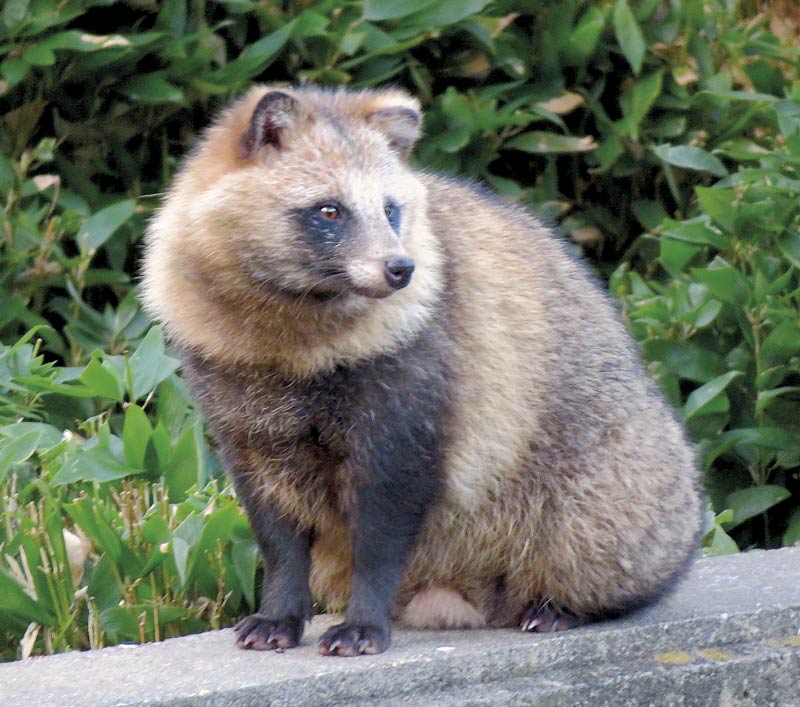
kkpcw / Wikimedia CommonsRaccoon dogs, raised by the million on farms in Chinakkpcw / Wikimedia Commons
Raccoon dogs, minks, and muskrats, raised by the millions on farms in China for fur and sometimes food, are also potential reservoirs of emerging pathogens. A team of scientists from China, Belgium, Sweden, and Australia examined organs from 461 fur-bearing animals found dead from disease and discovered 125 virus species, including 36 new ones and 39 with a potentially high risk of cross-species transmission. According to British virologist Edward Holmes of the University of Sydney, Australia, who participated in the study, the most worrying virus may be the HKU5 coronavirus, which originated in common bats and was found in minks that died of pneumonia; the virus is related to Middle East Respiratory Syndrome (MERS), which has killed almost 900 people in 27 countries since 2012. “Breeding animals for fur is an obvious way in which a pandemic coronavirus, or flu virus, could emerge in humans,” he told the newspaper El País. The samples were collected from more than a dozen provinces between 2021 and 2024, especially from the four that produce the most fur: Hebei, Shandong, Heilongjiang, and Liaoning, in the northeast of the country (El País and Nature, September 4).
Republish