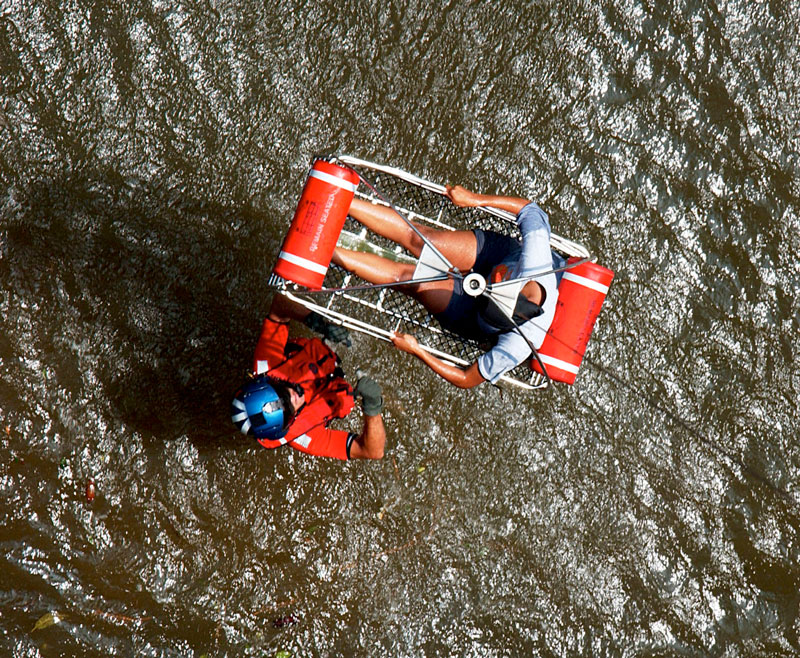
NyxoLyno Cangemi / U.S. Coast Guard via Getty ImagesPregnant woman rescued in New Orleans after Hurricane Katrina, 2005NyxoLyno Cangemi / U.S. Coast Guard via Getty Images
In addition to destroying homes and crops, spreading disease, and causing death, floods increase global premature births by around 3%. This is not a small figure, considering that approximately 390,000 children are born every day worldwide. Researchers from Virginia Tech, USA, analyzed data on pregnancy duration and birth weight associated with floods since the year 1800 from 3,177 prior studies. The team did not seek to identify causal mechanisms, but research on other disasters suggests that likely factors include stress, interruption of prenatal care, and delayed access to care. Premature births may also increase during floods because women are unable to reach hospitals due to flooded or damaged roads. The data varied widely: a 2008 study reported a 230% increase in premature births after the intense floods caused by Hurricane Katrina in 2005. Both premature birth and low birth weight are risk factors for chronic diseases later in life, such as asthma and diabetes (AGU News, December 8).
Republish