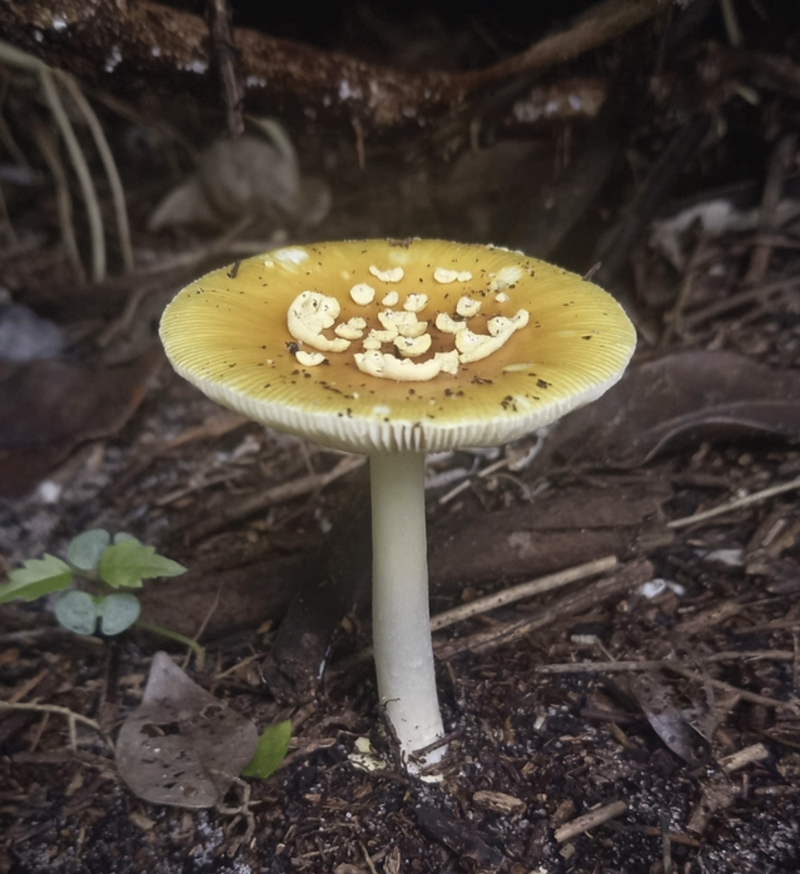
IUCNAmanita viscidolutea, a vulnerable species found on the Brazilian coastlineIUCN
The diversity of fungi, used as food and involved in the decomposition of dead plants and animals, is declining. Of the 155,000 species already identified, the International Union for Conservation of Nature (IUCN) has classified 1,300 as threatened, with 411 at risk of extinction. The growth of agricultural areas has put 279 species at risk of disappearing. Excessive use of fertilizers is threatening another 91 species, including Hygrocybe intermedia, from the United Kingdom. Another 198 species could go extinct due to deforestation, including the edible Giant Knight (Tricholoma colossus), found in pine forests in Finland, Sweden, and Russia. Of the 59 Brazilian species categorized as under some level of threat, the IUCN classifies five as critically endangered: Bondarzewia loguerciae, found in the forests of Santa Catarina and Rio Grande do Sul; Wrightoporia araucariae, which grows on the trunks of dead Araucaria angustifolia trees; Parmotrema bifidum, from Mato Grosso; Parmotrema pachydermum, endemic in Rio Grande do Sul; and Fomitiporia nubicola, found in the highest areas of the Atlantic Forest. “Forestry practices should consider fungi, for example leaving dead wood and scattered trees,” recommends Anders Dahlberg of the IUCN (IUCN, March 27).
Republish