


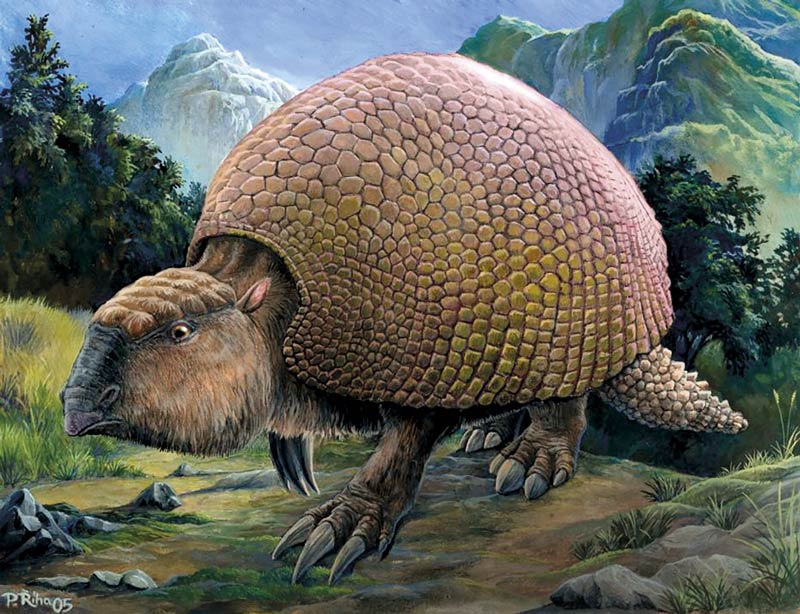
Pavel Riha / Wikimedia CommonsArtistic representation of a glyptodont, a distant relative of the armadillo that lived 20,000 years agoPavel Riha / Wikimedia Commons
Cuts in the fossilized pelvic bones of a glyptodont that lived 21,000 years ago on the banks of the Reconquista River, in what is now the Buenos Aires Metropolitan Area, were probably produced by man-made stone artifacts. The marks were likely made by people eating the meat of this extinct giant mammal. This is the interpretation proposed by archaeologist Mariano Del Papa, from the National University of La Plata, Argentina. A distant relative of the modern armadillo, the glyptodont was one of the species of the so-called South American megafauna, which completely disappeared 13,000 years ago. The team behind the study suggests the marks observed in a glyptodont specimen from the genus Neosclerocalyptus indicate that human beings were present in the south of the continent around 20,000 years ago, during the Last Glacial Maximum—much longer ago than previously thought. The Last Glacial Maximum is the most recent period in the planet’s geological history in which the polar ice caps reached their maximum extent, covering around 8% of the globe’s area, representing the cold peak of an ice age (PLOS ONE, July).
Republish