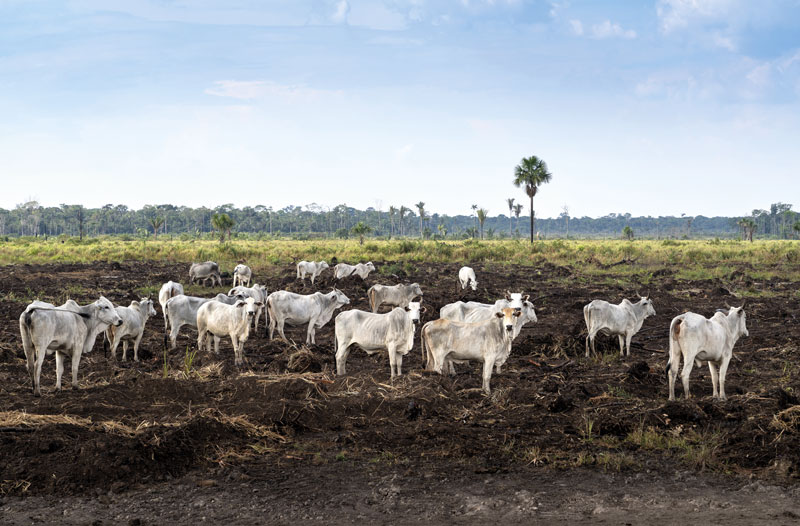
Paralaxis / Getty ImagesThe expansion of livestock farming in regions such as the Amazon puts Brazil in second place in global losses of natural spacesParalaxis / Getty Images
Trade balance surpluses (exports greater than imports) resulting from the sale of meat and agricultural products from tropical regions to large consumer markets such as China, the USA, the Middle East, and Europe often lead to a loss of biodiversity. Researchers from the Technical University of Munich (TUM), Germany, and the Federal Institute of Technology Zurich (ETH), Switzerland, tracked land-use changes in countries that exported agricultural commodities from 1995 to 2022, finding that nearly two-thirds of global biodiversity impact occurred in tropical regions. Four countries—Indonesia (22%), Brazil (11%), Madagascar (10%), and Mexico (8%)—account for half of global biodiversity loss through land-use change over the period. The main factor behind the loss of biological wealth in Indonesia was the deforestation of primary forests to make way for rice and grain; in Brazil and Madagascar, it was the conversion of green areas into pasture for the beef industry; and, in Mexico, it was the clearing of native vegetation for the production of vegetables, fruits, and nuts. More than 80% of land-use change in Latin America, the Caribbean, Africa, Southeast Asia, and the Pacific region resulted from a rise in agricultural exports (Nature Sustainability, September 13).
Republish