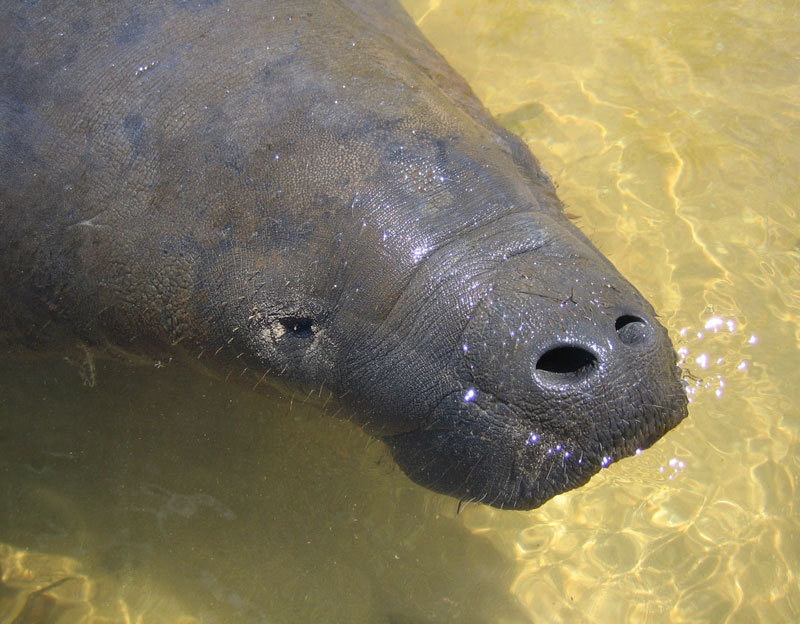
Thomas Lehmann / Wikimedia CommonsAmazonian manatee, threatened with extinctionThomas Lehmann / Wikimedia Commons
In October 2023, during an extreme drought, biologist Michelle Guterres of the Brazilian National Institute of Amazonian Research (INPA) took a walk along the beach of Lake Amanã, near the confluence of the Solimões and Japurá rivers in the Amazon, where she found 96 samples of feces from the Amazonian manatee (Trichechus inunguis). What surprised her was that they contained 556 whole seeds from nine species of aquatic plants. Luziola spruceana, a species of watergrass that appears after floods, was found in all of the samples, and the plants were germinating in 17 of them. This was a strong indication that the manatee—a mammal, it should be remembered—is a seed disperser, meaning it plays an important role in the maintenance of aquatic plants. Classified as vulnerable to extinction due to illegal hunting, the animal weighs up to 420 kilograms (kg), eats around 40 kg of aquatic plants per day, and can travel up to 115 kilometers between the Amanã and Mamirauá lakes, 600 kilometers west of Manaus. The drought made the discovery easier because instead of dissolving in the water, the feces lay on the shores of the lake, which was only 200 centimeters deep at its deepest (Mongabay, November 25; Journal for Nature Conservation, December).
Republish