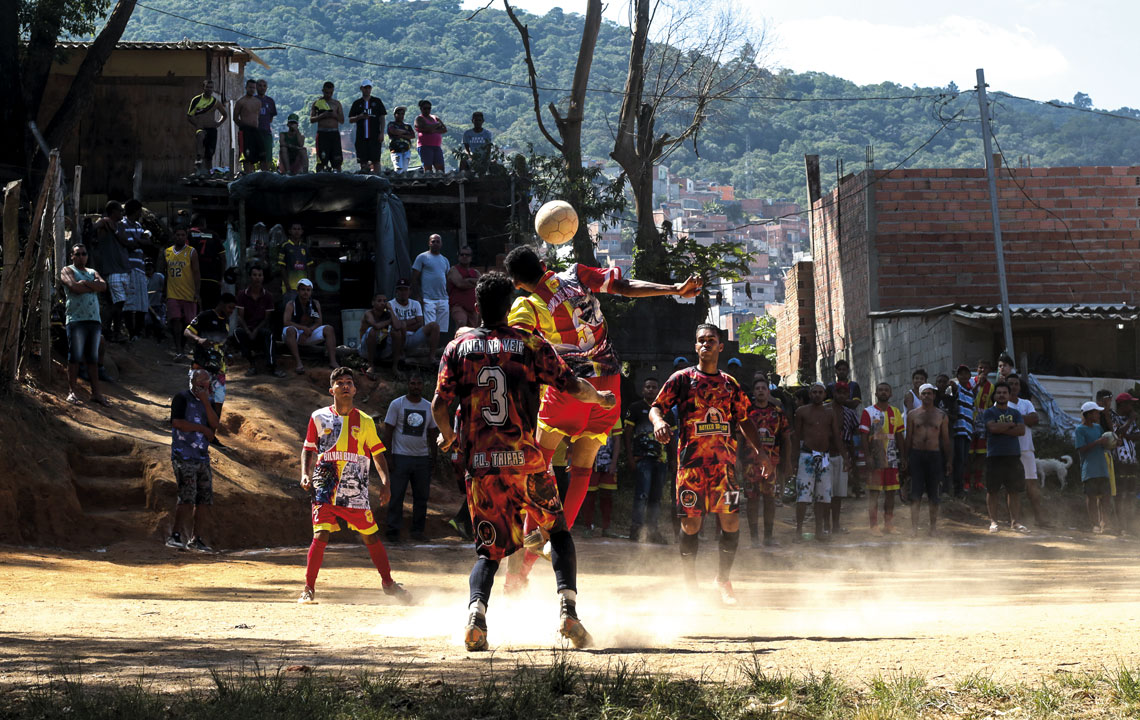
On weekends, the Campo de Marte (Mars Field), in the São Paulo neighborhood of Casa Verde, brings together hundreds of people among its six hard-dirt soccer fields. It is thought that at least 200 games are played there on Saturdays and Sundays, while supporters watch the games from folding chairs and children run around at play. Some teams arrive wearing uniform strips, others play shirtless, with many risking it barefoot. The scenes, which for over a century have been repeated all across Brazil, are becoming increasingly rare as cities grow and real-estate speculation advances. Thus, várzea (literally floodplain) or informal soccer, born of the spontaneous occupation of land areas and community mobilization, is facing a scarcity of areas available for games, jostling for space with condominiums, parking lots, and commercial centers.
The earliest records of soccer played in Brazil date from the end of the nineteenth century, in the days when migrants, immigrants, Afrodescendants, and manual workers would organize games on improvised fields on river floodplains, beside railroad lines or on vacant lots. In the case of São Paulo, one of the first ever games reported in newspapers took place in 1895, when Brazilian of British descent Charles William Miller (1874–1953) put on a game at Várzea do Carmo in the neighborhood of Cambuci. “This space, which later became a stronghold of amateur São Paulo soccer, marked the early spread of the sport around the city,” says geographer Alberto Luiz dos Santos, one of the curators of Vozes da várzea (Voices of informal soccer), an exhibit currently showing at São Paulo’s Museum of Soccer to the end of April.
According to Santos, who defended his doctoral thesis at the University of São Paulo (USP) in 2021 on informal soccer, members of the São Paulo elite founded clubs such as Sport Club Internacional, Clube Atlético Paulistano, and São Paulo Athletic Club, which from 1902 played in leagues at the Velódromo Paulista (São Paulo Velodrome), considered the first stadium in the city of São Paulo. “When this happened, some of the soccer played in São Paulo underwent a process of becoming elite,” says the researcher. During the same period, informal soccer flourished around the city’s fields, occupying flood areas and vacant lots. “The city, with its rivers, offered spaces on the plains that, when dry, were transformed into soccer fields,” recounts historian Diana Mendes Machado da Silva, currently on a postdoctoral internship at The New School, New York, a higher education institution focused on social sciences and philosophy.
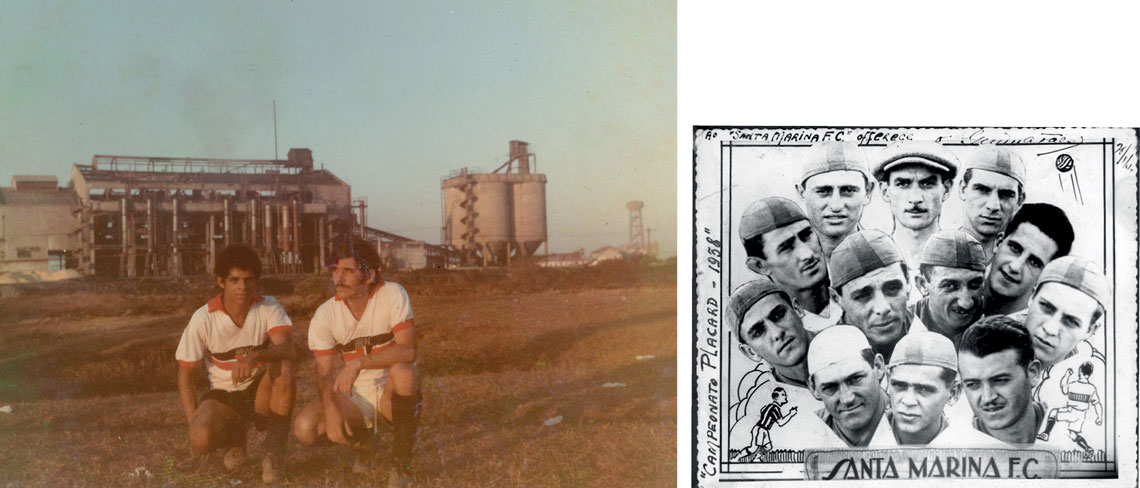
Museum of Soccer Archive / Santa Marina Collection / All Rights Reserved | Museum of Soccer Archive / Vila Varela Collection / All Rights Reserved Left, players from Santa Marina Atlético Clube, São Paulo, founded in 1913. Below, players on a field close to an industrial area, also in São Paulo (undated)Museum of Soccer Archive / Santa Marina Collection / All Rights Reserved | Museum of Soccer Archive / Vila Varela Collection / All Rights Reserved
During this period, the absence of a structured professional system enabled small amateur teams to compete against elite clubs, with a relatively close relationship. Matches were organized by the Paulista Soccer League (LPF), founded in 1901. According to anthropologist Enrico Spaggiari, of USP’s City Anthropology Study Group, the 1930s saw soccer professionalized in Brazil. “In those early days, informal soccer had a strong link with professional teams, functioning as a talent base,” says the researcher, one of the arrangers of the book Futebol popular (Popular soccer), published last year by Editora Ludopédio with support from the Brazilian National Institute for Science and Technology (INCT) Brazilian Soccer Studies. “In the following decades, professional teams began to structure their youth academies, and this direct transition became increasingly difficult.”
As soccer became more professionalized from the 1930s, amateur teams spread out around São Paulo; the movement gained strength among factory workers and those living in workers’ communities, some of them European immigrants, who began organizing their teams. Additionally, Black populations in the neighborhoods of Barra Funda, Bixiga, Peruche, Glicério, and Várzea do Carmo formed associations, in a similar way to the railroad communities. “Várzea soccer emerged as a practice that went beyond sport: it was a way of appropriating the city, by which people cleared lots, marked out playing areas, and organized competitions,” says Santos.
Silva agrees—the historian believes that informal clubs are not just sporting arenas, but also areas for gathering and social and political articulation among communities that inhabited and worked in river floodplain areas. During her master’s defended at USP in 2013, the researcher studied the history of the Anhanguera Athletics Association, founded by Italian-Brazilians in 1928, and still very much in existence today. The outcomes of her study were published in a book, released in 2017 by the Alameda publishing house. “Poor immigrants, former slaves, and later folk from the Northeast were being excluded from housing and employment opportunities in the city, so they drew upon associative practices to provide mutual help with these issues, forming clubs for leisure, such as Anhanguera Athletics Association, and for the popular, amateur soccer that spread around the city,” she adds.
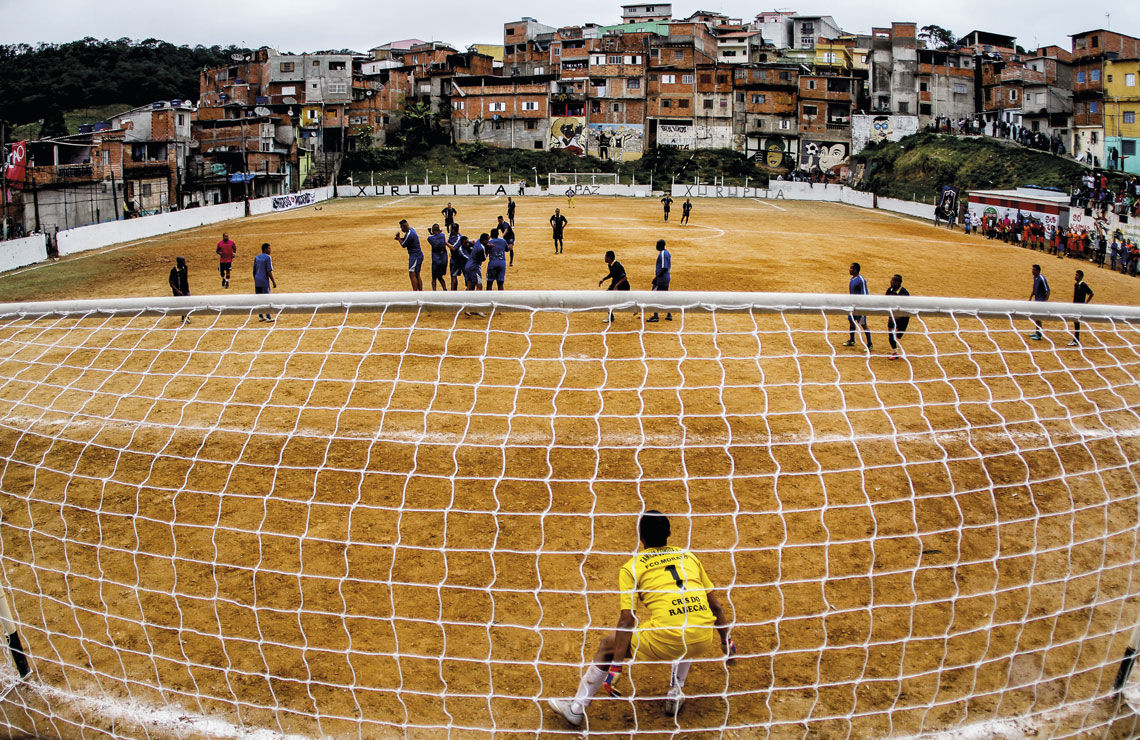
Rogério Souza SilvaA game on the Xurupita Futebol Clube field, in Jardim Vivan, west zone of São PauloRogério Souza Silva
In the southern Brazilian state capital of Porto Alegre, teams organized by Black players played an essential role in the consolidation of amateur soccer, says Mauro Myskiw of the Federal University of Rio Grande do Sul (UFRGS). “The Black population structured its own leagues, creating a singular sporting movement. They offered spaces for inclusion and socialization, while the traditional clubs imposed racial restrictions when selecting their personnel,” says the researcher, who also coordinates the line of research into community and informal soccer conducted by INCT. Created in 2022, the initiative is funded by the Brazilian National Council for Scientific and Technological Development (CNPq).
According to Myskiw, the first records of várzea soccer in the Rio Grande do Sul state capital date from the beginning of the twentieth century. During this time, the sport was mainly played by ethnic clubs founded by Italian, German, and Portuguese immigrants.
From the 1930s and 1940s, leagues formed by Black people spread around the city, says the researcher. Black players later came to be accepted by professional teams that had previously excluded them because of the color of their skin. “With the possibility of playing in increasingly structured teams, these players were gradually incorporated into the wider sporting scenario,” says the researcher, alluding to one of the research findings.
Just as in the São Paulo State capital, popular soccer in Belo Horizonte, Minas Gerais State, between the 1930s and ‘40s was strongly linked to the factories and steelmaking. “Clubs linked to these enterprises had greater financial capacity to take on players,” says historian Raphael Rajão Ribeiro, author of a doctoral thesis on popular soccer culture in the Minas Gerais capital, defended at the Getulio Vargas Foundation (FGV) in São Paulo in 2021. “They were officially employed as manual workers, but at that time they were dedicated to their soccer,” adds Ribeiro, a professor at the Federal Institute of Ceará (IFCE), and one of the arrangers of the book Futebol popular (Popular soccer).
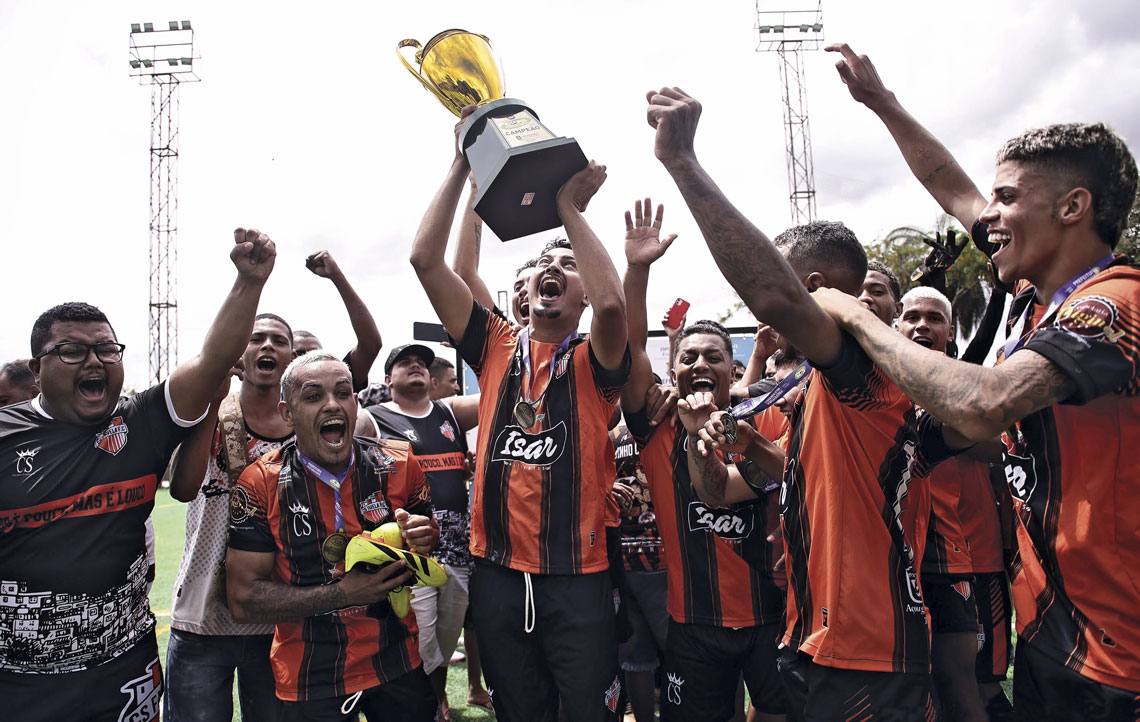
Ta Santana / Copa Centenário / PRHOne of the winning teams at the 2024 Centenário Cup held in Belo Horizonte, Minas Gerais State, since 1997Ta Santana / Copa Centenário / PRH
In Rio de Janeiro, the early geographical structure of amateur soccer was linked to the railroad network connecting downtown to the suburbs; indeed, the informal game is also known as suburban soccer in the city. In his doctoral work, defended at Fluminense Federal University (UFF) in 2023, historian Glauco José Costa Souza analyzed suburban soccer in neighborhoods such as Engenho de Dentro, Madureira, and Olaria between 1906 and 1930.
The researcher states that the creation of the Carioca (Rio) Championship in 1906 drove the formation of elite teams, while lower-income neighborhoods began to organize their own competitions, such as the Suburban Soccer League. “Suburban clubs gained strength from having their own leagues, promoting a strong soccer culture in low-income areas of Rio,” emphasizes Costa, who sourced his research from periodicals of the day such as Jornal do Brasil, Gazeta de Notícias, and Gazeta Suburbana, in addition to official documents from clubs. He says that most suburban teams in the city fell by the wayside, and teams surviving to date are those who had players bought by bigger clubs, or who found alternative sources of funding from local traders or the proceeds of the jogo do bicho (“game of the animal,” a prohibited but nonetheless hugely popular Brazilian lottery game in which animal images on cards sold on the sidewalk represent sets of numbers).
For Osmar Moreira de Souza Junior, physical education professor and coordinator of the Study and Research Group on Pedagogical and Social Aspects of Soccer at the Federal University of São Carlos (UFSCar), várzea and amateur soccer should today be looked at differently. In his perspective, amateur soccer became a subgroup of the várzea version. While the latter is still underpinned by informality and the spontaneous occupation of land areas, “amateur soccer, on the other hand, involves clubs that began as informal teams and devised an institutionalized model, with regular tournaments, small stadiums, and financial mechanisms to sustain the teams,” explains Souza Junior, one of the coordinators of the book Do futebol moderno aos futebóis transmodernos (From modern soccer to transmodern soccers), which took the Jabuti Acadêmico Award in the category Physical Education, Physiotherapy, Speech Therapy, and Occupational Therapy in 2024.
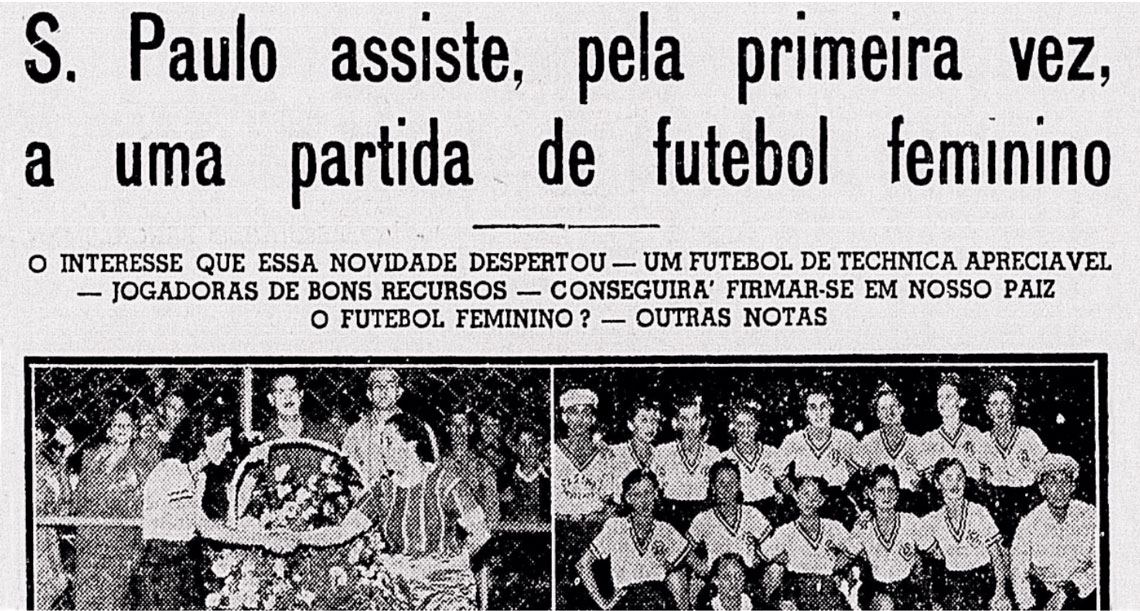
Correio Paulistano Newspaper, May 19, 1940 / Reproduced from the Museum of Soccer WebsiteNews on a game between women’s teams at the inauguration of the Pacaembu Stadium in 1940Correio Paulistano Newspaper, May 19, 1940 / Reproduced from the Museum of Soccer Website
This is what happens, for example, in São José do Norte and Pelotas, in the interior of Rio Grande do Sul State. Amateur soccer there is organized with a level of efficiency comparable to that of the professional leagues, says physical educator Luís Carlos Rigo, of the Federal University of Pelotas (UFPel). “In these cities the different amateur soccer leagues have official websites to publish the results of game days, statistics on red cards, and other detailed information on local leagues,” says Rigo, one of the coordinators of the INCT Amateur and Community Soccer research line.
In São Paulo, várzea soccer is undergoing a transformation. In an article published last year Spaggiari, of USP, recalls that the banks of the Pinheiros and Tietê rivers were home to dozens of informal soccer fields until the early decades of the twentieth century; many were lost when construction of the riverbank marginal roadways began in the 1950s. From the 1980s, the metropolis became increasingly densely populated, drastically reducing the availability of free spaces for the sport.
In another study, conducted in 2023 for the São Paulo Municipal Government’s Historical Heritage Department, Spaggiari mapped and documented the history of the city’s independent fields and clubs. “With urbanization, the informal soccer fields occupy an increasingly weakened position. These days most of them are located in the low-income areas,” he explains. Campo de Marte is an exception, situated as it is in a central area.
Another change involves the professionalization of some várzea teams. In the opinion of Souza Junior, of UFSCar, these teams have come to be classified as amateur, and he says that this process gained impetus from large-scale competitions, such as the Kaiser Cup, whose organization began in the 1990s in the São Paulo state capital. The tournaments provided visibility to certain teams, which began to receive corporate sponsorship. “The growing presence on social media, with live broadcasts of competitions and the production of digital content, enabled the monetization of games, and boosted economic circuits,” adds Santos, curator of the Museum of Soccer exhibition. “Today we can estimate that São Paulo has more than a thousand nonprofessional soccer teams, though this is an imprecise number as many are created every year while others cease their activities,” continues the geographer, who analyzed the contemporaneous São Paulo informal soccer scene in a 2019 article.
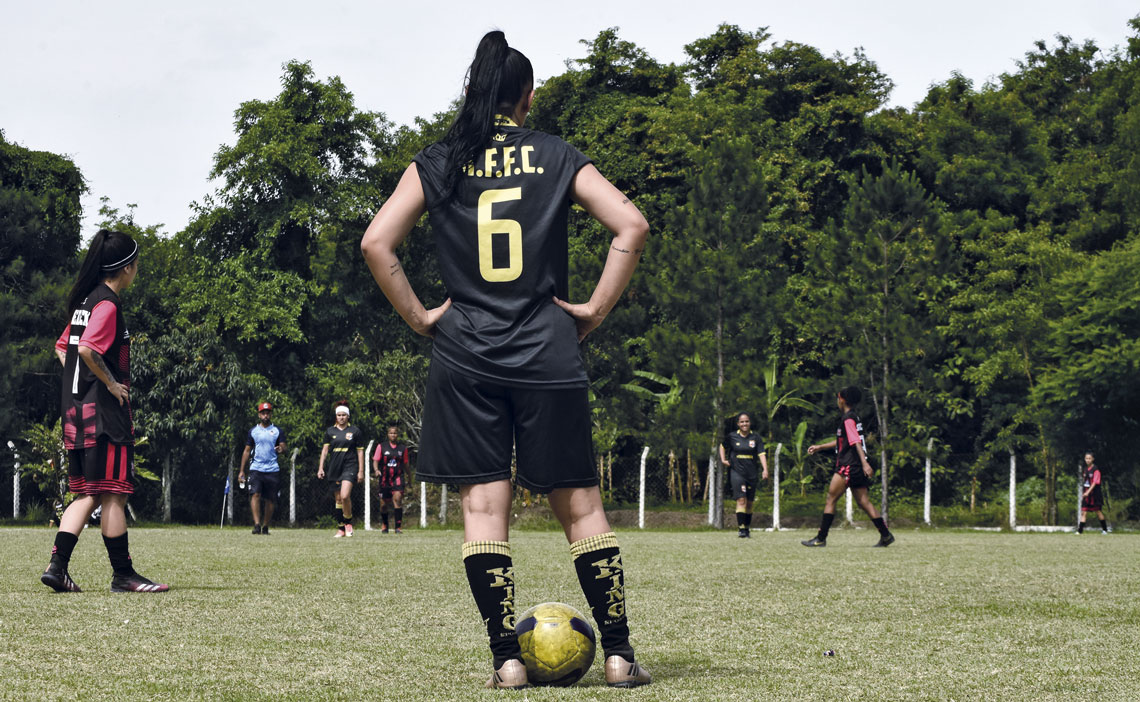
CassimanoA tournament of the Women’s Várzea Festival, held in 2021 at Campo de Marte in São PauloCassimano
The development of nonprofessional women’s soccer teams has been attracting the attention of historian Aira Bonfim, who defended her master’s thesis on the theme at FGV São Paulo in 2019. The researcher says that there are newspaper records showing girls playing against boys in the city’s elite clubs since 1915. In those early days, women’s soccer was also practiced by circus artists, who played as part of the spectacle. For example, in 1926 the Piolin Circus staged a show in their marquee in Paissandu Square (São Paulo), in which actresses wearing jerseys of the team Palestra Itália—today the famous Palmeiras—played a game.
Women’s sport expanded into the low-income areas over time. “The 1930s saw considerable growth in female teams, particularly in Rio de Janeiro. In that decade there were at least fifteen women’s teams in the city’s suburban neighborhoods,” says Bonfim. As women demonstrated their ball skills, invitations for them to open men’s championships began to roll in. In 1940, for example, two of these Rio teams were invited to play at the inauguration of the Pacaembu Stadium in São Paulo. “The presence of female players shocked the public,” says the historian, one of the founders of the Brazilian Soccer Reference Center (CRFB) at the Museum of Soccer.
In 1941, the government of Getúlio Vargas (1882-1954) prohibited women’s soccer in Brazil, a ban that remained in place until 1979. “Nevertheless, they continued playing during this period, organizing games on the pretext of beneficial events, training in closed spaces such as clubs and schools, and in low-income areas where they were distant from any kind of official scrutiny,” she says. A recent milestone on the São Paulo stage was reached in 2019. That year, player Maria Amorim, a resident of the Parelheiros neighborhood in the city’s south zone, founded an unprecedented women’s league, which has since promoted championships with associations from all over the municipality. “There are currently 150 women’s teams functioning in the city,” celebrates Bonfim, who did this mapping as part of an extension course she offered at the Pontifical Catholic University of São Paulo (PUC-SP) in 2022.
The story above was published with the title “Ball in limbo” in issue in issue 349 of march/2025.
Scientific articles
SPAGGIARI, E. “Profissionalização” da várzea?: Controvérsias e dinâmicas do rodar no futebol popular paulistano. INTERthesis – Revista Internacional Interdisciplinar. Vol. 211, no. 1. 2024.
SANTOS, A. L. Lugares do futebol no Jaraguá/SP: Lógicas de organização, expressões simbólicas e tendências do futebol de várzea contemporâneo. FuLia. Vol. 2, no. 2. 2019.
RIBEIRO, R. R. Festivais esportivos varzeanos em Belo Horizonte: Memória social da cultura futebolística popular. FuLia. Vol. 3, no. 3. 2018.
Books
RIBEIRO, R. R. et al. Futebol popular. São Paulo: Editora Ludopédio, 2024.
SOUZA JÚNIOR, O. M. et al. Do futebol moderno aos futebóis transmodernos: A utopia da diversidade revolucionária. São Carlos-SP: EdUFSCar, 2023.
BONFIM, A. F. Futebol feminino no Brasil: Entre festas, circos e subúrbios, uma história social (1915–1941). São Paulo: Edição da autora, 2023.
SILVA, D. M. M. Futebol de várzea em São Paulo: A Associação Atlética Anhanguera (1928–1940). São Paulo: Editora Alameda, 2017.