


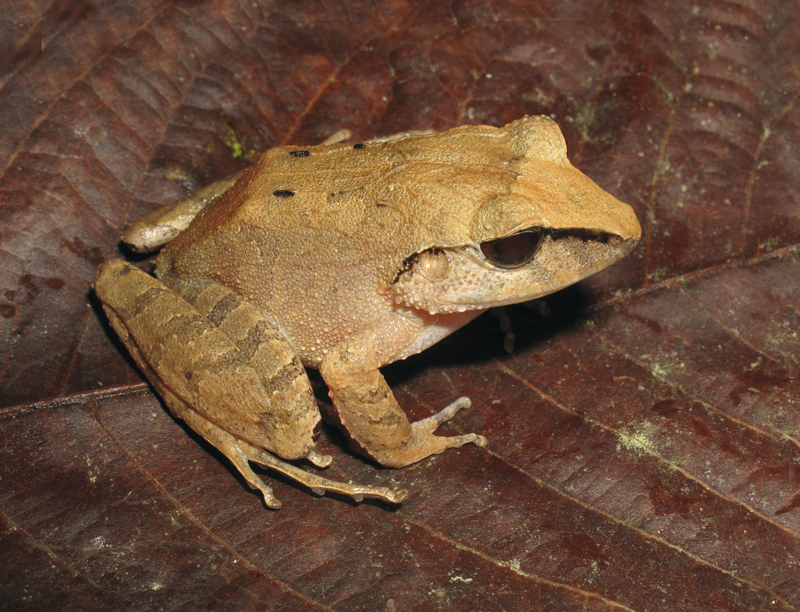
Célio F. B. Haddad / UNESPHaddadus binotatus, so far showing no signs of infection by the deadly fungusCélio F. B. Haddad / UNESP
Chytridiomycosis, a disease caused by the fungus Batrachochytrium dendrobatidis (Bd), has been identified as responsible for the population reduction or extinction of frogs and toads almost all over the world. In Brazil, the loss is mainly linked to climate change, aggravated by deforestation and forest fragmentation. Biologists from São Paulo, Bahia, and Amazonas analyzed 90 Brazilian amphibian species from 1900 to 2014 and found that population decline was primarily caused by gradual or extreme climate changes, especially those associated with the El Niño phenomenon. In 2014, a severe drought in southern Minas Gerais resulted in a sharp reduction in the populations of 26 frog species. Chytridiomycosis often peaks in the years after episodes of population decline, suggesting that Bd acts as an opportunistic pathogen rather than the leading cause of losses. Of the frog species analyzed, eight are considered possibly extinct, while two others, Hylodes mertensi and Hylodes sazimai, are considered critically endangered and endangered respectively—all were affected mainly by climate fluctuations (Conservation Biology, April 9).
Republish