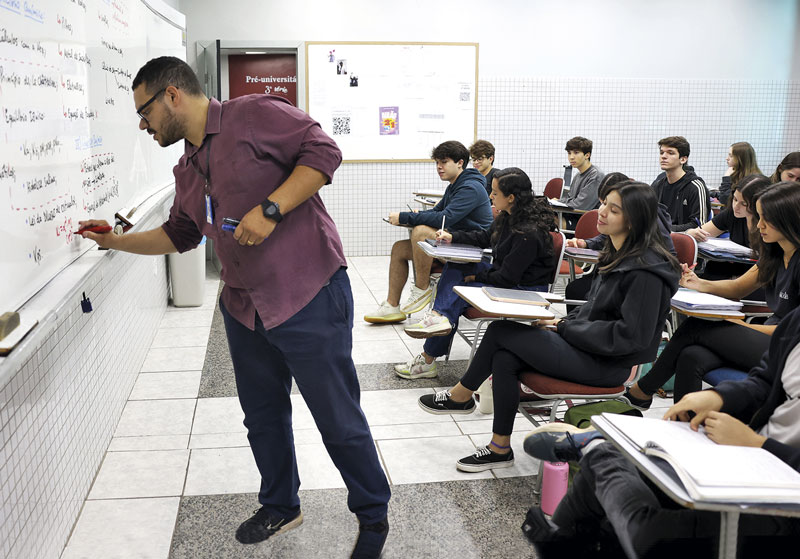
José Cruz / Agência BrasilSamuel Ribeiro Costa prepares students for the 2024 ENEM exams at a school in BrasíliaJosé Cruz / Agência Brasil
While presenting the education results from the 2022 Brazilian Census in Porto Alegre, Gustavo Silva, research director at the Brazilian Institute of Geography and Statistics (IBGE), attributed the rise in education levels between 2000 and 2022 to municipal, state, and federal public policies. The percentage of people with no education or who did not complete primary education fell by almost half, from 63.2% to 35.2%, equivalent to 71,000 people. At the same time, the number of inhabitants with a higher education degree grew almost three-fold, from 6.8% to 18.4%, equivalent to 37,300 people. There are still major regional contrasts: in 2022, the Brazilian state with the highest proportion of people aged over 25 with a higher education degree was the Federal District (37%), while Maranhão was the lowest (11%); of the state capitals, Florianópolis in Santa Catarina and Vitória in Espírito Santo had the highest proportion of people with a higher education degree (41.8%), while Manaus had the lowest (19.8%); of municipalities with more than 100,000 inhabitants, São Caetano do Sul in São Paulo had the highest average number of years of study among people aged 25 or over (12.7 years), while the lowest average was found in Breves, Pará, with 6.5 years (IBGE, February 26).
Republish