Biologist César Favacho, who makes videos about insects and arachnids, and has 322,000 followers on TikTok, adopts a procedure when receiving invitations to do advertising campaigns on social networks: he consults other science communicators about possible conflicts of interest and risks of compromising his reputation. In 2023, he received an invitation to make videos for a mining company and, after speaking with colleagues, turned it down. “Although the money could have helped with my work as a communicator, a field I intend to continue in, I felt that my credibility is my most important value,” he says. According to Favacho, who is taking a PhD in biodiversity and evolution at the Emílio Goeldi Museum of Pará, in Belém, the company’s activity caused environmental damage and the compensatory measures in which it invested were timid. Today, he is discussing a proposal made by a pharmaceutical company with his colleagues.
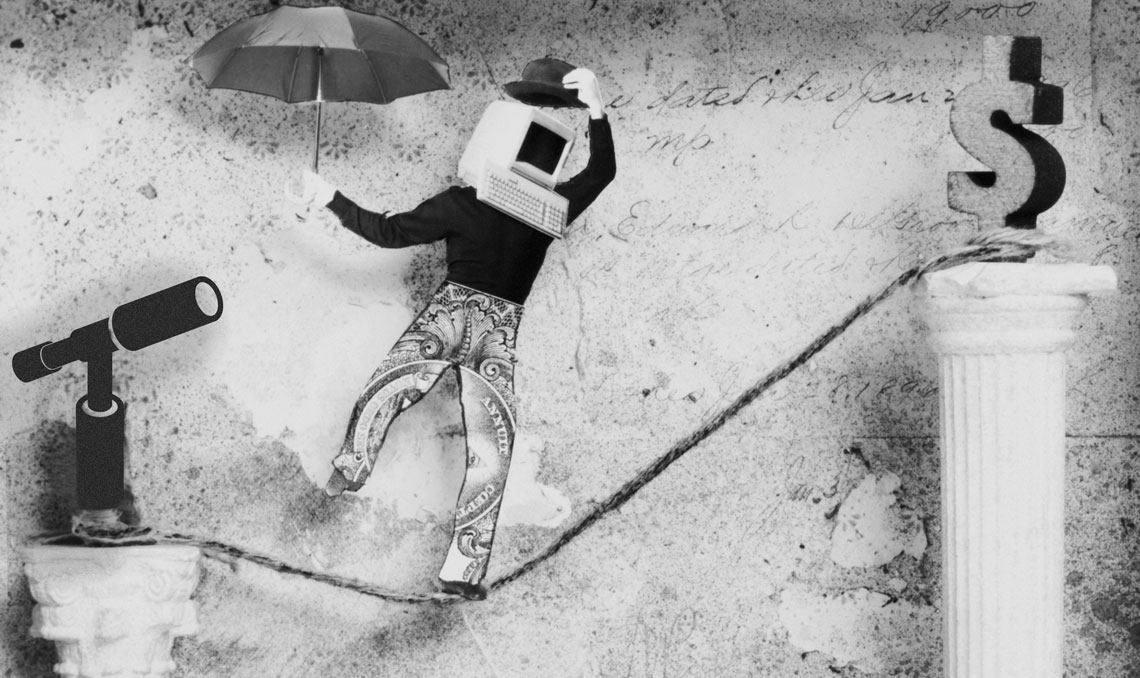
Capable of reaching millions of people on social networks, science communicators are sought to advertise products ranging from smart watches to cosmetics, or to promote companies in institutional films. Their choices are not always well received by followers and have triggered a question: what ethical boundaries should be respected when accepting to do advertorials, a euphemism for advertisements disguised as informative content. Associating your image with a company is a sensitive topic because advertising is seen as a personal endorsement of the product or service. In the case of science communicators, there is an additional issue since their credibility stems from publishing content backed by scientific evidence.
This discussion gained traction at the end of 2024 after microbiologist and science communicator Átila Iamarino, with a million followers on Instagram, took part in a campaign indicated as a “paid partnership” on his social networks. Three videos published between September and October 2024 for the oil company Shell address the qualities of the ethanol the company produces, the complexity of replacing fossil fuels—which are still of significant economic importance—with sustainable options, and the company’s expertise in reliably manufacturing petroleum derivatives. The latter sparked controversy due to a part in which Iamarino states that Shell has the technology to safely extract the raw material, “providing essential energy and helping to power lives.”
Posted on October 16, the video had already received over 3,000 comments by the following day, many of them negative—the posts remained online, but comments were disabled after the backlash. The main complaint relates to the microbiologist having accepted money to endorse the ideas of a company whose core activity results in the emission of greenhouse gases. Criticism was also directed at the influencer, known for combating scientific denialism during the pandemic, for defending “climate denialism,” although the videos neither contest nor minimize the role of fossil fuels in the climate crisis. When contacted by Pesquisa FAPESP Iamarino did not answer the requests for an interview.
It was not the first time that the microbiologist has left his audience upset. In 2020, Iamarino published the video O livre mercado é um computador (the free market is a computer) on YouTube channel Nerdologia, which was sponsored by the Brazilian stock exchange, the B3, and the brokerage firm Nova Futura Investimentos. The video discusses the factors that determine price fluctuations and draws a comparison with the workings of ant nests. A favorable mention of the free market, in contrast to the ideas of “socialism” acted as a flashpoint for criticism. A study published in January 2022 in Revista Fronteiras – Estudos Midiáticos, the journal of the University of Vale do Rio dos Sinos (UNISINOS), analyzed reactions on X to the video and classified them into four categories. One of them included individuals who questioned a biologist’s authority to discuss economics and social sciences, fields outside their expertise. Another attacked Iamarino for supposedly supporting “neoliberal stances.” A third dealt with an alleged contradiction between the communicator’s history of combating misinformation and the publication of a video with “misguided” ideas. And a fourth censured him for accepting financial support from B3.
“For the general public, what the science communicator says is like an endorsement from science. For this reason, the credibility that he has built comes with great responsibility,” observes biologist Luiz Bento, science communicator of the Foundation Center for Science and Higher Distance Education of the State of Rio de Janeiro (CECIERJ) and one of the coordinators of the Scientific Culture, Education, and Communication research group from the University of Campinas (UNICAMP). “Science communication has a social function. There is an ethical issue when a scientist lends their image to a company whose practices include actions that ignore evidence-based science,” he assesses.
The dilemma arises because the work of internet content creators needs to be remunerated for sustainability, and one of the main ways to achieve this is through advertising contracts. “Digital influencers are typically individuals who make a living from their image and visibility,” explains public relations professional Carolina Terra, from the School of Arts and Communication of the University of São Paulo (ECA-USP) and author of the book Marcas influenciadoras digitais: Como transformar organizações em produtoras de conteúdo digital (Digital influencer brands: How to transform organizations into digital content producers; Difusão, 2021). Unlike traditional media outlets, they are both the creators of informative content and the faces of advertising at the same time.
To organize this fluid environment, in which paid advertising can mix with spontaneous recommendations, in 2021 the National Council of Advertising Self-Regulation (CONAR) launched an advertising guide for digital influencers, in which it stresses that all paid content must be labeled as such. “The goal is for consumers to have no doubt that it is advertising content,” explains Terra. “But ethical issues concerning conflicts of interest are not covered. It is up to each individual, in their specific field, to assess them.”
The boundaries may not be clear for science communicators on the internet, but for journalists, including those specialized in science, there are ethical codes with standards that govern the professional activity. Media outlets traditionally separate advertising from the production of public interest information. “It is rare for a journalist, in the course of their work, to lend their image to a brand. Advertising is managed by the company’s commercial department. Journalists who appear in commercials are those whose careers have shifted towards entertainment,” notes Luiz Bento.
Journalist Eugênio Bucci, from ECA-USP and author of the book Sobre ética e imprensa (About ethics and the media; Companhia das Letras, 2008), suggests looking at the history of journalism to understand what led to the establishment of autonomous rules for regulating the issue. He highlights that the important codes of ethics in the media are just over 100 years old and that major newspapers had already separated opinion, business, and reporting. “This emerged to protect the value of journalistic credibility and to ensure that the public understood the rules guiding media outlets. And at the time, this increased the readership of newspapers,” he explains, emphasizing that his observations apply to journalism as a whole, not specifically to influencers.
“This is a new and important ethical issue, to which little attention has been given until now, at least in the UK and in Europe,” said science journalist Clive Cookson from the Financial Times to Pesquisa FAPESP. For him, if a type of ethical code were to be discussed, it should take two issues into account—which, in his view, are problematic: “The first is the fact that people use their scientific reputation to advertise things outside their field of expertise.” The second, according to Cookson, involves influencers with a scientific background who promote views that go against evidence to influence the political debate, such as in the case of climate change—without necessarily earning money from it. “This appears to be the main problem that we are facing here [in the UK],” he says.
Strategies of science communicators
Without shared guidelines, many scientists rely on common sense when accepting or rejecting advertising campaigns. Paleontologist Beatriz Hörmanseder, who has 244,000 followers on TikTok and is doing her PhD in animal biology at the Federal University of Espírito Santo (UFES), says that she refused to advertise for a store that sells imported fossils—this is a line she says she does not intend to cross. “The store doesn’t have fossils from Brazil but sells Moroccan fossils. You can’t put a price on heritage; I am against the sale of all types of fossils,” she observes. She seeks funding from areas in which she does not see conflicting values. In 2023, she made a commercial partnership with a US processor manufacturer. As part of the agreement, the company sent her a computer—according to her, with an estimated value of between R$15,000 and R$20,000—in exchange for a series of videos that she recorded for the brand, published on YouTube, demonstrating how a scientist can use the computer (in her case, for research involving the 3D scanning and preservation of fossils).
Upon gaining visibility on the internet, scientists seek or are sought by specialized agencies. Brazilian astrophysicist Duília de Mello, vice dean of the Catholic University of America, in Washington, USA, is among the clients of publicist Juliana Gongora, founder of Vésper Assessoria, a firm specialized in guiding scientists for advertising, lectures, and media relations.
Among the contracts signed is a television campaign for Mercado Livre Latin America, starring Mello. “When a brand request for an advert or lecture arrives, the first thing to do is assess the risks and benefits. The entire script of the campaign needs to be negotiated. If the scientist’s image is tarnished, the damage can be huge,” says Gongora. She says that she has turned down persistent offers from betting companies that the company has received.
Duília de Mello says that she relies on the agency’s support to assess and screen the companies for which she agrees to do lectures and advertising. “As scientists, we need to show our face and what we do, even to inspire young people to pursue this career, but we must carefully consider whom we associate our image with,” reflects the astrophysicist.
Pharmaceutical biochemist Laura Marise and biologist Ana Bonassa, creators of the science communication initiative Nunca Vi 1 Cientista (which translates to I have never seen 1 scientist), which has 1.1 million followers across YouTube, Instagram, and TikTok, also work with an agency specialized in content creators. Marise explains that, when a brand asks her to speak about the effectiveness of a certain product, they request scientific publications and documents that support the data. “There have been cases where, after making this request, the company never got back to us,” she says.
Even with the criteria they adopt, they have not gone unscathed from criticism for the choices they have made. In 2024, Marise and Bonassa agreed to host the Petrobras podcast Nossa Energia (our energy, in English). Although it was not an advertorial, they were questioned for associating their names with an oil company in the context of climate change. “We decided to accept because we felt that having two female science communicators leading a project for the largest state-owned company in the country, in a space generally occupied by men, would bring good representation and visibility,” explains Bonassa.
Since 2022, they have left their research careers to focus entirely on science communication online. Last year, they lent their image to 40 campaigns. “There’s this romanticized idea that you can make a living from science communication solely through channel monetization and some financial support from followers. Some months have fewer views, and algorithm changes can affect performance,” states Marise.
Journalist Sabine Righetti, from the Laboratory of Advanced Studies in Journalism (LABJOR) of UNICAMP, suggests that science communication projects, including those of communicators on social media, should have predefined ethical criteria. This includes establishing the types of funding or advertising that the influencer cannot accept, whether because they contradict scientific evidence or fall within a field of knowledge outside the scientist’s expertise. She stresses that there is still a lack of support and funding mechanisms for science communication in Brazil. As a result, she suggests that if advertising is rigorously evaluated, it can play an important role. “If the private sector is going to fund somebody’s work on social media, it is best that it be a serious science influencer who has clear criteria for the types of funding they accept,” she concludes.
The story above was published with the title “Credibility in the balance” in issue in issue 349 of march/2025.
Republish