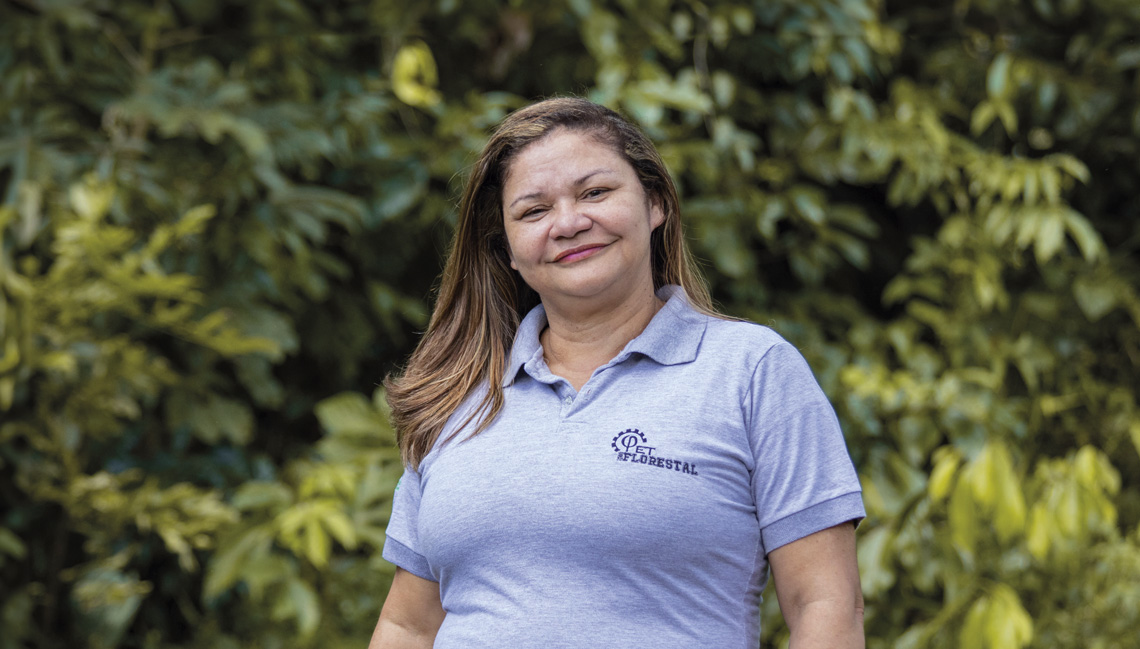
At the age of 22, I heard someone use the scientific names for trees for the first time: Myrcia sylvatica, which we called “murta,” and Banara guianensis, which is known locally as “andorinha.” It was 1992 and I was in Igarapé-Açu, a city about 120 kilometers from Belém, the state capital of Pará. It was my first day of fieldwork collecting plant samples with the SHIFT Program [Studies of Human Impact on Forests and Floodplains in the Tropics], which was a partnership between EMBRAPA Eastern Amazon and the universities of Bonn and Göttingen, both in Germany. It fascinated me, and I have been studying and trying to understand the identity of trees ever since.
I am from a traditional riverside community. I was born in the city of Abaetetuba, which is the second largest producer of açaí in Pará. I come from a very humble family—my mother is a housewife and my father is a fisherman. During my childhood, I would bathe in the river before going to school in the morning. On my way home, I would go into the bush—which is what people from riverside communities call the forest—and climb palm trees to pick açaí berries. It was my interest in plant species that motivated me to study forest engineering at the School of Agricultural Sciences of Pará [FCAP], which is now the Federal Rural University of the Amazon [UFRA].
It was not an easy journey. To begin with, I had to convince my mother to let me go to high school. For her, it was enough that I knew how to read and write. I did a technical course in accounting, which enabled me to get a temporary job in an office in Belém in 1991. The following year, I started doing botanical collection work at EMBRAPA [Brazilian Agricultural Research Corporation], which was also supposed to be temporary, but I ended up staying there until 2004, working on many projects related to plant identification.
I worked throughout my entire degree. I would leave the lab and go straight to class, usually skipping lunch, in a routine that ended up negatively affecting my health. In the third semester of the course, I received a grant from PIBIC [Institutional Program for Undergraduate Scholarships], funded by CNPq [the Brazilian National Council for Scientific and Technological Development]. I spent the first installment on a health insurance plan so that I could get treatment for an ulcer, which was the result of my poor diet.
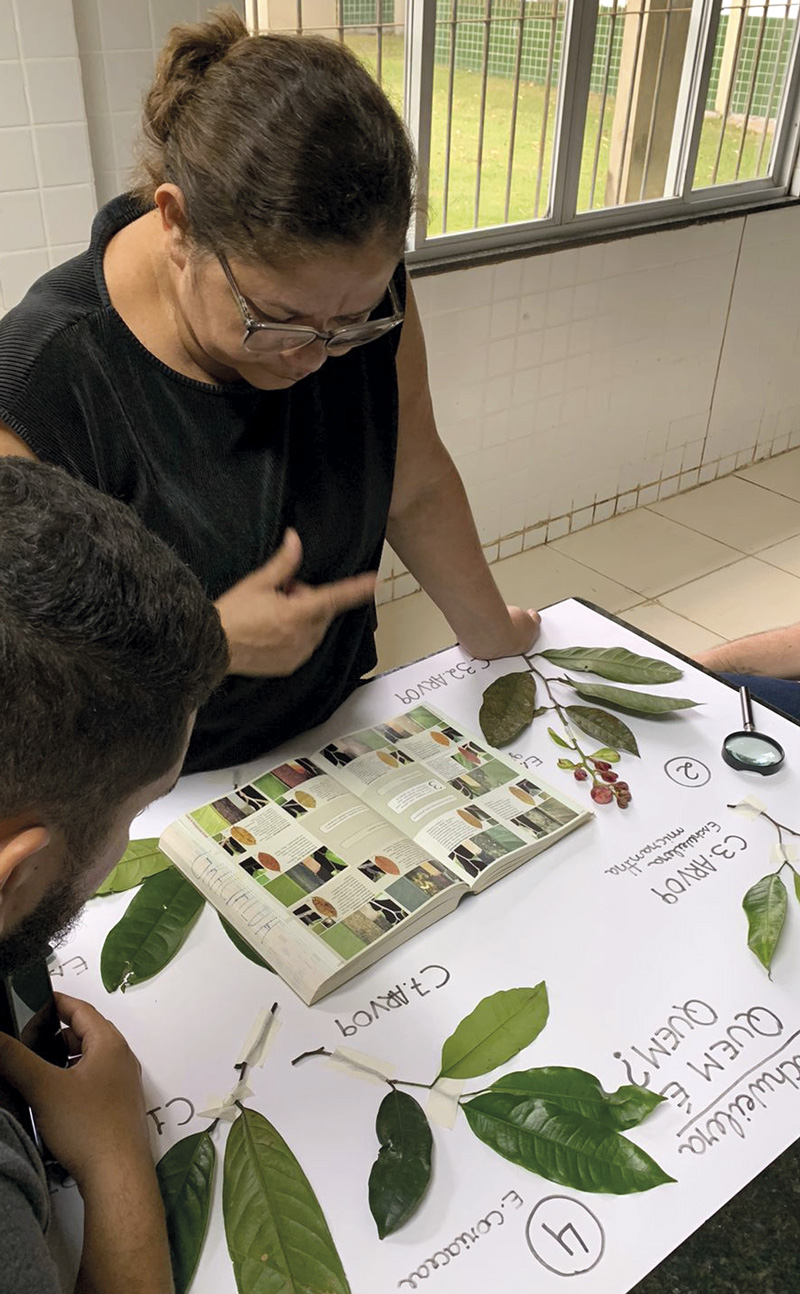
Abner Reis/Press Office / UFRATo Ferreira, tree identification avoids rare species from being as exploited as common onesAbner Reis/Press Office / UFRA
I completed my undergraduate degree in 2000 and in the same year I was accepted onto the master’s program in forest sciences, at what was then FCAP. For my master’s research, I analyzed the angelim, a tree from the Leguminosae family, the wood of which is among the most sold in Pará. My thesis, which I completed two years later, was published by EMBRAPA as a manual titled Manual de identificação botânica e anatômica – angelim [Botanical and anatomical identification manual – angelim] in 2004. The term “angelim” encompasses a group of tree species with different properties, but which are often sold under the same name. This has several consequences, compromising the quality of products made from the wood and the conservation of rare species, which are often exploited to the same extent as common species due to identification errors.
After leaving EMBRAPA, I managed the Rodrigues Alves Municipal Forest in Belém in 2005 and 2006. We inventoried 510 trees there, of which around 400 are rare species. But these species are at a very high risk of extinction due to incorrect management and deforestation. We are losing species and they will be gone forever. Tree species that have not even been described are being felled and deliberately misidentified in order to obtain licenses.
The COP30 meeting [United Nations Climate Change Conference], which will take place in Belém next year, has drawn attention to the city. The event could serve to attract research institutions, strengthen those already here, and establish new partnerships based on listening to the people who live in the forest. However, I am concerned about the arrival of projects and public policies designed to encourage businesses that exploit forest resources. I am not against these initiatives, but for them to be truly sustainable, we need an inventory and map of the forest. The bioeconomy requires a lot of knowledge. Botanical identification is essential to good forest management. It adds value. It is what ensures conservation, productivity, and consequently, economic and social returns. This is one of my motivations for working with local communities.
Since 2006, when I was a professor at UFRA’s Center for Agricultural Sciences, I have been working with the Miriti Art Association of Abaetetuba. Through a partnership with EMBRAPA Eastern Amazon, we are discussing the conservation of floodplain areas that provide raw materials for the production of toys made from a common palm tree called moriche palm. These toys are an important source of income in the city, sold in especially high numbers during the Círio de Nazaré festival that takes place in Belém every October. About 20 years ago, the local population began cutting down male moriche palm trees to plant açaí palms in their place. This had a negative impact on moriche production, and to this day, people who make the toys have to go elsewhere to acquire the raw material.
As a researcher and member of a riverside community, I know that we need to facilitate access to technology for people living in the forest and establish ways of socializing knowledge. In my PhD, which I defended at the Rio de Janeiro Botanical Garden Research Institute in 2009, I developed an environmental modeling tool for species that could be accessible to communities and cooperatives. By combining forest inventories created by private companies, which include species data and geographic coordinates, with environmental characteristics such as soil type and climate, the model calculates the probability of species occurrence in areas not yet inventoried. Now, the model is serving as the basis for the development of an application.
I like to keep myself busy. Since 2018, I have been participating in another project involving EMBRAPA and UFRA to help the Municipal Government of Portel, on the island of Marajó, to set up the Management Center for Native Açaí Groves in Marajó, (MANEJAÍ). The idea is to responsibly expand açaí production from 1 ton per hectare to 6 tons per hectare. This would have a significant impact on the income of local families.
In Marajó we also do academic research, especially on how certain factors, such as soil, insects, and water availability, determine tree canopy changes throughout the year. For these studies, I trained a group of young people from the local community to help me with botanical collections. I call them “forest students.” We are also implementing the first seed collection and forest restoration areas in community areas of Marajó. Today, simply tackling deforestation is not enough; we urgently need to restore forests that have been degraded. This is one of the contributions I want to make to my region.
The story above was published with the title “Unraveling the identity of trees” in issue 346 of December/2024.
Republish