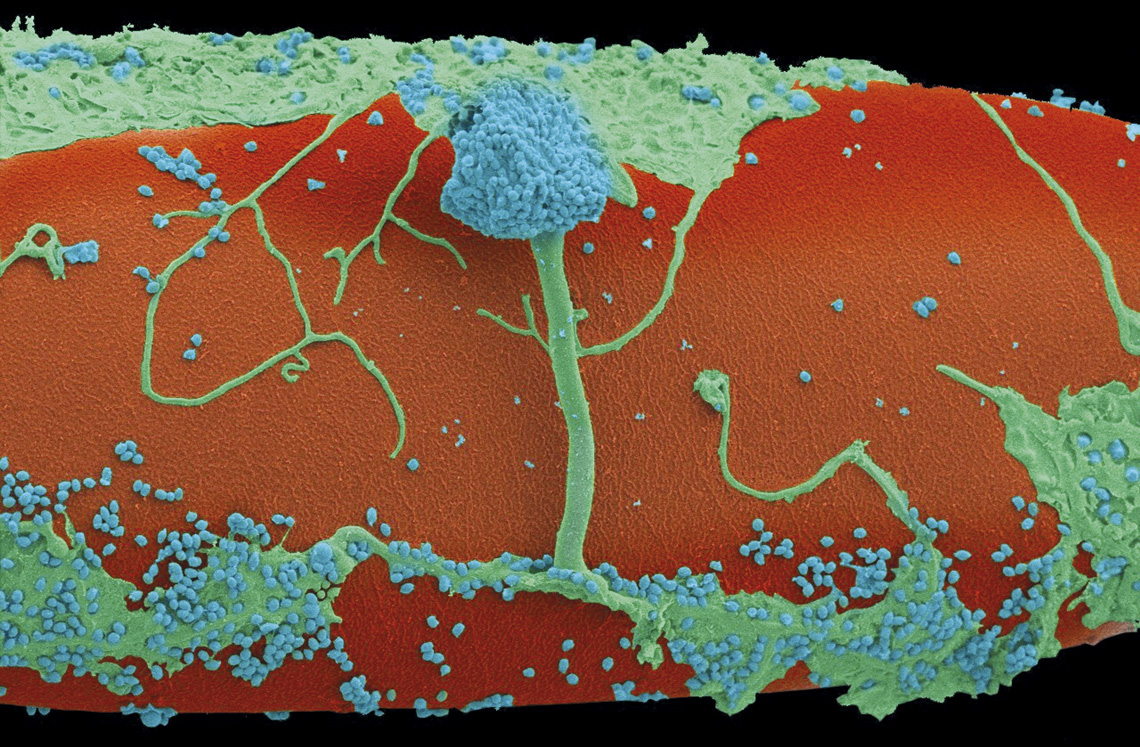
The fauna and flora of the Amazon are not always visible. Not only because they hide or reach beyond our vision, but also because the biodiversity can be microscopic, like the fungus Aspergillus giganteus colonizing an Aedes aegypti mosquito egg (red) in the image above. The fungal filaments (hyphae) are shown in green and the reproductive spores are highlighted in blue. The formation of a fruiting body in the center indicates that the fungus is at an advanced phase of its life cycle, now capable of removing nutrition from the egg, and consequently preventing it from hatching. The microorganism was collected from the wild for a study seeking to develop a form of biological control for the Aedes aegypti mosquito, which transmits dengue fever and other diseases.
Photograph submitted by Kemily Nunes Moya, a PhD student at FIOCRUZ Amazonas, and produced at the Multiuser Center for Analysis of Biomedical Phenomena at the State University of Amazonas. The image won the CNPq Photography Award for Science and Art in 2023.
Republish