


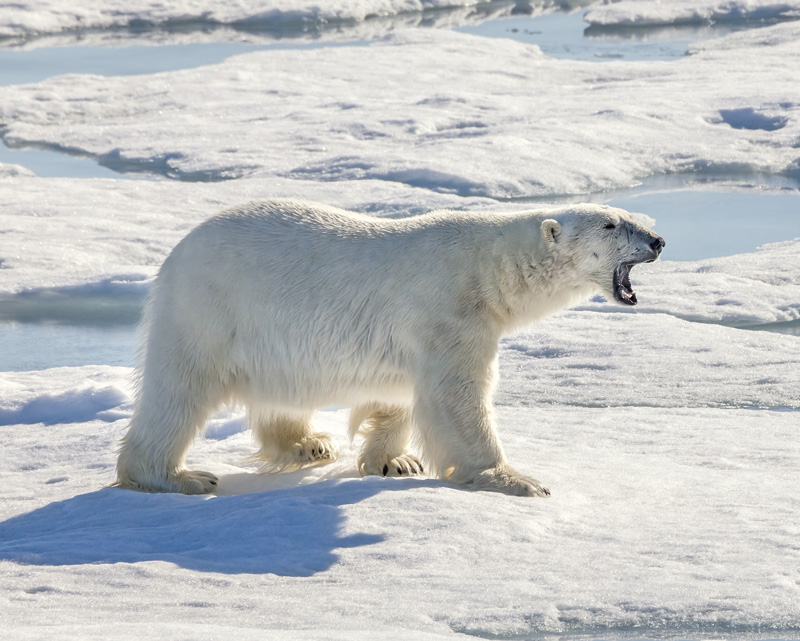
Andreas Weith / Wikimedia CommonsMelting Arctic ice has led to unexpected encounters between animalsAndreas Weith / Wikimedia Commons
Rising temperatures in the Arctic have brought previously distant species into contact, increasing the risk of infections among wild animals. Researchers from the Geological Survey, managed by Colorado State University and the US Department of Agriculture, identified a fourfold increase in the prevalence of antibodies for microbial and viral pathogens in polar bears (Ursus maritimus). Their conclusion was based on a comparison of samples from 115 adult females collected between 1987 and 1994 and samples from 232 adults or sub-adults collected between 2008 and 2018 in the Chukchi Sea between Russia and Alaska. There was a greater prevalence of antibodies for the canine distemper virus (CDV), which causes a serious respiratory disease (67% of samples), and for the protozoan Neospora caninum, which can cause jaw paralysis and muscle flaccidity (64%). There are also signs of contact with the protozoan Toxoplasma gondii, which causes neurological changes (PLOS ONE, October 23).
Republish