 They are transparent, swim at the bottom of rivers, and measure no more than three centimeters long. Despite its apparent insignificance, the fish genus Priocharax is an important piece of the ecological puzzle, feeding on insect larvae and serving as food for the young of other types of fish, in addition to carrying an evolutionary enigma: they remain in juvenile form.
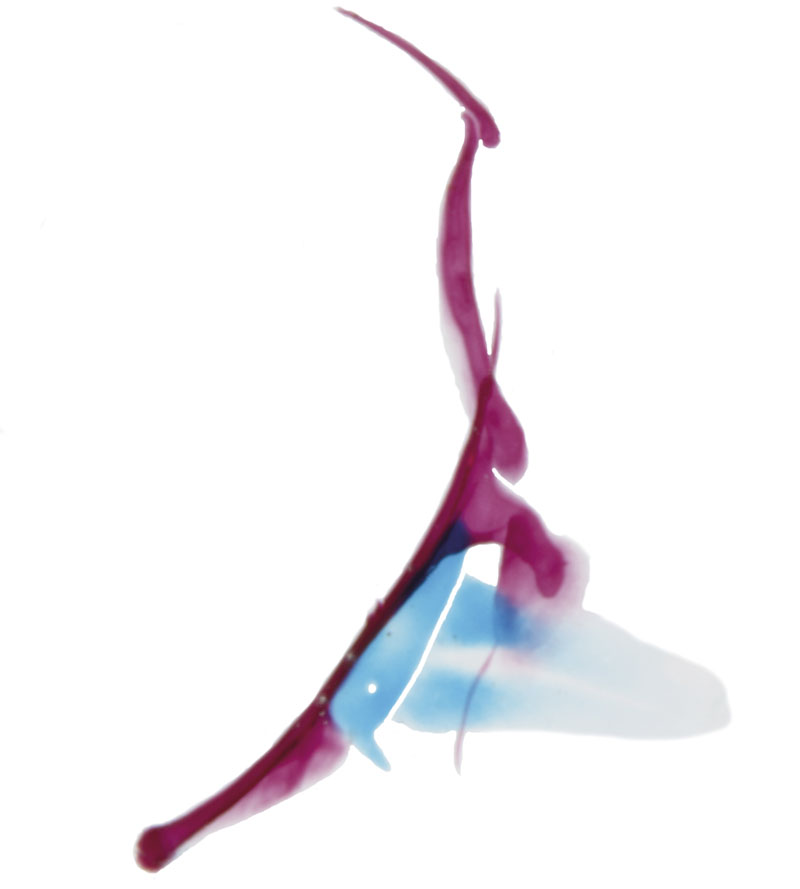
In the photograph above, the dissected and stained pectoral fin bones of P. rex appear pink, with the cartilage in blue—and therein lies the surprise. In the adult fish of other genera, the fins ossify into spiny rays. P. rex It is the largest species of the 10 described in the genus—seven of them by biologist George Mattox.
Image submitted by George Mattox of the Biology Department at the Federal University of São Carlos, Sorocaba campus
Republish