newsletter printed editions
español português
  • Science
  • S&T Policy
  • Technology
  • Humanities
  • Health
  • Videos
  • Print issue
  • newsletter
  • português español

Issue # 345 _ November 2024

Browse the magazine

Cover

Graphene hits the market
Two decades after it was first created, the unique two-dimensional nanomaterial is beginning to be incorporated into technological innovations on a commercial scale By Frances Jones

Interview

Graça Nunes: AI with no illusions

Expert from USP São Carlos warns about the limitations and ethical obstacles of artificial intelligence By Yuri Vasconcelos


Sections

Data

Editorial

Good practices

Notes

Photolab

Retrospect

Small Business Innovative Research (PIPE)


Scientific Production

National consortium takes over management and funding of the SciELO library

Partnership between CAPES, CNPq, and FAPESP reaffirms Brazil’s commitment to open-access scientific journals

By Fabrício Marques

Communication

Federal universities strive to break out of the academic bubble

Institutions have embraced online communication but are still speaking to a limited audience

By Sarah Schmidt

Interview

Antoinette WinklerPrins: From the Amazon to research funding

Deputy division director of the US National Science Foundation was in São Paulo to discuss potential collaborations with Brazilians

By Sarah Schmidt and Maria Guimarães

Nobel Prize

2024 Nobel Prize honors researchers in the field of artificial intelligence

The physics and chemistry prizes were awarded to scientists who created computational tools

By Marcos Pivetta

Public Health

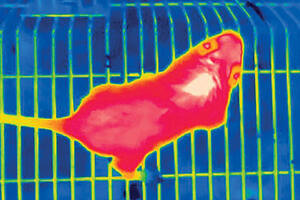
Trans women continue to suffer from poor health and prejudice

Study with 1,317 participants in five state capitals finds persistently high rates of sexually transmitted infections (STIs) and obstacles that limit access to health services

By Giselle Soares

Physiology

Neurotransmitter with dual function protects against obesity

Molecule known to act on the brain, stimulating appetite and weight gain, has the opposite effect when secreted by peripheral nerves, helping to burn fat

By Gilberto Stam

Evolution

The eardrum may have saved reptiles from mass extinction

The tympanic membrane in the inner ear emerged in a common ancestor of lizards, crocodiles, alligators, snakes, turtles, and birds 250 million years ago

By Enrico Di Gregorio

Paleontology

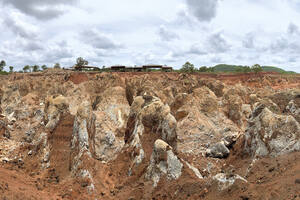
When and where were the first animals in South America?

Western Mato Grosso do Sul, eastern Santa Catarina, and northern Minas Gerais were home to complex organisms between 575 million and 530 million years ago

By Carlos Fioravanti

Oceanography

Threat to Brazilian coral puts fish at risk

Despite being resistant to environmental changes, species are being eliminated

By Meghie Rodrigues
Global Warming

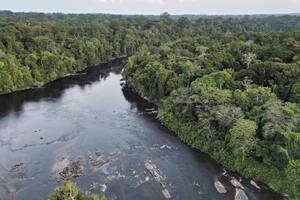
The Amazon is not uniformly affected by drought

The region’s ability to respond to the climate crisis is variable, with some areas on the verge of ecological collapse

By Laura Tercic

Climate change

Carbon emissions from wildfires increased by 60% between 2001 and 2023

The rise was mainly caused by fires in temperate and boreal regions, such as Canada

By Meghie Rodrigues

Astrophysics

Asteroid set to pass close to Earth in 2029 could create a meteor shower on the Moon 100 years later

Proximity to Earth could cause debris surrounding the asteroid to be pulled away by the planet’s gravitational field

By Marcos Pivetta

Physics

Mysterious water phenomenon can also be produced in quantum systems

Mpemba effect causes hot liquids to freeze faster than cold ones

By Danilo Albergaria


Biotechnology

Research indicates new uses for microalgae

In the lab, the microscopic organisms proved capable of producing fertilizer, fixing metals in effluents, and offering new strategies for biofuels; the challenge is to expand the scale

By Carlos Fioravanti

Aeronautical engineering

Chinese flying car debuts in Brazil

Chinese-made EHang model completes first flight trial in São Paulo as Embraer’s eVTOL prototype nears flight-testing phase

By Yuri Vasconcelos

Civil engineering

Buildings need to be adapted to higher temperatures

Engineers and architects debate and test construction techniques and materials better adapted to rising global temperatures

By Enrico Di Gregorio

Interview

Pedro Meira Monteiro: Expanding memory

Princeton professor calls on institutions to rethink their collections through the lens of diversity

By Christina Queiroz


Society

The motivations and challenges of popular entrepreneurship

The instability of the job market and growing appreciation of working-class culture is driving residents of poor regions to start their own businesses

By Christina Queiroz

Literature

The inspiring work of Luís Vaz de Camões

Books and events celebrate the 500th anniversary of the birth of one of the greatest ever Portuguese-speaking poets

By Paula Carvalho and Ana Paula Orlandi
Follow Us
Home About us Contact
FAPESP Agência FAPESP Biblioteca Virtual

© Revista Pesquisa FAPESP - All rights reserved.

>