Paleontology
Paleontology
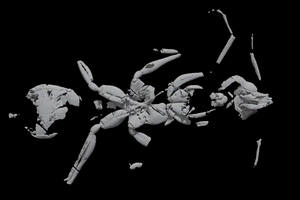
Ice Age survivors
443-million-year-old arthropods withstood major climate changes
By Redação
Paleontology
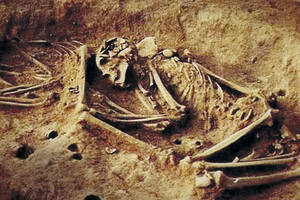
Ancient Colombian people with no descendants
Indigenous people who lived in Colombia 6,000 years ago left no descendants
By Redação
Paleontology
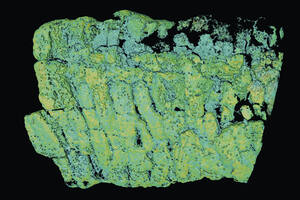
X-ray of an ancient organism
X-ray analysis shows that the first animals with skeletons, which lived 55 million years ago, were elongated and tubular
By Redação
Paleontology

The Brazilian cradle of dinosaurs
New ancient dinosaur discovered in Rio Grande do Sul
By Redação

Paleontology
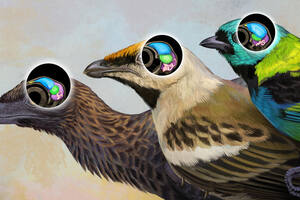
Fossil helps understand how bird brains evolved
Skull from dinosaurs' time is exceptionally well preserved
By Redação

Fossils

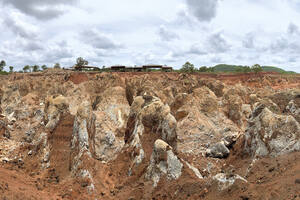
Dinosaur precursor prepared for bipedal running
Dinosaur precursor had skeletal features that paved the way for bipedal running
By Redação
Paleontology
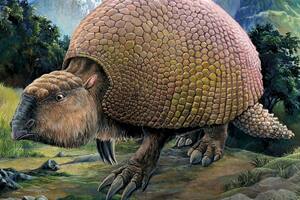
Glyptodont barbecue
Fossil marks suggest humans ate animals around 21,000 years ago
By Redação
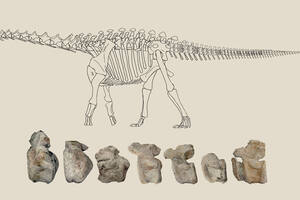
Paleontology
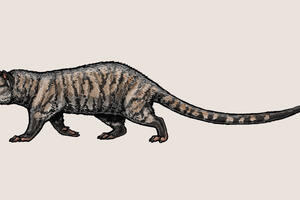
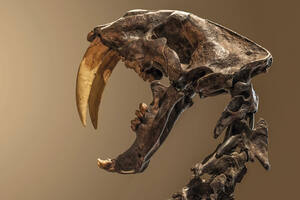
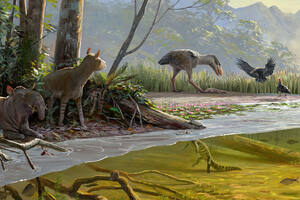
Marsupial nursery
Large marsupial lived in Itaboraí (Rio de Janeiro) 55 million years ago
By Redação
PALEONTOLOGY
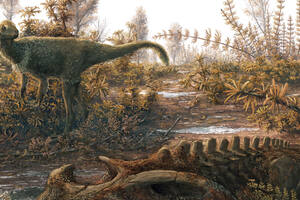
Marks left by insects on rhynchosaurus bones indicate underground activity
Marks left by insects on rhynchosaurus bones indicate underground activity
By Laura Tercic
PALEONTOLOGY
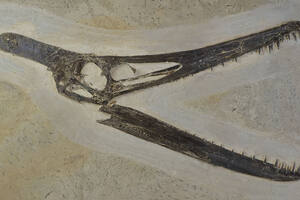
Another donation to Brazil’s National Museum
Brazilian National Museum receives donation of 1,104 fossils from the Araripe basin in Northeast Brazil
By Redação
Research Itineraries
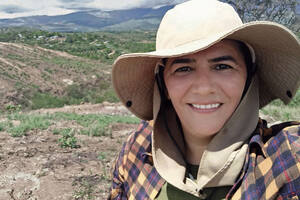
At the right time
Syrian paleontologist Wafa Adel Alhalabi arrived in Brazil as a refugee, having fled the war in her home country. Now at USP, Ribeirão Preto campus, she is studying fossils from her homeland

Paleontology
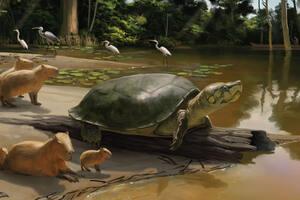
Plentiful hunting in the rivers
Turtle fossil found in a mine in the Madeira River basin belonged to one of the largest species ever described
By Redação
Paleontology
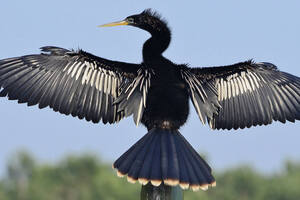
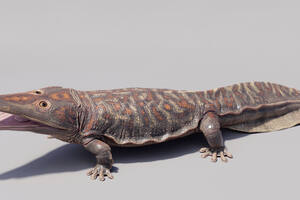
Animals millions of years old in Acre
Diversity of fauna millions of years old in Acre is greater than previously thought
By Redação

Electronic engineering
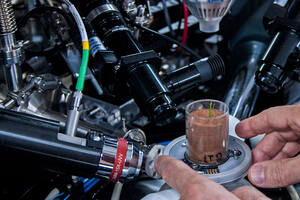
Carnaúba: an X-ray supermicroscope
The longest light beamline of Sirius in Campinas, São Paulo State, provides details on fossil histories, interaction of plants with the soil, and impurities in diamonds