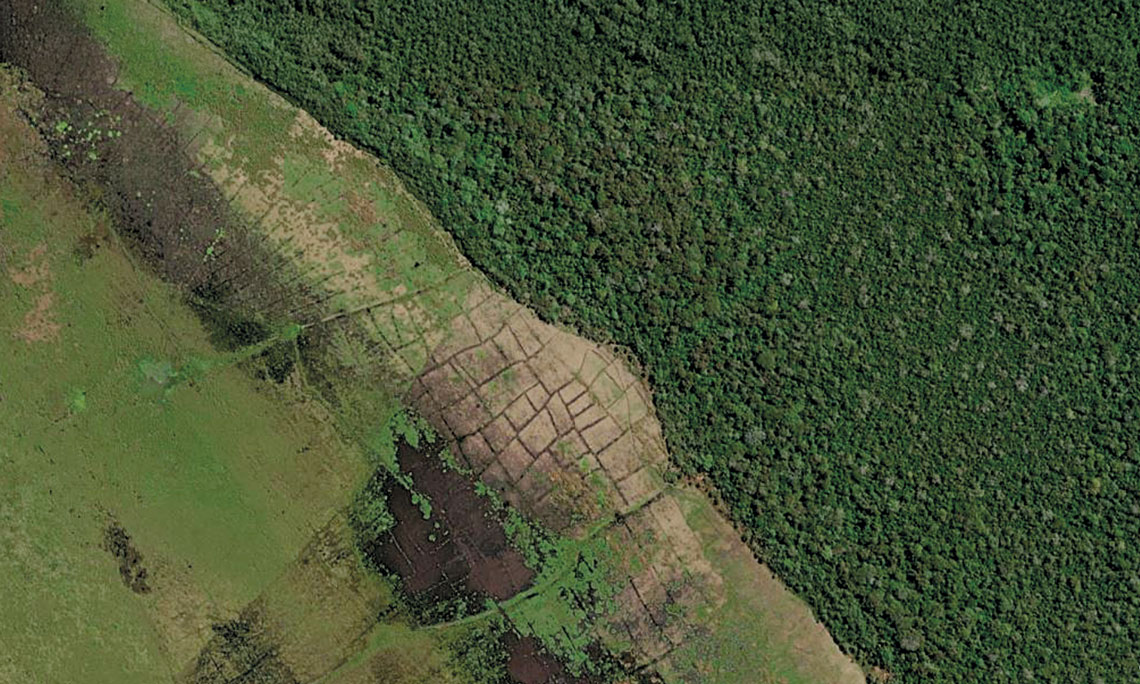
Long before European contact, the Casarabe people inhabited vast stretches of the southwestern Amazon, from roughly 500 to 1400 C.E. A growing body of evidence suggests a sizable population once cultivated extensive maize fields across the Bolivian plains known as the Llanos de Moxos. And that is turning heads. Newly published research has reinterpreted these ancient farms as monocultures—such as a January paper in Nature—and shed new light on the role of corn in ancient peoples’ diets. Another article, from Nature Human Behaviour in December, suggests these cornfields may have played a role in domesticating ducks.
“We always thought pre-Columbian groups in this part of the Amazon grew a mix of crops—like the “three sisters” [corn, beans, and squash] of Central American agriculture, or used agroforestry systems,” explains Italian environmental archaeologist Umberto Lombardo, from the Autonomous University of Barcelona. Lombardo led the Nature study with collaborations from archaeologist Eduardo Góes Neves’s group at the University of São Paulo’s Museum of Archaeology and Ethnology (MAE-USP). “Discovering a monoculture of maize was truly a surprise,” adds Lombardo, who has lived in the region for over two decades and has been doing fieldwork there since 2006.
Earlier studies had already revealed that the region is dense with traces of ancient human habitation—hundreds of monumental earthen mounds interconnected by canals and causeways. “They’re arranged in a hierarchical layout, with larger mounds surrounded by clusters of smaller ones,” says Lombardo. “That suggests a level of social complexity beyond isolated villages—possibly even centralized political control,” he adds.

Using a mix of remote sensing, microbotanical analysis, and field surveys, researchers have now uncovered sophisticated landscape engineering for farming: drainage canals to divert water during floods, and artificial ponds to store water through the dry season—possibly even to attract animals for hunting. An analysis of ancient plant remains, such as phytoliths (the silica-based casts of plant cells, which are well preserved in the Llanos de Moxos), revealed that maize was abundant in fields and near ponds, but absent in forested zones—clearly indicating that this was open-field farming rather than agroforestry.
“There’s been a decades-long debate about maize’s role in the Amazon,” says British archaeologist Jennifer Watling of MAE-USP, who supervised the postdoctoral research of Brazilian archaeobotanist Lautaro Hilbert, a coauthor on the study. Much of that uncertainty came from the belief that maize requires fertile soils—thought to be rare in the Amazon. But that notion has been overturned by discoveries of dark earths, which are still being intentionally produced by Indigenous communities today.
On a smaller scale, Watling and her team also found phytoliths from squash, cassava, gourd, and other cultivated plants within forested areas. “On higher ground that stays dry during the rainy season, there are forest areas that were likely under human management,” she notes. Watling says the Nature study underscores just how central maize was to the diet of these ancient communities. The same is true for the December article in Nature Human Behaviour, led by Brazilian archaeologist Tiago Hermenegildo, who analyzed material from the Llanos de Moxos for his PhD, completed in 2022 at the University of Cambridge, with funding from the Brazilian National Council for Scientific and Technological Development (CNPq). The material has since been repatriated and is now housed at a museum in Trinidad, Bolivia—established using European research funds as a gesture of reciprocity.
“There’s substantial evidence of maize at the site,” says Hermenegildo. “We’re finding traces in the pottery, in the soils, and in preserved bits of kernels and cobs.” Such finds often hinge on chance—what happens to be preserved over time and whether it happens to show up in the sediment samples archaeologists have sieved. To get around that reliance on chance, Hermenegildo has focused since his master’s degree on analysis of stable isotopes—forms of atoms that, unlike radioactive ones, don’t decay over time.
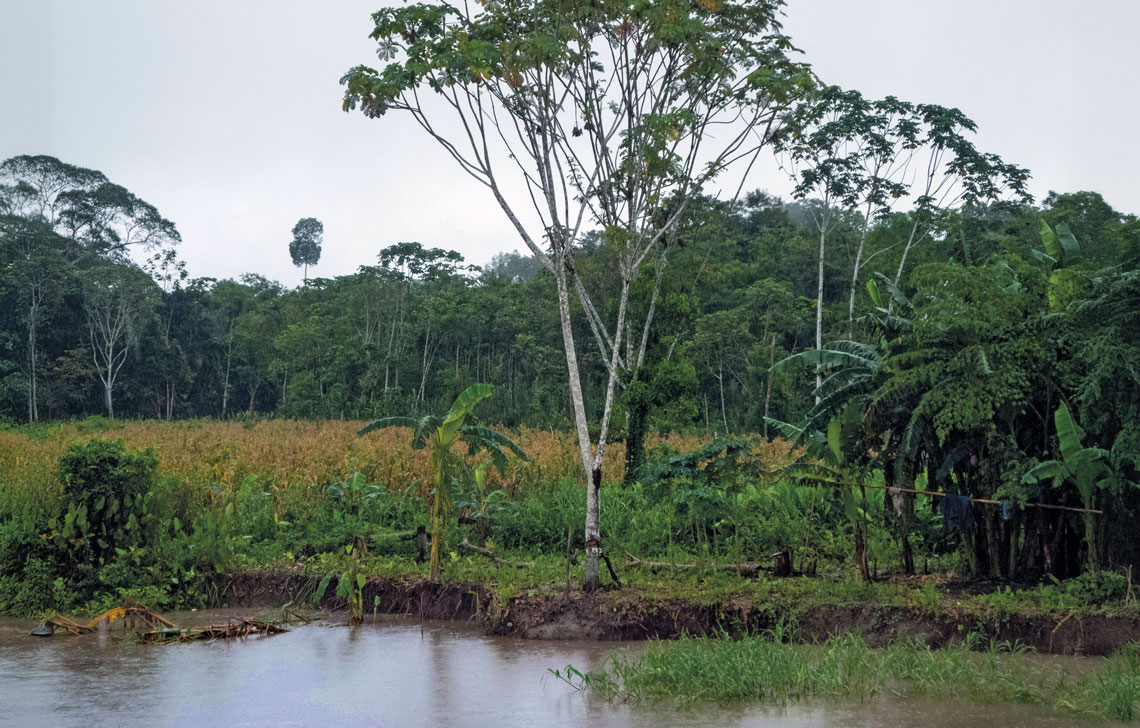
Education Images / Universal Images Group via Getty ImagesCornfields in the Peruvian Amazon: in some regions, native varieties of maize can still be foundEducation Images / Universal Images Group via Getty Images
Diet recorded in collagen
“The carbon isotopes preserved in bone collagen tell us which plants people were eating, while nitrogen isotopes are associated with animal protein intake,” Hermenegildo explains. He notes that edible C4 plants such as maize, with its four-carbon photosynthetic pathway, do not occur naturally in the Amazon. When C4-type carbon shows up in human or animal bones, it is a strong indicator of maize in the diet.
Watling, who is not herself a specialist in stable isotope analysis, still sees it as a more informative tool for inferring diets, as it captures what people and animals consumed over their lifetimes. But the broader archaeological context still matters. Hermenegildo agrees: before analyzing isotopic data, it is important to have a clear picture of the site’s zooarchaeological and archaeobotanical record—what animals and plants were present in that human context. “We started turning up a surprising number of duck bones while analyzing the animal remains,” he recalls. That was unexpected—and it led to a new interpretation.
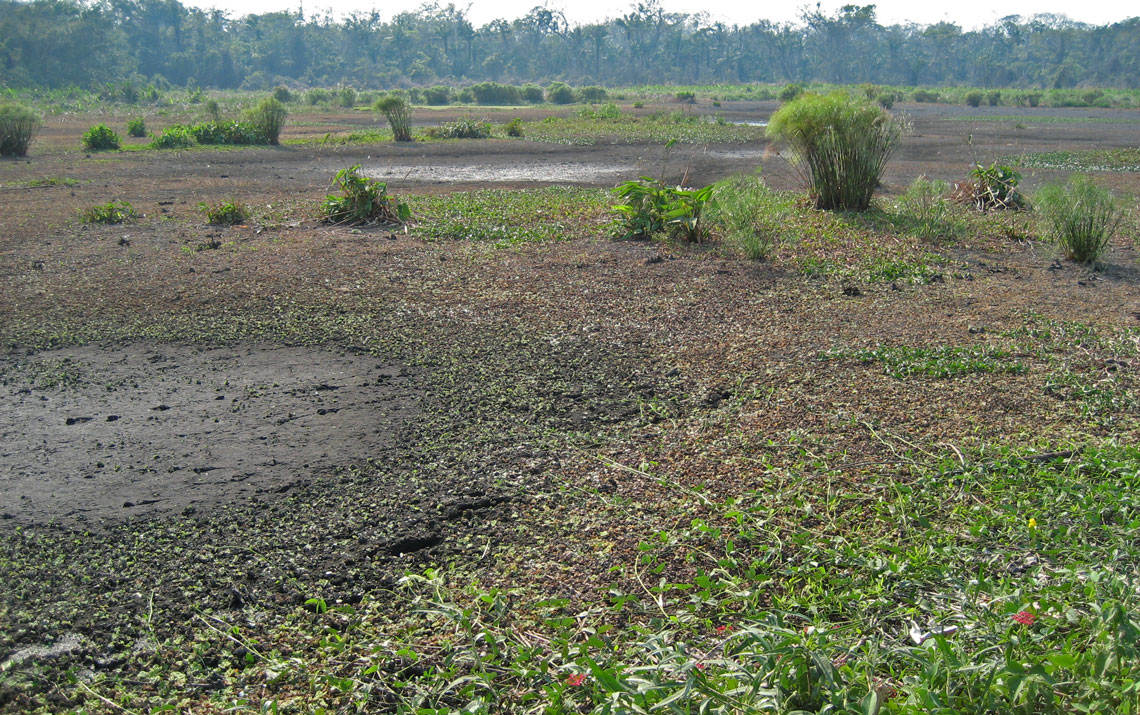
Umberto Lombardo / Universidade Autònoma de BarcelonaPre-Columbian ponds were used to store water for irrigationUmberto Lombardo / Universidade Autònoma de Barcelona
The study provided the first archaeological evidence suggesting that the Muscovy duck (Cairina moschata), a species native to the area, may be the only known case of animal domestication east of the Andes. “Stable isotopes showed that the ducks were eating an even higher proportion of maize than people were,” Hermenegildo says. He adds, however, that the ducks were likely used in rituals—something also noted in accounts left by Jesuit missionaries who passed through the area in the sixteenth and seventeenth centuries. “We still don’t know exactly on what occasions and how often people were eating ducks,” he cautions. Stable isotope analysis is unable to pinpoint specific sources of animal protein, Hermenegildo explains—but most of the animal bones recovered from the site belong to deer. These animals, which could weigh up to 40 kilograms (about 88 pounds), were hunted and likely offered a more significant source of meat for the community.
For Hermenegildo, the key finding is that maize was central to the pre-Columbian diet in this region—and an anchor crop around which early urban centers developed. He points to evidence of a trade network between the Amazon lowlands and the Andes, with copper tools and ornaments showing up at archaeological sites in the Llanos de Moxos. Maize eventually spread into the mountains too, though it remains unclear which route it took to get there. “It took longer for maize to adapt to high-altitude environments,” he explains. After European colonization, Indigenous Amazonian populations were decimated—and so were records of maize, a crop that relies on human cultivation to thrive.
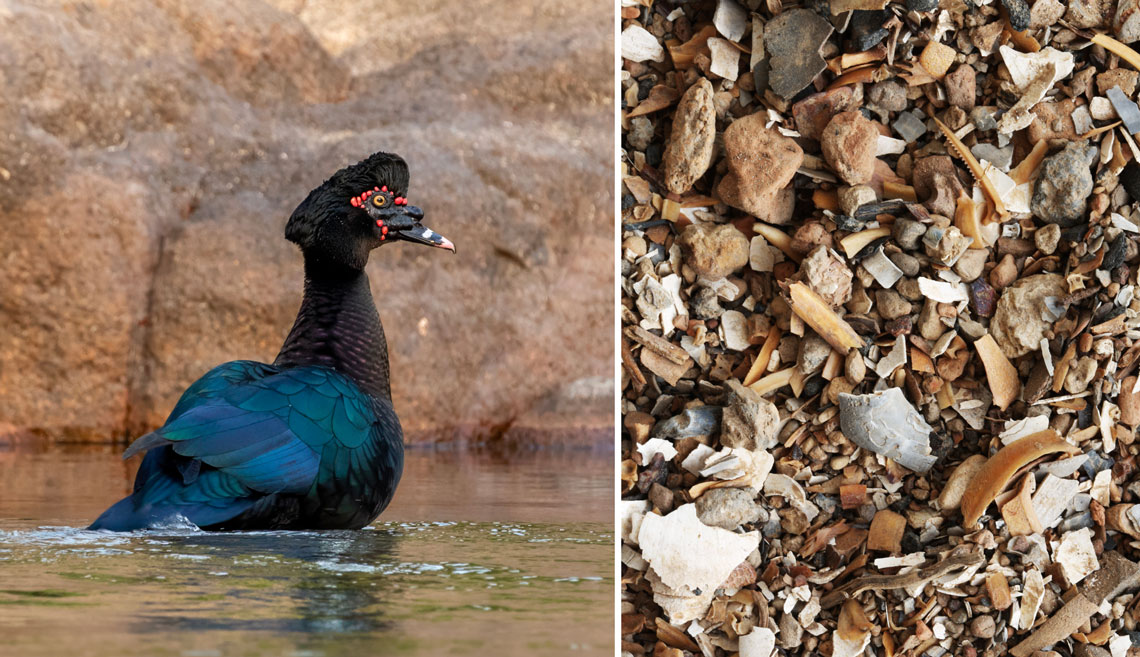
Dan Vickers | Heiko Prümers / Instituto Arqueológico AlemãoArchaeological digs (left) have uncovered bones from the Muscovy duck—the only known locally domesticated animal east of the Andes (right)Dan Vickers | Heiko Prümers / Instituto Arqueológico Alemão
“The southwestern Amazon is a major hotspot of maize diversity—where native landraces were developed and adapted over time,” says Flaviane Costa, a postdoctoral genetics researcher at the University of Oxford, who was not involved in the studies. Costa, who specializes in maize domestication and the traditional landraces still grown in the Amazon today, says that a better understanding of this agricultural, genetic, and cultural heritage can be highly valuable, even in shaping modern conservation and food security policy.
Costa believes it is important to build further on the research by Hermenegildo, Lombardo, and collaborators to better gauge the scale of Casarabe agriculture and how it compares with the farming systems Indigenous peoples use today. She also urges caution when labeling the Casarabe fields as “monocultures.” “Traditional maize cropping systems are very dynamic,” she explains. “They preserve a wide range of native landraces with diverse traits, making them suitable for many different uses.” Lombardo notes that the findings in Bolivia point to the possibility of large-scale food production—enough to support a sizable population—but this is still speculative. “We still need a comprehensive map of all the ponds and canals to estimate total agricultural output,” he says. “Only then can we start modeling the size of the population.”
High costs, limited access, and ethical issues continue to slow broader use
Tiago Hermenegildo earned his master’s degree in 2009 at the Center for Nuclear Energy in Agriculture (CENA) at USP’s Luiz de Queiroz School of Agriculture (ESALQ-USP). “I chose it for its expertise in stable isotope analysis—but at the time, no one there was applying it to archaeology,” he recalls.
Even today, stable isotope analysis remains incipient in Brazil, largely due to a lack of investment, says Portuguese anthropologist Maria Ana Correia, a researcher at Portugal’s Interdisciplinary Center for Archaeology and the Evolution of Human Behavior, and an affiliate of the Laboratory of Archaeology and Environmental and Evolutionary Anthropology at USP. She adds that preserving collagen—the basis for isotope testing—is often difficult at Brazilian sites due to the region’s heat and humidity.
Correia coauthored a January article in the American Journal of Biological Anthropology outlining ethical guidelines that need to be observed in this type of research. “We have to be selective with archaeological samples,” she recommends. “Preservation is critical for future research—we don’t yet know what new techniques might emerge—and the entire process should be thoroughly documented. And just as important, we need to establish responsible relationships with society—particularly with the present-day descendants of the communities we’re researching.” For Correia, it is particularly encouraging that these recent studies are being led by Latin American scholars.
Projects
Indigenous peoples and the environment in the Ancient Amazon (nº 19/07794-9); Principal Investigator Eduardo Góes Neves (USP);Grant Mechanism Thematic Project; Agreement AHRC, UKRI; Investment R$2,732,154.84.
Scientific articles
HERMENEGILDO, T. et al. Stable isotope evidence for pre-colonial maize agriculture and animal management in the Bolivian Amazon. Nature Human Behaviour. Dec. 23, 2024.
LOMBARDO, U. et al. Maize monoculture supported pre-Columbian urbanism in southwestern Amazonia. Nature. Jan. 29, 2025.
STANTIS, C. et al. Ethics and applications of isotope analysis in archaeology. American Journal of Biological Anthropology. Vol. 186, no. 1, e24992. Jan. 2025.