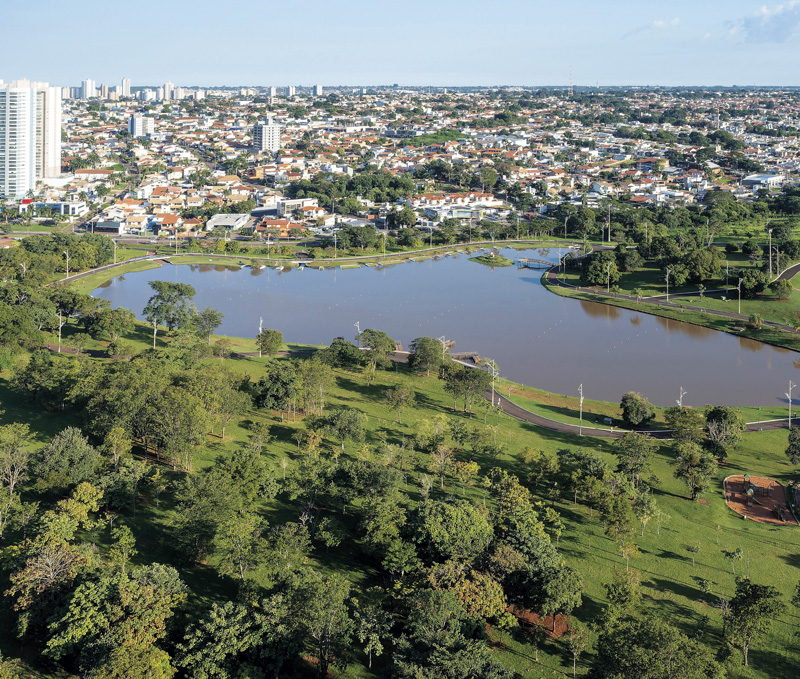
Erich Sacco / Getty ImagesVegetation cools more in open, dry cities, such as Campo GrandeErich Sacco / Getty Images
Scientists from the University of Cambridge, UK, analyzed 182 papers published between 2010 and 2023 on 17 climates in 110 cities or regions worldwide, concluding that urban trees generally cool cities with hot, dry climates, such as in the Brazilian Central-West, more than those with hot, humid climates, as is typical in the North of Brazil. During the day, trees block solar radiation through water evaporation or air flow changes. At night, however, the canopies can trap heat and increase temperatures. In arid climates, such as Cairo, Egypt, trees cooled environments by just over 9 degrees Celsius (°C) during the day and warmed them by 0.4 °C at night. In tropical rainforest climates, the daytime cooling effect was roughly 2 °C, with nighttime warming of 0.8 °C. In temperate climates, trees can cool cities by up to 6 °C and warm them by 1.5 °C. In general, trees cool most effectively in open, low-rise cities with dry climates. “Our results emphasize that urban planners not only need to give cities more green spaces, they need to plant the right mix of trees in optimal positions to maximize cooling benefits,” said Ronita Bardhan, leader of the study, in a statement (University of Cambridge and Communications Earth & Environment, December 10).
Republish