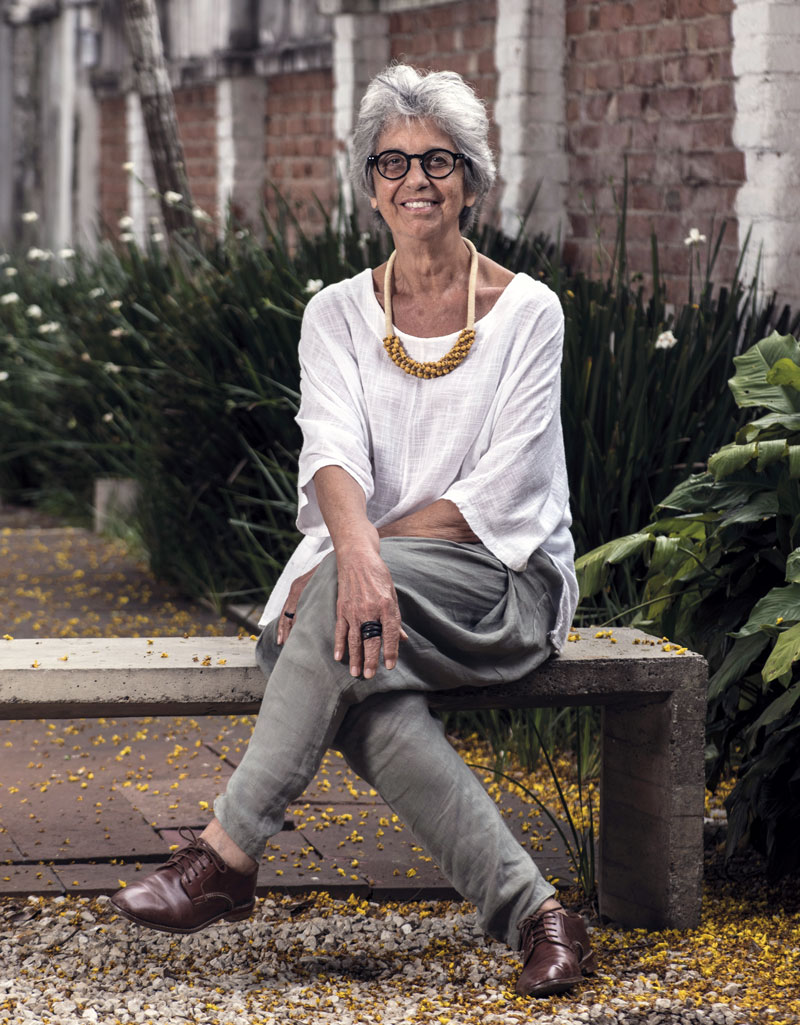
 Léo Ramos Chaves / Revista Pesquisa FAPESPWith a childhood marked by loss and supported by women who challenged the social norms of their time, sociologist Nadya Araujo Guimarães has become a reference in studies on care, playing a key role in the consolidation of this field of research in Brazil. Orphaned at the age of 5, she was raised by her maternal grandmother and aunt.
Guimarães, currently aged 75, began her undergraduate degree in history at the University of Brasília (UnB) in 1968. Drawn to the field of social sciences, she took this course simultaneously, eventually earning her degree in it just as she was about to graduate in history. In 1976, she went to Mexico with two small children to pursue her PhD. At that time, the country was a refuge for intellectuals from across Latin America, escaping the authoritarian regimes that were ravaging the region.
An expert in the sociology of work, she entered this field of study interested in understanding the political expressions of informal workers and their organizational strategies, which developed without union support.
Today, along with other sociologists, she is at the forefront of research on care, broadening the academic perspective on a subject that, until then, had mainly attracted the attention of professionals in the field of health.
A full member of the Brazilian Academy of Sciences (ABC), Guimarães retired from the Federal University of Bahia (UFBA) in 1996, at the age of 47. Later, in 2002, she began lecturing at the Department of Sociology of the School of Philosophy, Languages and Literature, and Human Sciences at the University of São Paulo (FFLCH-USP), where she is currently a full professor. She has been a researcher at the Brazilian Center for Analysis and Planning (CEBRAP) since 1993.
Sociology of work
Institution
Brazilian Center for Analysis and Planning (CEBRAP) and the University of São Paulo (USP)
Educational background
Bachelor’s degree (1971) and master’s degree (1974) in sociology from the University of Brasília (UnB), and a PhD in sociology from the National Autonomous University of Mexico (1983)
Married to Antonio Sergio Alfredo Guimarães, also a sociologist at USP, she has a son and a daughter from her first marriage, as well as eight grandchildren. At the end of 2024, she gave this interview to Pesquisa FAPESP in two comprehensive conversations held at CEBRAP and USP, coinciding with the approval of the National Care Policy. In December, this legislation, which guarantees rights and promotes improvements in both professional and voluntary caregiving relationships, was approved by the Senate and sent for presidential sanction.
Your father’s family is from Alagoas. Why did you move to Bahia?
My paternal grandfather came from a wealthy family in Alagoas. He was already married to my grandmother when they lost everything after a flood of the São Francisco river, which destroyed the salt pans he owned. The financial loss and the loss of social status emotionally destabilized my grandfather. During a period of extremely high infant mortality in Brazil, they had 16 children, of which only eight survived. My grandmother then took control of the situation and decided to migrate. She packed their bags, and with her husband and eight children, headed to Salvador, where she rebuilt their life from scratch. It was a courageous decision. With her husband incapacitated, she raised the children alone. They all had to start working very early, including my father, João Araujo dos Santos, who was the eldest.
Did your parents meet in Salvador?
Yes, but I lost my mother, Orlanda Neves Araujo, at a very young age. She passed away when I was 5, due to a medical error during the delivery of my brother. I was brought up by my maternal grandmother, Isabel Neves Ferraz, a housewife, and by my aunt, Edith Neves Ferraz de Carvalho, a doctor. At the end of the 1940s, when I was born, the societal norms governing what was allowed for women were very rigid. My mother graduated as a teacher and then got married, without ever starting her teaching career. On the other hand, my aunt wanted to be a doctor, defying her father’s wishes that she should become a primary school teacher. So, she made a deal with him: during the day, she would take a normal course, aimed at teacher training, and at night she would study sciences, which was the path to careers in the exact and biological sciences. She was a role model for me.
Why?
I learned from her to value self-determination and to never give up on my goals. She enrolled in the School of Medicine at UFBA and graduated in a class in which only two women completed their degree. When she was about to complete her degree, she witnessed the medical error that caused her to lose her only sister, my mother. This tragedy certainly influenced her choices. She decided to become an obstetrician and gynecologist. It was as if, from then on, she took on the mission of alleviating the suffering her sister endured during the failed delivery. From the age of 8, I would accompany her on her hospital visits on Sundays. We would visit patients and discharge mothers, who were always joyful with their babies.
What were the impacts on the family of losing your mother?
Our family unit ended up fragmenting. My brother went to live with our paternal grandmother and I went to live with our maternal grandmother. This deprived us of growing up together as siblings, of the fights, but also of the bond that is woven through daily interactions. This experience explains how much I value, today, the relationship between siblings. I confess that, for a long time, I wondered why my father was unable to keep our family together after the loss of my mother. Today, more mature, I look back at the past with a different perspective and understand. Men were not prepared to care. Their role was to provide for the family through work. Faced with the loss of his wife and the challenge of being alone with two small children—a newborn and a 5-year-old girl—he went to live with his own mother, entrusting her with raising the boy who seemed to him to be the most vulnerable.
Did you ever think about being a doctor?
I grew up with that aim. I wanted to be a pediatric surgeon. I studied at the Laboratory School of UFBA and prepared for the university entrance exam to pursue a career in medicine. However, in the first year of the old scientific course, a careers test struck me like a lightning bolt: the result suggested that I was destined for the humanities. I received the result with anger and resisted changing course and being transferred to the classical path, which focused on careers in the humanities and social sciences. The school’s academic board made a proposal: that I try taking subjects from the classical course for three months. If I didn’t adapt, I could return to the scientific route. I agreed, and to my surprise, I loved the classical course.
Why did you go to Brasília?
When I finished the Laboratory School, I took the college entrance exam and enrolled at the University of Brasília [UnB], in 1968. I was 17 years old and moved to the city on my own. At that time, UnB was offering an innovative teaching program. Students took a basic cycle of subjects and only chose their undergraduate degree after finishing it. I entered the basic humanities cycle, determined to study history. That was until I was introduced to anthropology and became fascinated by it. UnB allowed students to have flexibility in composing their curriculum, making it possible to include subjects from different fields of study. As a result, I chose an undergraduate degree in history, but began taking subjects from the social sciences program.
I learned from my maternal aunt, who raised me together with my grandmother, to value self-determination
How was the transition to sociology?
One of the decisive events was Latin American sociology classes, taught by Gláucio Ary Dillon Soares [1934–2021], a brilliant and charismatic professor who had just returned to Brazil after completing his PhD in the USA. He was also the director of the Latin American School of Social Sciences [FLACSO] in Chile. Gláucio offered me a scientific initiation grant to work as an assistant preparing his first book published in Brazil. Additionally, UnB was launching its master’s program in sociology. So, I decided to change path. I no longer enrolled in subjects from the history program and accelerated my studies in social sciences. I wanted to graduate in time to join the second class on the master’s program, as a teaching assistant, which happened in July 1971.
What were the impacts of the military coup on UnB?
The institution was deeply affected. By 1964, professors had already been fired and arrested, including sociologists Perseu Abramo [1929–1996] and Rui Mauro Marini [1932–1997], who would later become my PhD advisor. Students were also persecuted. It was a difficult period. The academic environment was stimulating and there was freedom of thought in the classroom, but student politics and activism was not allowed, and we endured frequent invasions on campus.
What did you research for your master’s degree?
After studying the factors behind the surprising weight of the left-wing vote in the 1960 elections in Goiás, I wanted to understand the construction of local power by examining the role of oligarchic groups.
Why did you go back to Bahia?
In 1973, as I was nearing the end of my master’s degree and, consequently, my connection with UnB as a teaching assistant, I received a job offer to join the coordination team at UFBA for a study assessing the implementation of university reform in higher education institutions across the country. That same year, my first daughter was born. In 1974, I decided to enter the selection process to become a professor in the Department of Sociology at UFBA and was accepted in first place.
How did you get involved in research into the sociology of work?
At UFBA, I connected with a group from the Center for Human Resources, where sociologist Inaiá Maria Moreira de Carvalho was conducting research on the political attitudes of workers in Bahia. At that time, analyses on underemployment and urban marginality were in vogue, and researchers from the Joaquim Nabuco Foundation in Pernambuco and from UFBA had completed two surveys, one in Salvador and the other in Recife, about workers in informal occupations. The team needed someone to analyze the data related to questions about the political attitudes of these workers. This work was the first step toward what would become the focus of my PhD research.
In the 1970s, Mexico was a refuge for intellectuals from Latin America who had fled from dictatorships
Why did you decide to do your PhD in Mexico?
Ever since I finished my master’s degree and as my daughter grew, I began making contacts to take my PhD abroad. The anthropologist Roberto Cardoso de Oliveira [1928–2006], head of the Department of Social Sciences at UnB at the time, suggested that I look for a position at Colegio de México, which had recently launched a PhD program run by sociologist and anthropologist Rodolfo Stavenhagen [1932–2016]. So, in 1976, I applied for a place. I had just had my second child and arrived in Mexico in August, when he was only one and a half months old and my daughter was two and a half years old.
How was the experience?
My research agenda in Mexico continued to focus on the connection between work and politics. I had redefined my thematic interests, moving away from electoral sociology to explore how insertion into the labor market shaped forms of collective action. At this time, several Latin American countries, such as Brazil, Argentina, Uruguay, and Chile, were under dictatorial regimes. As a result, Mexico became a refuge for intellectuals from the region, including political exiles, as was the case with my PhD advisor, Rui Mauro Marini. This turned Mexico City into a vibrant Latin American hotbed for critical thinking. The Colegio de México was a wonderful institution. However, its PhD program was, in fact, a big training cycle that involved master’s degrees and PhDs. I had already completed my master’s degree in Brazil and realized that I would spend my three years away from teaching activities just taking courses. So, I ran the risk of returning to Brazil without having made progress on my thesis project. With the approval of the National Council for Scientific and Technological Development (CNPq), I applied for the PhD program in sociology at the School of Political Sciences of the National Autonomous University of Mexico [UNAM].
How long did you live in Mexico for?
I lived there continuously between 1976 and 1978, a period during which I completed the compulsory PhD subjects. This allowed me to return to Brazil and use the last year of my sabbatical leave to conduct field research. In 1982 and 1983, I returned to Mexico several times, staying for a few months each time, in order to finish writing and defend my thesis.
What did you research for your PhD?
In Brazil, studies about the political attitudes and behavior of workers focused on the industrial proletariat. The analyses centered on urban workers employed in the formal market, in activities associated with the economic growth of the Southeast, the ABC region of São Paulo, trade unions, and labor organizations. This was the world that researchers like Fernando Henrique Cardoso, Leôncio Martins Rodrigues [1934–2021], Juarez Brandão Lopes [1925–2011], and Maria Hermínia Tavares de Almeida reflected on. However, there was another group of urban workers that was growing rapidly. They were outside the industrial and regular employment circuit. These were informal workers, who survived through odd jobs, without fixed employers or trade unions. This was a group that was barely visible to the Brazilian sociology of work and was more often analyzed by scholars of the urban context, such as Luiz Antonio Machado da Silva [1941–2020] and Lucio Kowarick [1938–2020]. How did these informal workers, without trade unions and outside of factories, act politically? How did they organize themselves collectively during periods of intense political mobilization in Brazilian society? In my thesis, I sought to answer these questions.
What were the conclusions?
To find these answers, I conducted a case study on the forms of political expression of informal workers, observing what happened in Pernambuco, especially in Recife, between 1955 and 1964, a period of notable collective action both in the countryside and in the city. This period prior to the military coup was marked by the progressive government of Miguel Arraes [1916–2005], who was mayor of the city from 1960 to 1962 and later state governor between 1962 and 1964, when he was arrested and removed from office. The conditions at the time were ideal for political mobilization and collective action. I spent months researching in the Recife Public Archive, scouring local newspaper articles for signs of the forms of expression of these workers, from whom only inaction was expected. Additionally, I interviewed communist leaders, activists, and politicians to reconstruct the memory of that period. I discovered that informal workers, such as street vendors and domestic workers, developed strategies for solidarity and collective action, even without relying on the infrastructure of trade unions and solid ties to companies. I found records of movements, such as the Campanha do Prato Vazio (the empty plate campaign, in English), and documented the organization of street vendors, highlighting the collective action that occurred outside traditional domains.
Informal workers organized themselves in collective actions that occurred outside traditional domains
Were these forms of expression by informal workers also identified in other parts of the country?
Yes. While researching the Recife Public Archive, I discovered an unusual story that took place in Brasília. In the early 1960s, the construction industry in the federal capital was in crisis due to the economic recession. Many migrant workers, who had arrived to build the city, were unemployed. Faced with this situation, they organized into volunteer groups to sweep the streets, dividing the city into areas and appointing leaders for each one. After some time, they managed to convince the municipal government to pay them for their work. A few months later, the construction workers went on strike. In solidarity, those who had once been construction workers and were now street sweepers decided to strike as well, demanding the same salary increases as the construction workers. Their previous experience as construction workers continued to shape their collective action, which became politicized. They made national headlines due to their unsuccessful attempt to resist the military coup.
When did the topic of gender enter your research agenda?
Even though women worked, they were scarcely acknowledged in the foundational analyses of the sociology of work in Brazil. We now know, in the history of Brazilian industry, that key economic sectors have been marked by the presence of women, such as the textile and garment sectors. Furthermore, paid domestic work has always been a female domain: even today, around 90% of this workforce is made up of women. Additionally, the informal labor sector has always made room for the female workforce. Nonetheless, in 1960s Brazil, few studies on the labor market paid attention to the gender dimension. Sociologists like Heleieth Saffioti [1934–2010] and Eva Blay were pioneers of such studies. In 1983, already a member of the Center for Human Resources at UFBA, I began researching the dynamics of changes in the occupational structure in Bahia, within the context of the decentralization of industrial activity in Brazil. It was within this context that the question of gender became imperative for me.
What drove these transformations?
The Second National Development Plan, launched in 1974 by President Ernesto Geisel [1907–1996], encouraged industrial decentralization in the country, including the opening of petrochemical hubs in Bahia and Rio Grande do Sul. This facilitated the emergence of a modern working class in areas that had seen industry lose its centrality. Many of these new workers were young people trained in technical schools, who aspired to follow other careers but ended up becoming subordinate workers. At the same time, engineers and other high-level professionals were brought from the Southeast to work in these industries, creating a tense situation that intensified over the years. On the other hand, formal female labor began to gain visibility in urban Brazil. Sectors such as healthcare, education, and other urban services, which were open to the presence of women, grew in cities such as Salvador. It was impossible not to see this reality. In 1987, I published O que é que a baiana faz? Novos padrões de divisão sexual do trabalho no estado da Bahia (What do women from Bahia do? New patterns of gendered labor division in the state of Bahia), in which I analyzed these changes. It was my first written work dedicated exclusively to the topic of female labor.
How does the issue of race connect with this shift?
In Bahia, it is impossible to understand unemployment and informal labor without considering that these phenomena make up the daily lives of Black people. In Salvador, for example, 80% of the population is Black. Popular celebrations, such as Carnival, created temporary positions for Black individuals who, outside of this period, faced difficulties finding work and income. In the early 1990s, with support from the Ford Foundation, we developed an interdisciplinary research program at UFBA to analyze, among other topics, the dynamics of the labor market focusing on race and gender issues. The results were published in books to which I contributed, including Trabalho e desigualdades raciais: Negros e brancos no mercado de trabalho de Salvador [Labor and racial inequalities: Black and White people in the labor market in Salvador; Editora Annablume, 1998], organized in conjunction with sociologist Vanda Sá-Barreto, and Imagens e identidades do trabalho [Images and identities of labor; Editora Hucitec, 1995], coauthored by sociologist Antonio Sergio Alfredo Guimarães and French anthropologist Michel Agier.
In 1960s Brazil, few studies on the labor market paid attention to the issue of gender
What led you to settle in São Paulo?
In 1993, with my children grown up and at university, I decided to do a postdoctoral fellowship at MIT, the Massachusetts Institute of Technology. Having already graduated from UFBA I spent a semester at CEBRAP, before going to the USA, planning the structure of a research area focused on labor studies. I spent a year in the Department of Urban Studies at MIT. When I returned to Brazil in 1996, I retired from UFBA. At that time, philosopher José Arthur Giannotti [1930–2021], then president of CEBRAP, invited me to return to the institution, initially with a grant from FAPESP. I have been a part of the institution ever since as an associate researcher, having established and run the labor studies area for several years. During this period, my research agenda expanded. I moved from topics such as productive restructuring, technological innovation and its impacts on labor, to studies on the career paths of workers in contexts of rising unemployment. I developed a special interest in the impact of these changes on different racial, age, and gender groups. I then delved deeper into analyses of the subjective experience of unemployment, comparing countries with different labor market structures and social protection regimes, such as Brazil, France, and Japan. Several books resulted from this line of research, including Trabalho flexível, empregos precários [Flexible work, precarious jobs; Edusp, 2009], which won the Jabuti Award.
How did care become the subject of sociology research?
The topic of care was virtually nonexistent in Brazilian sociology in the 1990s. It is true that since the 1960s, feminist theorists have been dedicating themselves to studying unpaid labor performed by women in domestic settings, or even domestic labor itself, but care was never explicitly discussed. When the term appeared, it was analyzed with a bias towards health and related to aging. Research on the sociology and anthropology of care developed in Brazil throughout the 2000s, in alignment with the progress of international debates. Brazilian sociologist Helena Hirata, from the Center for Sociological and Political Research in Paris, France, and I attempted to document this moment by organizing a large international seminar in São Paulo, which resulted in the book Cuidado e cuidadoras. As várias faces do trabalho do care [Care and carers. The different faces of care work; Editora Atlas, 2012].
What are you working on at the moment?
I am coordinating the international comparative study Who cares? Rebuilding care in a post-pandemic world, funded by FAPESP and by international collaborative network the Trans-Atlantic Platform for the Social Sciences and Humanities. The study focuses on examining care within the context of the pandemic and in the period that follows. In addition to Brazil, the USA, Canada, France, Colombia, and the UK are involved in the project. We analyze topics such as family care needs, the labor market, public policies, and forms of regulation of the right to care. The project will end in 2025. Several publications have resulted from the international colloquia, the last of which will take place in São Paulo in April.
The story above was published with the title “Revealed care” in issue 347 of january/2025.
Republish