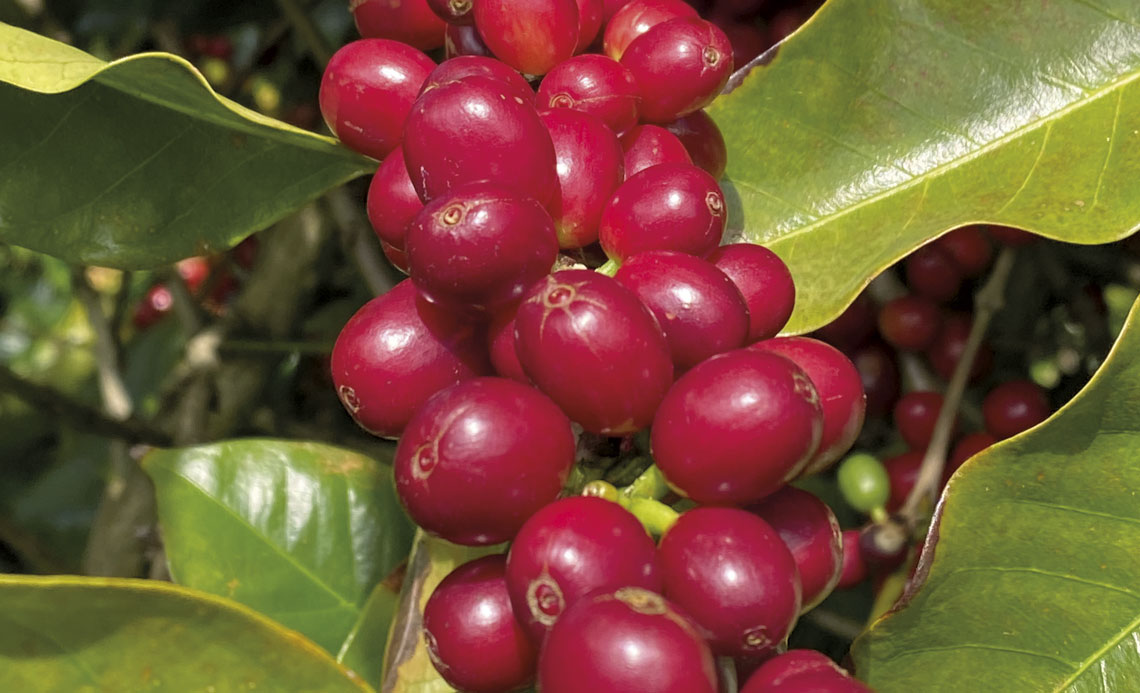
Already retired, after a professional career dedicated to computing, in 2018 Guimarin Toledo began, at age 60, a second degree in agronomy at the Federal University of Paraíba (UFPB) campus in Areia, a municipality with 23,000 inhabitants and 130 kilometers from the state capital. During the course, he learned about plans by some professors to revive coffee cultivation in the region, almost a century after it disappeared, along with another important part of the agricultural economy at the time, cotton.
Toledo bought 200 seedlings that began being cultivated in the university’s experimental plant beds and planted them in an area used as pasture on his rural property in the neighboring municipality of Alagoa Grande. Now, as a recently graduated agricultural engineer, he wanders among rows of 2,000 thriving Arabica coffee trees (Coffea arabica), made up of nine varieties, nearly all bearing green fruit.
“We are going to start harvesting this year, around July or August,” he celebrates. “I intend to sell in small batches, to coffee shops.” His daughter Laura, who also graduated in agronomy, in 2022 from Areia, is already managing the promotion of the coffee on social media. For the time being, the main source of income from the property is the sale of eggs produced by 1,100 hens, kept in a pavilion close to the coffee plantation, with the freedom to forage in the nearby woods twice a day.
Alongside the Toledos, agricultural engineer from UFPB Guilherme Silva de Podestá, one of the coordinators of the project to reintroduce coffee farming to the region, examines the plants and acknowledges the care they are treated with—they receive 10,000 liters of water, every day—adding: “They said that arabica coffee would only grow at an altitude of at least 700 meters [m], but we are at 272 m here [in Alagoa Grande]. The growth was similar to ours, in Areia, at 570 m. The productivity just needs to be assessed.”
Three hours earlier, it was Podestá’s turn to show a test field, on one of the university’s farms, with 250 coffee trees of 21 varieties of arabica coffee planted in 2018. Laden with green fruit, some are almost 3 m in height.
“Planting coffee in this region works,” he confirms. “We managed to produce 40 sacks [of 60 kilograms] per hectare, while the national average last year was 27. In 2023, the Catuaí 24/137 variety produced 45 sacks per hectare.” Besides this variety, which was also the one that stood out on the Toledos plantation, another three varieties proved to be extremely productive—Catuaí Vermelho 144, Catuaí Amarelo 62, and Arara. In an article published in June 2021 in Research, Society and Development and another in December 2024 in Revista de Agricultura Neotropical, the group from UFPB describes the selection and productivity of the varieties cultivated on the university’s farms.
If the experiments progress, the plants produce well, and the consumers like the results, the region could become a supplier of specialty coffees. With a distinctive aroma and taste, produced in small quantities, specialty coffees today account for at most 10% of the total volume produced in Brazil (see Pesquisa FAPESP issue nº 340). The coffee plantations could also help to diversify the agricultural economy of the state. In 2017, the year of the most recent Agricultural Census, rural producers from Paraíba produced 5.1 million tons (t) of sugarcane, 79,000 t of cassava, 39,000 t of bananas, and 46 million coconuts.
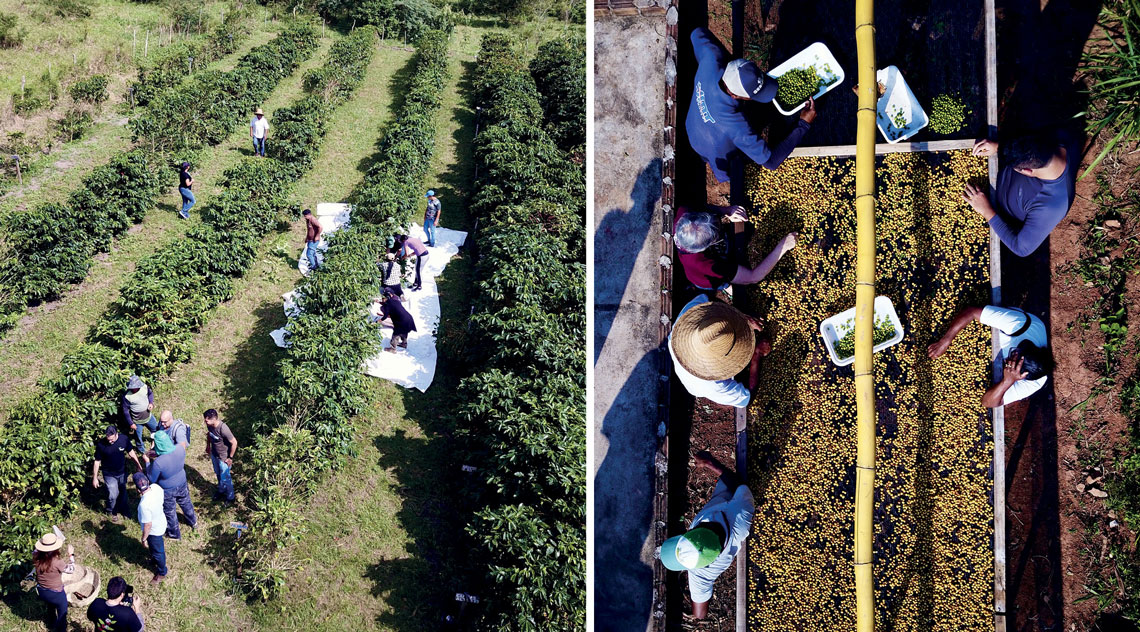
Jheyson Dantas / UFPBCoffee farmers take part in the harvest and selection of beans of a coffee plantation at UFPB in August 2024Jheyson Dantas / UFPB
Pests, climate, and soils
Asking about pests is inevitable, since the downfall of coffee farming in the region is attributed to the uncontrolled proliferation of small, red scale insects (Cerococus parahybensis), along with the lack of resources to combat them. A specialist in plant diseases, Podestá remains calm: “The plants have few scale insects, which we combat using biological control,” he says.
According to him, two really worrying problems are another insect, the coffee leaf miner (Leucoptera coffeella), a moth considered a coffee plant pest worldwide and controlled using industrialized insecticides, and the fungus Cercospora coffeicola, which causes the disease known as brown eye spot due to the marks it leaves on the plants. The pest is combated using fungicides and by monitoring the nutritional state of the plants.
Raised on his family’s coffee plantations in Cabo Verde, Minas Gerais, Podestá arrived in Areia as a hired professor in 2016 and soon began exploring the possibilities of planting coffee there. “I noticed that the climate was favorable and there was a history of production,” he says. According to him, there are reports that at the end of the nineteenth century and the beginning of the twentieth, the mountainous region closest to the coast, known as Brejo Paraibano, once had as many as 6 million coffee plants.
Both the climate and the relief are favorable to the plant. “The moisture comes from the coast and, on meeting the Alagoa Grande mountain, before Areia, rises and cools,” describes Raphael Beirigo, also an agricultural engineer from UFPB, who is involved in the research. “It rains more in Areia than in other mountains farther west.” A soil specialist, he says that in Areia and other nearby municipalities, there are patches of humic latosol, rich in organic matter, similar to the elevated regions of São Paulo and Minas Gerais where coffee is grown.
Currently, Bahia concentrates 97% of coffee production in the Northeast region and is the fourth largest producer in Brazil, after Minas Gerais, Espírito Santo, and São Paulo. Farmers from other states in the region are considering planting Rubiaceae again. In an article from September 2023 in the journal Turismo: Visão e Ação, researchers from the Federal University of Ceará (UFC) reported the revival, beginning in 2013, of shade-grown coffee cultivation, where coffee is planted beneath the canopy of existing trees, in the Baturité mountain range, in the north-central region of the state. The coffee-farming comeback, which had been swapped for growing fruit since the 1930s, has resulted in the mobilization of the Brazilian Support Service for Micro and Small Businesses (SEBRAE), agricultural cooperatives, and public agencies.
To rebuild coffee farming in Paraíba, Podestá managed to get seeds from a producer in Minas Gerais and colleagues from the Agricultural Research Company of Minas Gerais (EPAMIG) and Fundação Procafé. The plants sprouted and grew well in the region, encouraging the group to take further action.
On a Wednesday evening in May 2023, after work, while drinking beer and eating fried pork intestines at a bar near the university, Podestá and Beirigo, director of technology transfer and licensing at the UFPB Agency for Technological Innovation (INOVA) at the time, came up with the idea of creating a brand that could help sales and secure funding for the continuation of research on the coffee that was beginning to be produced at the university on an experimental basis.
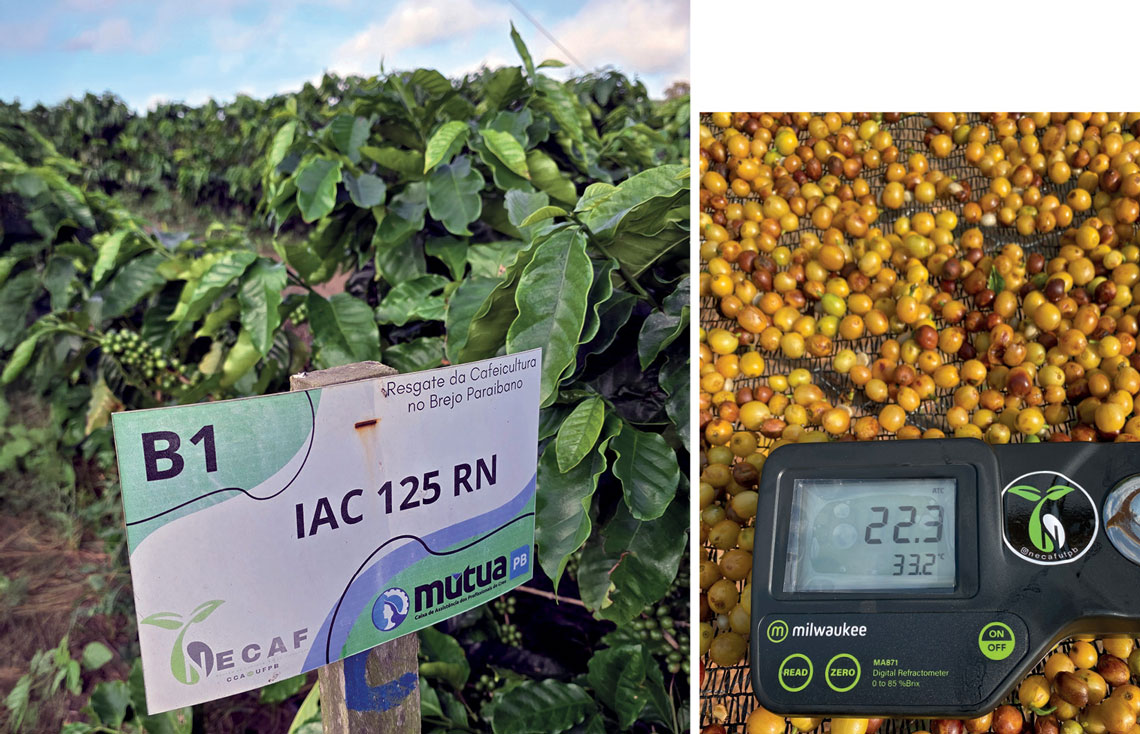
Jheyson Dantas / UFPBOne of the varieties planted in 2019 which is undergoing tests for productivity and quality and a refractometer indicates the proportion of sugars in the beans, which determines the ideal time for harvestJheyson Dantas / UFPB
Product designer Angélica Acioly and other professors from UFPB created the visual identity of the brand Grãos da Parahyba, launched in September 2024—it is extremely rare in Brazil for universities to create brands for their products. Once the registration goes through with the Ministry of Agriculture and Livestock (MAPA) and the Brazilian Coffee Industry Association (ABIC), the company Junior Coffee Solutions, currently being set up, will be able to receive money from sales to fund new research.
The research group distributed 9,000 seedlings in 2023 and 10,000 last year to 35 producers in seven municipalities from the region known as Brejo Paraibano: Areia, Alagoa Grande, Alagoa Nova, Bananeiras, Pilões, Serraria, and Matinhas. The expectation for this year is that another 18,000 seedlings reach the farmers.
“We guarantee the purchase of the harvest, even if it is very small, just three or five sacks per producer,” says Frederico Dominguez, national marketing manager at São Braz Indústria e Comércio, one of the largest business groups in the state’s food sector. “In the coming years, production will still be too small to be used on an industrial scale, but we can use it for blending with our products.” Dominguez monitors the work of the researchers, to whom he donated a roaster and a grinder, kept in the room of the Coffee Farming Study Center (NECAF) at the back of one of the buildings at UFPB, which is also a space for tasting the soft, mild-flavored coffee.
In October 2024, in the city of São Paulo, a certified specialty coffee evaluator identified aromas of caramel, spices, and red fruits in the drink made from the beans from Areia, while the taste was of milk chocolate, caramel, citrus fruits, and dried fruit. The two samples sent for assessment obtained scores of 81.25 and 82.75.
The coffee has contributed to educating students at the university, having inspired nine completed final undergraduate papers, seven in progress, one completed master’s thesis, three underway, and one ongoing PhD dissertation. Lots of research is done in another experimental field, with 2,500 plants of 32 coffee varieties, in order to find the most suitable fertilization and irrigation methods for the region. In one of the experiments, Jheyson Dantas, in the final year of the agronomy course, assesses the responses of four varieties to different treatments for inducing resistance to pests and disease.
Characterization studies of wild varieties are also underway, which are remnants of plants discovered in the region decades ago. Podestá and his team discovered them in mid-2023, when they first visited Quilombo Bonfim, in Cephilo, in the district of Areia.
On the land of one of the inhabitants of the quilombo, 49-year-old farmer José Alves de Maria, the coffee plants grew among banana trees, lime trees, orange trees, and cassava plants. “My father brought 30 plants from the forest and planted them here,” he says. Showing a coffee plant almost 3 m in height, he says, proudly: “This here produced 6 kilos of coffee. We spent six months drinking it.” Under a large cashew tree, he himself planted a cutting, which is already quite tall. “After one year it already bore fruit.”
The story goes back even further. His mother, Inácia Alves, 75, recalls: “Since I was a child, I saw my father bring them from the forest and plant them. When it’s time, I roast them myself in a pan, with sugar and rapadura [unrefined whole cane sugar], and then grind them in a mortar. There used to be a lot of coffee in the forests. It’s bearing fruit again now.”
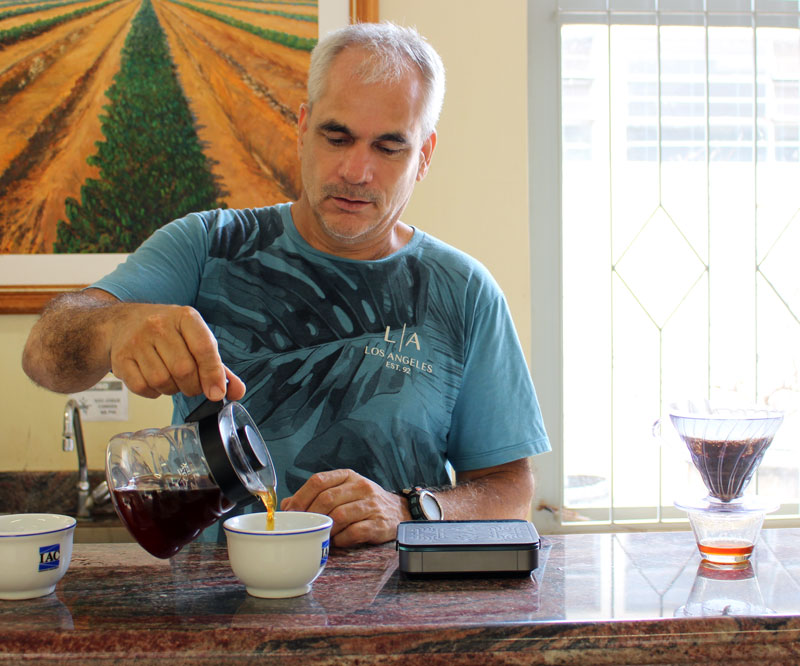
IACGiomo prepares coffee from Paraíba for tasting at the IACIAC
This report includes external assessments of one of the coffee varieties, Arara, produced in the region of Areia, in Paraíba.
“It is a specialty coffee, with a well-executed fermentation and a high score, fruity and well-balanced,” commented Q-grader (certified taster) and barista Raphael Ferraz, owner of the Grassy Caffé coffee shop and roastery, in Ribeirão Preto, in the state of São Paulo.
He tried the coffee at the request of agricultural engineer Raphael Beirigo, of the Federal University of Paraíba (UFPB), one of the coordinators of the research on this culture in the mountainous region of the state.
“It’s a very lightly roasted coffee, with beautiful, defect-free beans and a delicate, sweet flavor, slightly fruity, with mild citrus acidity,” assessed agricultural engineer and Q-grader Gerson Giomo, coordinator of the Specialty Coffee Program of the Agronomic Institute of Campinas (IAC) (see Pesquisa FAPESP issues 187 and 340).
He tried the coffee at the request of Pesquisa FAPESP. “It’s a specialty coffee, of superior quality to regular ones, and with potential,” he added.
Scientific articles
DA SILVA PODESTÁ, G. et al. Vegetative and productive aspects of arabica coffee genotypes in the Brazilian semiarid region. Revista de Agricultura Neotropical. Vol. 11, no. 4. Dec. 13, 2024.
RIBEIRO, S. R. P. et al. O café sombreado da serra de Baturité, Ceará, Nordeste do Brasil: Gestão ambiental, sustentabilidade e impactos ecossocioeconômicos. Tourism: Visão e Ação. Vol. 25, no. 3. Sept. 15, 2023.
SILVA, G. R. et al. Desenvolvimento inicial de cultivares de Coffea arabica L. no Brejo Paraibano. Research, Society and Development. Vol. 10, e45410615906. June 6, 2021.