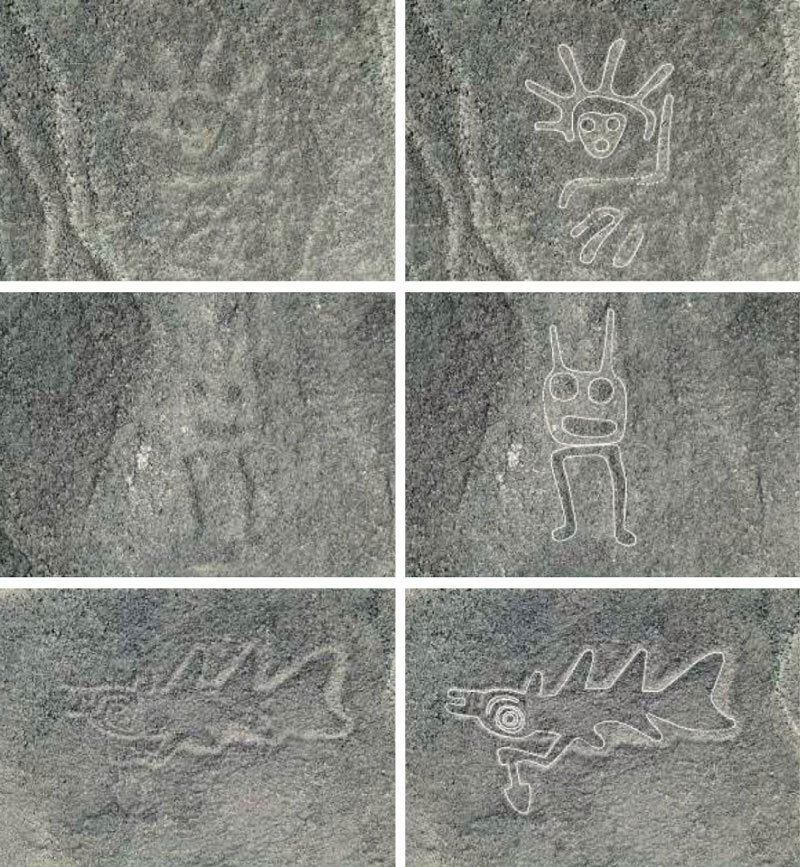
SAKAI, M. et al. PNAS. 2024Computer tools improve pattern recognitionSAKAI, M. et al. PNAS. 2024
The Nazca Desert in Peru is known for the immense geoglyphs in the soil, visible from above and known collectively as the Nazca lines. Over the course of almost a century, 430 of them were identified. They were produced more than 1,500 years ago by the Nazca people, who dug into the ground to create differences in color and texture. Many of the lines have been worn away over time, meaning they are not always easy to spot. Now, archaeologists from Japan, France, and the USA are using artificial intelligence (AI) to analyze high-resolution aerial photographs. In just six months, the AI’s ability to recognize patterns helped to identify more than 300 shapes that the human eye had been unable to recognize, including decapitated heads. The study divided the markings into two groups: “relief-type” designs, where stones were used to accentuate the contrast, which are more intricate and were built close to trails so that they were more likely to be seen; and “line-type” designs, which were larger and more spaced out, and may have been created for and used in rituals (Live Science and PNAS, September 23).
Republish