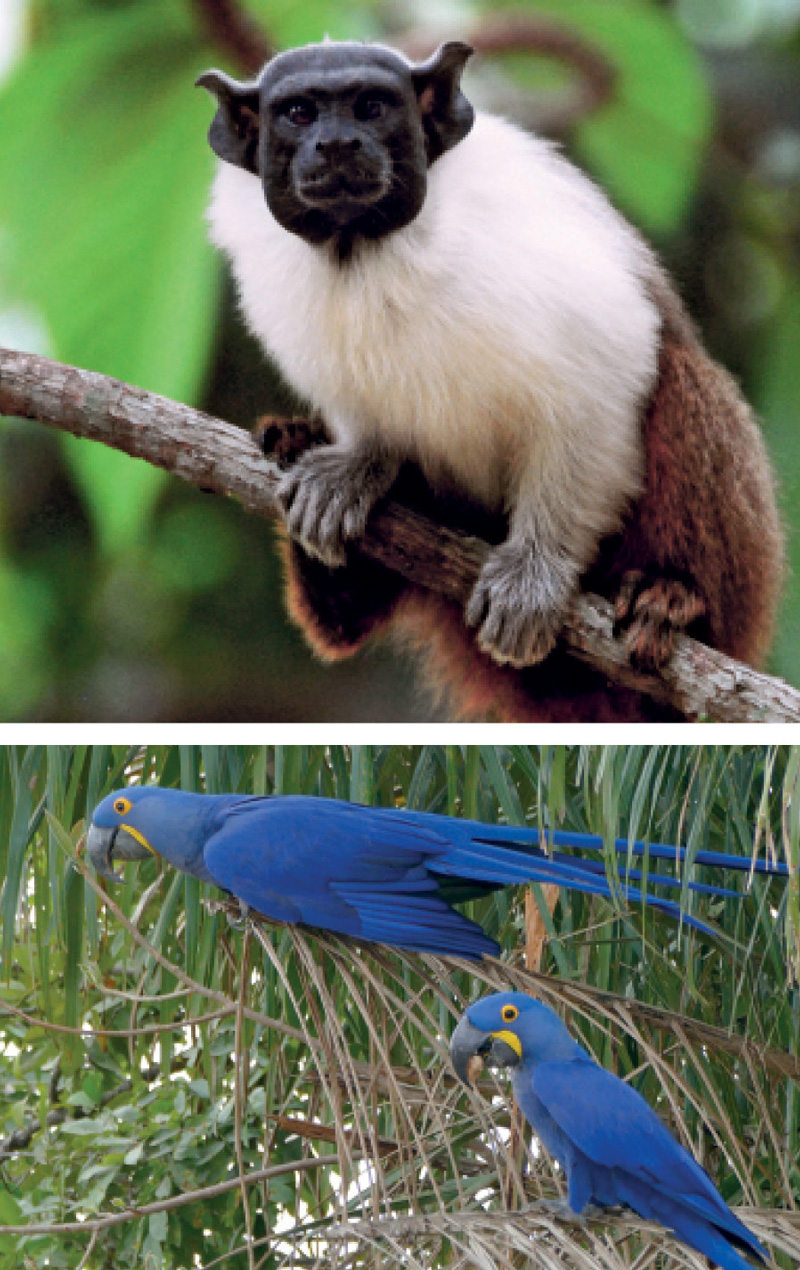
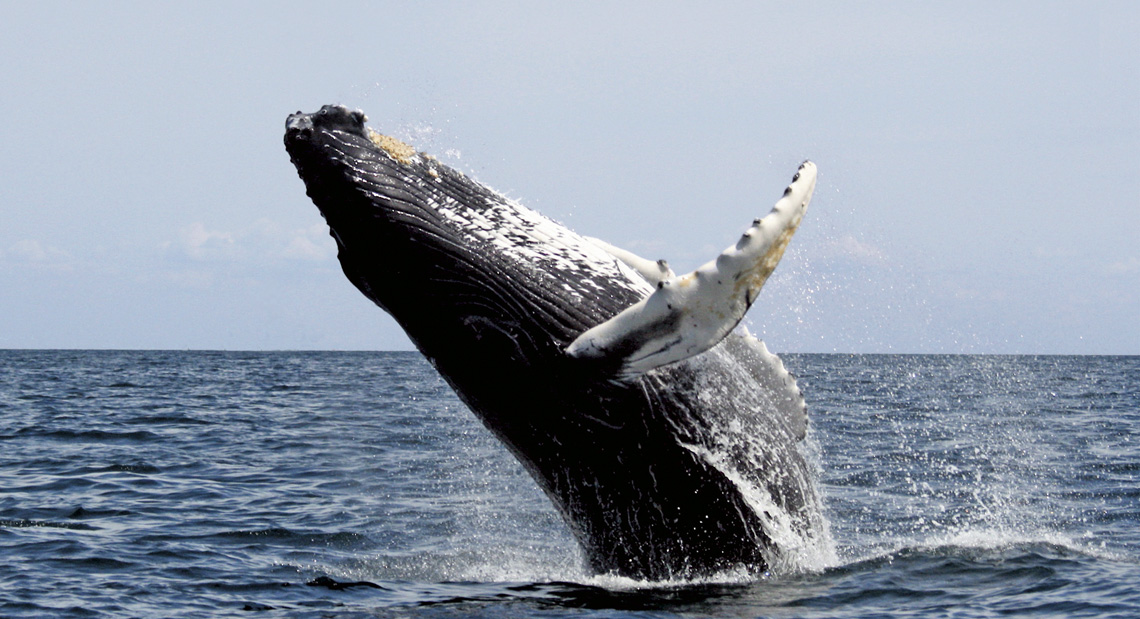
Whaldener Endo / Wikimedia Commons | Bernard Dupont / Wikimedia CommonsPied tamarin, whose habitat is shrinking; Spix’s macaw, now extinct in the wild; and the humpback whale, whose populations are on the rise again after hunting was bannedWhaldener Endo / Wikimedia Commons | Bernard Dupont / Wikimedia Commons
The pied tamarin (Saguinus bicolor), which lives in the rainforest near Manaus, the state capital of Amazonas, and whose population may have declined by as much as 80% since 1997, was classified as a critically endangered species in the most recent update of the Red List of Threatened Species, published by the International Union for Conservation of Nature (IUCN) in June. The IUCN evaluated 18,391 plant, animal, and fungi species in Brazil and classified 2,475 as threatened with extinction, 515 of which are critically endangered. Four of them, such as the Spix’s macaw (Cyanopsitta spixii), no longer exist in the wild and live only in captivity. Sixteen went extinct, including mammals, birds, amphibians, insects, and trees. The red list is used to guide measures for reducing the risk of a species going extinct. In 2022, the conservation status of four of Brazil’s five sea turtle species improved, and the green sea turtle (Chelonia mydas) was removed from the endangered species list. Humpback whale (Megaptera novaeangliae) populations began to recover after a hunting ban was instituted in the 1980s. This year’s IUCN red list showed a sharp decline in biodiversity in Australia, Bangladesh, France, Japan, Saudi Arabia, and Yemen, while it remained stable in Afghanistan, Angola, Belgium, Ivory Coast, Peru, and Switzerland. In a small number of countries, such as Poland, biodiversity has increased as a result of environmental conservation policies (IUCN, June).
 wwelles14 / Wikimedia Commons