Almost 10% of deaths are expected to occur in Latin America and the Caribbean
Sarah Bailey Cutchin / CDCComputer-generated image of the bacteria Haemophilus influenzae, which causes meningitis and pneumonia and is becoming resistant to antibioticsSarah Bailey Cutchin / CDC
Excessive and indiscriminate use of antibiotics in human healthcare and agriculture over recent decades has led to the emergence of resistant varieties of bacteria, which cause infections that are becoming increasingly difficult to treat. The result is hundreds of thousands of deaths every year worldwide. The total number of deaths attributed to illnesses caused by antimicrobial-resistant bacteria rose from 1.06 million per year in 1990 to 1.14 million in 2021, according to the most comprehensive and recent estimate of the problem, presented in an article published in the scientific journal The Lancet last September. More concerning is that deaths from resistant bacteria are expected to continue to increase in all regions of the world until 2050, and at a faster rate than in the last three decades.
The study was carried out by hundreds of researchers, including Brazilians, who are part of an international alliance monitoring resistance to antibiotics and other medicines: the GBD 2021 Antimicrobial Resistance Collaborators. The team arrived at the estimates by combining information on causes of death with data on hospital admissions and antibiotic sales and use, as well as the resistance profile of 22 species of bacteria to the most potent antimicrobials available, collected in 204 countries and territories between 1990 and 2021.
Considering population growth and aging, the projected near-future is bleak: deaths from antimicrobial-resistant bacterial infections are expected to increase globally by 2050, reaching 1.91 million deaths per year. This is an average increase in total deaths attributed to these pathogens of 69.6% over 1990, and it could be even higher in regions such as South Asia, where India, the world’s most populous country, is located, as well as in Latin America and the Caribbean (see graphs below). If the general situation remains the same, with no new antibiotics proving capable of defeating these bacteria and no effective (and known) measures adopted to prevent infections, 39.1 million people could die between 2025 and 2050 as a result of infections caused by microorganisms resistant to antibiotics—almost 10% of these deaths would occur in Latin America and the Caribbean.
Alexandre Affonso / Revista Pesquisa FAPESP
The outlook is even worse when including deaths associated with infections by resistant bacteria but not directly caused by them. There were 4.78 million deaths of both types in 1990 and 4.71 million in 2021. During this period, the figure did not grow because deaths from sepsis (an improper immune system response to infection) decreased significantly as a result of advances in treatment. It is forecast to hit 8.2 million in 2050, however, due to the expected increase in deaths from infections caused by resistant bacteria among people over 50 years old. Between now and the middle of this century, deaths directly caused by and indirectly associated with resistant bacteria could take the lives of 169 million people worldwide—more than the population of many countries.
“Antimicrobial medicines are one of the cornerstones of modern healthcare, and increasing resistance to them is a major cause for concern,” Iranian-American epidemiologist Mohsen Naghavi, who is leading research into antimicrobial resistance at the University of Washington’s Institute of Health Metrics (IHME) and was lead author of the Lancet paper, said in a press release. “Understanding how trends in antimicrobial resistance deaths have changed over time, and how they are likely to shift in the future, is vital to make informed decisions to help save lives,” he added.
The increase in deaths attributed to and associated with resistant bacteria observed between 1990 and 2021 is partly a consequence of population growth and changes in the average age. In 1990, there were approximately 5.3 billion people in the world, roughly 6% of whom were over 65 years old. In 2021, the global population was 7.9 billion and over-65s accounted for almost 10%. The elderly are more susceptible to infections because they have a weaker immune system, in addition to being more likely to have chronic diseases, which can make it more difficult for their body to fight off bacteria. According to the study authors, the only reason deaths from antimicrobial-resistant infections did not increase more in the last 31 years is because there was a significant drop among children under 5: in this age group, deaths decreased by more than 50%. Deaths increased in all groups over 25 in the period, especially among those over 70 years old, in which the growth was more than 80%.
“The drop in deaths among infants shows that some known interventions, such as the use of vaccines to prevent bacterial infections, really work,” says neonatologist Cristina Carvalheiro of the Ribeirão Preto School of Medicine at the University of São Paulo (FMRP-USP), one of the authors of the article in The Lancet. “Comprehensive childhood vaccination helps prevent infections and reduces the use of antibiotics, which can lower the chance of microbial resistance emerging,” she explains.
The increase in overall deaths is, of course, partly due to the spread of antimicrobial-resistant bacteria. Antibiotics, which inhibit the growth of or kill microorganisms, may be of natural (produced by fungi or other bacteria) or synthetic origin and affect different bacterial structures. When exposed to the appropriate concentration of antibiotics for the right amount of time, the microorganisms usually die. If the dosage and duration of the treatment are lower than needed to kill them, some can survive and multiply, accumulating genetic changes that allow them to escape the action of the drugs. With antibiotics being so intensively used in human healthcare and in agriculture to protect farm animals against disease and induce weight gain, bacteria are continually exposed to the drugs, leading to the selection of resistant variations (see Pesquisa FAPESP issue nº 335).
In the article published in The Lancet, the authors outlined three scenarios that could occur between 2025 and 2050. In the first and most likely, deaths from bacterial infections (resistant or otherwise) would remain unchanged. In the second, the pharmaceutical industry would create new antibiotics, especially for gram-negative bacteria, which have a more structured cell wall. A growing number of gram-negative species are resistant to even the most powerful existing drugs. And thirdly, vaccination levels, healthcare for preventing infections, and good access to current antibiotics and their proper use would be improved—antibiotics are often scarce in poor countries.
Alexandre Affonso / Revista Pesquisa FAPESP
If nothing changes (scenario 1), the study projected a total of 169 million global deaths associated with infections caused by resistant bacteria over the next two and a half decades. The researchers estimated that new antibiotics (scenario 2) would prevent 11.1 million deaths. The greatest impact, however, would be achieved in the third scenario: infection prevention measures and the appropriate use of existing antibiotics would save 92 million lives.
“Preventing infections through existing measures can have an outsized effect through multiple pathways,” the authors wrote. Firstly, by preventing infections, the risk of resistant microorganisms coming into contact with people is reduced. Secondly, preventing infections even by bacteria susceptible to antibiotics leads to a decrease in the number of people taking the drugs, reducing the selection pressure for antimicrobial-resistant bacteria. Finally, by improving access to clean water, sewage, and good hygiene, the risk of resistant bacteria spreading throughout a community is lowered.
“In developing countries, the low availability of tests for diagnosing resistant bacteria, restricted access to appropriate antibiotics, and a lack of infrastructure in healthcare and sanitation systems make each of these scenarios worse,” explains Brazilian geographer and epidemiological modeling specialist Jessica Andretta Mendes, who is currently doing a postdoctoral fellowship at the University of Oxford, UK, and coauthored the Lancet article. “An important way of trying to mitigate deaths is to improve data collection on bacterial resistance and how it is monitored. The more efficient the registration services, the better we will understand the specificities of resistance in different regions, thus allowing for the planning of more targeted interventions,” says the researcher, who studied dengue epidemics in Campinas, São Paulo State, and the influence of mosquito breeding sites on the incidence of the disease during her doctorate, funded by FAPESP.
“In addition to increasing access and appropriate use of antibiotics and monitoring infections, we need to strengthen community health education programs, reinforcing the importance of vaccination and preventive measures, such as hand washing,” says Brazilian dentist and pathologist Marcos Palone of Saveetha Dental College and Hospitals, India, another coauthor of the paper.
In addition to being potentially fatal, infections by antimicrobial-resistant bacteria also cause significant damage to the public health system. In the 10 years from 2013 to 2022, the three most common infections—pneumonia, urinary tract infections, and bloodstream infections—led to 2.4 million hospital admissions in public hospitals in the state of São Paulo (with approximately 500,000 deaths associated with the three infections), costing around R$4.7 billion, partially a result of antimicrobial-resistant bacteria. These figures were estimated by the Infection and Antimicrobial Analysis Group (GAIA), led by infectious disease specialist Carlos Kiffer of the Federal University of São Paulo (UNIFESP). They are detailed in several papers accepted for presentation at the European Congress of Clinical Microbiology and Infectious Diseases in Austria in April and received funding from the Aries Project, one of the Research, Innovation, and Dissemination Centers (RIDCs) supported by FAPESP.
In the state of São Paulo, a surveillance system for microbial resistance has been in operation since 2004. More recently, the Multidrug-Resistant (MDR) Bacteria Prevention and Control Plan began being implemented in hospitals in São Paulo in 2016. The plan defines the responsibilities of hospitals, microbiology laboratories, and state management, aiming to ensure that epidemiological indicators are reported, tests are conducted, and professionals are trained in preventive measures, including hand-washing and isolation measures to keep patients with suspected cases of resistant infection away from other people.
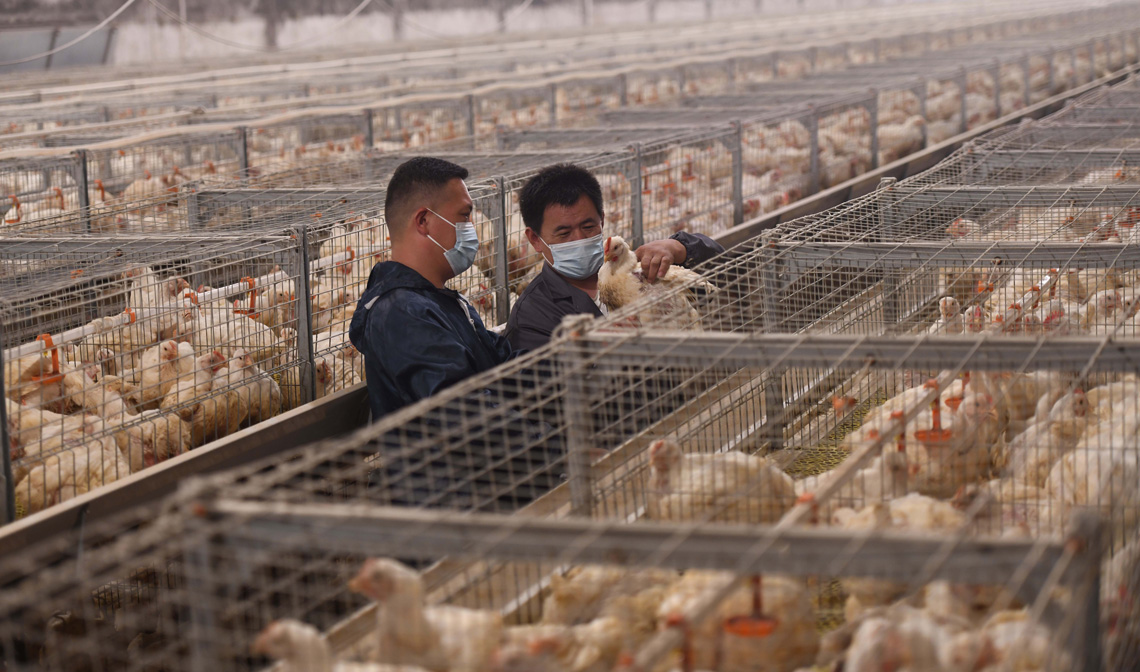
Fang Dehua / VCG via Getty ImagesPoultry farm in China: bacterial infection rate rises from farm to supermarket shelvesFang Dehua / VCG via Getty Images
“With 97% of hospitals participating and regularly reporting data to the State Health Department, infection rates have already been reduced thanks to the so-called ‘surveillance effect,’” explains infectious disease specialist Denise Brandão, head of the State Program for Preventing and Managing Healthcare-Associated Infections. According to the department’s most recent report, published in 2023, the number of samples containing resistant bacteria in the state fell by 9%, from 2,803 in 2022 to 2,531 in 2023.
At the national level, microbial resistance surveillance is carried out jointly by Brazil’s Ministry of Health and its Health Regulatory Agency (ANVISA). In 2018, the country established the National One Health Plan for Prevention and Control of Antimicrobial Resistance (PAN-BR), which outlines several interventions to curb the problem. However, there are still some barriers to implementing the plan.
Although the national plan includes initiatives for standardizing and systematizing microbial resistance data collection and analysis, there are disparities in the information provided by different states. According to the Ministry of Health’s 2024 Epidemiological Bulletin, 85,718 samples of antibiotic-resistant bacteria were identified in Brazil between 2015 and 2022. The state of Minas Gerais recorded the highest number (20,146), followed by Paraná (17,748). The lowest numbers were registered in Alagoas (8) and Roraima (2). The bulletin points out that this does not necessarily reflect a low volume in these states, but rather “lower sensitivity of AMR [antimicrobial-resistance] surveillance and limited submission of samples to centralized public health laboratories.”
Matias Salomão, an infectious disease specialist from USP’s School of Medicine, is part of an international team that developed a test capable of more efficiently detecting multidrug-resistant bacteria in hospitals. In his opinion, the challenge of managing and preventing infections by resistant bacteria goes beyond the hospital walls. “One example is long-term care facilities for the elderly, where people suspected of having an infection cannot be isolated like they would be in an ICU.”
And the problem does not end there. Infection control is about more than just human health. In a study published in the December print issue of the journal Emerging Microbes & Infections, scientists from China Agricultural University analyzed the presence of antimicrobial-resistant bacteria in the poultry and swine production chains in the city of Chengdu, which has a population of 20.9 million people. They found such microorganisms at 4.7% of chicken farms and 2% of pig farms. This rate was 7.6% and 22.4% in chicken and pig slaughterhouses respectively and rose to 65.5% and 34.2% in meat available in stores. “The problem needs to be tackled through an integrated, multisectoral approach that considers human health, animal welfare, and the environment,” the authors wrote.
The story above was published with the title “Somber scenario” in issue in issue 349 of march/2025.
Project São Paulo Institute of Antimicrobial Resistance (Aries Project) (nº 21/10599-3); Grant Mechanism Research, Innovation, and Dissemination Centers (RIDCs); Principal Investigator Arnaldo Lopes Colombo (UNIFESP); Investment R$27,052,581.24.
This article may be republished online under the CC-BY-NC-ND Creative Commons license. The Pesquisa FAPESP Digital Content Republishing Policy, specified here, must be followed. In summary, the text must not be edited and the author(s) and source (Pesquisa FAPESP) must be credited. Using the HTML button will ensure that these standards are followed. If reproducing only the text, please consult the Digital Republishing Policy.