Alexandra Ozorio de Almeida - Editor in Chief
Letter from the editor | 356

Not earth and not rare, but nonetheless important
Smartphones, wind turbines, electric vehicles, cloud computing. We live in an age of digital technologies powered by complex devices. Materials with specific functional properties are needed to produce them, obtained from increasingly diverse natural resources. Among these raw materials is a particular group of chemical elements known as rare earths. The name is inaccurate. The... View Article
Letter from the editor | 355
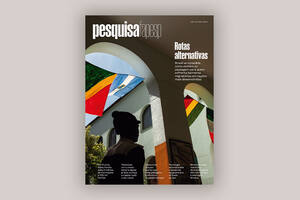
Latin American and vulnerable
Migration in Brazil has taken on a new form. After decades of decline since the 1960s, when arrivals were mostly from Europe, the trend has reversed since the turn of the twenty-first century. Between 2010 and 2022, the number of immigrants increased by 70%, with Latin Americans representing the majority. According to the most recent... View Article
Letter from the editor
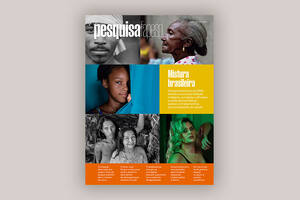
The significance of populational diversity
When the major human genome sequencing projects began in the late 20th century, the belief was that the differences in the genetic composition of different individuals would be minimal. Therefore, to reach the goal of a complete reference genome, little attention was paid to the populational diversity in the samples to be sequenced. It turned... View Article
Letter from the editor | 353

Doing the accounts
Cattle farming alone is responsible for almost 20% of greenhouse gas (GHG) emissions in Brazil. If the rest of the agricultural sector is included, the figure rises to 30.5%. If changes in land use—such as the conversion of forest areas into fields, pastures, and crops, all of which are closely associated with agriculture and livestock—are... View Article
Letter from the editor | 352
Cartography of lives
Letter from the editor
Letter from editor | 351
Arguing through poetry
Breast cancer is the second most common type of cancer among Brazilian women and the most deadly. In 2025, 18,000 women will die of the disease. The incidence rate has remained stable this century, but the death rate has continuously risen. Mortality is increasing fastest among women up to 40 years of age, at almost... View Article
LETTER FROM THE EDITOR | 350
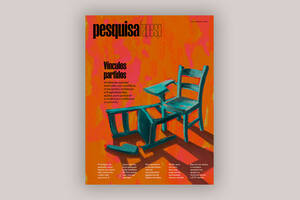
Broken bonds
Violence and schools should not mix. But unfortunately, they are overlapping more than ever in various ways. Conflicts between students or between teachers and students; external violence that infiltrates the school environment from the surroundings; and institutional violence, which includes exclusionary behavior. There are also the extreme cases of premeditated attacks. Every violence indicator has... View Article
editorial
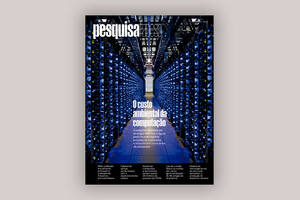
Solid clouds
Every month, I open my laptop to write an editorial for the next issue of Pesquisa FAPESP. The screen lights up and the cursor flashes as I type each character. I create the “editorial_xyz” file, which I save on a virtual storage service, although this service requires a physical structure like the one depicted on... View Article
LETTER FROM THE EDITOR | 348
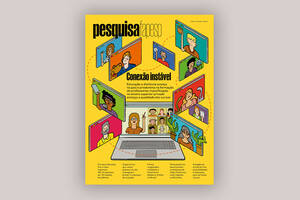
Learning with few parameters
Anyone who grew up reading comic books way back in the twentieth century probably remembers advertisements for correspondence courses. In this first generation of distance learning, technical, professional, and supplementary programs were taught by mail. It was possible to complete elementary and high school education, qualify as a machinist, or my favorite, to become a... View Article
LETTER FROM THE EDITOR | 347
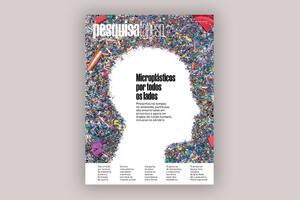
Particles and processes
For a long time, we have been bombarded with images of plastic waste, especially marine scenes like floating islands of garbage, dirty beaches, and the turtle with a straw stuck in its nose. It is no surprise that this ubiquitous material, the benefits of which are buried by its overuse, is also found throughout the... View Article
LETTER FROM THE EDITOR | 346

A welcome but insufficient counterflow
Brazil holds a unique position in discussions about climate change. The country’s annual greenhouse gas emissions place it in the undesirable group of the five most polluting in the world (or in sixth place, if the European Union is counted as a whole). Its profile, however, is different to other large economies in which the... View Article
Letter from the editor | 345
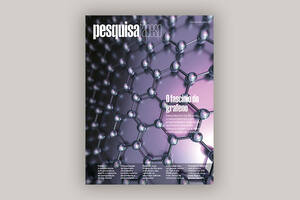
Singularities
Think of a material that is one atom thick and stronger than steel. Dense and impermeable, but also transparent, flexible, resistant, and an excellent electrical and thermal conductor. Graphene, “discovered” 20 years ago, sounds like something out of science fiction. It is no coincidence that it is made of carbon atoms, a chemical element essential... View Article
Letter from the editor – 25 years
In service of Brazilian science
In October 1999, Notícias FAPESP, a newsletter dedicated to the foundation’s work, was transformed into the magazine Pesquisa FAPESP, which is this year celebrating its 25th anniversary, having greatly expanded its scope. Two years earlier, one of us (JFP), then scientific director, introduced the foundation to Octavio Frias de Oliveira, owner of the newspaper Folha... View Article
Letter from the editor

Cool the planet
Science, like any other human activity, often faces ethical dilemmas. While common in fields that conduct animal research, they can also arise in the so-called hard sciences. In the study of the climate and how human activity impacts temperature changes on Earth, scientists spend a lot of time thinking about mitigation strategies. But to what... View Article
Letter from the editor | 342

Health behind bars
When discussing the health of the prison population, Dr. Drauzio Varella is a name that will inevitably be mentioned. Possibly the best-known and most admired doctor in Brazil, he voluntarily dedicates his time to an occupation that few people are willing to do, even when paid: taking care of people in prison. Dr. Varella says... View Article
LETTER FROM THE EDITOR
Tall trees and a small particle
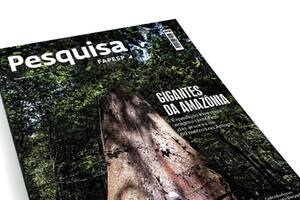
It is highly unlikely that you have ever heard of the Tumucumaque Mountains National Park. Located in the states of Amapá and Pará at the northern border of Brazil, it is the largest national park in the country and the largest tropical forest in the world. This uninhabited tropical region has experienced the least human... View Article
LETTER FROM THE EDITOR | 341
Beyond human beings
Our treatment of animals used for research, production, and consumption, has slowly been changing over time. Science has improved our understanding of animal cognition and their capacity to feel pain, making their use in research less acceptable. Breeding them for food is also being questioned more and more. In addition to ethical concerns, people are... View Article
LETTER FROM THE EDITOR | 340
Coffee with pions
Coffee is the most popular drink in Brazil, after water. In a cup or glass, with or without sugar, with breakfast in the morning or after a meal, it is ubiquitous in homes, offices, factories, restaurants, and bars. In Brazil — the world’s largest producer and second largest consumer — coffee is always superlative. A... View Article
Editorial

Palms, armspans, and blocks of sugar
The increase in the homeless population over recent years is clearly evident to anyone visiting any of Brazil’s major metropolises. Although the phenomenon is no longer restricted to large cities, that is where this acute form of social exclusion and poverty is most apparent. There are homeless people, defined as anyone who lives temporarily or... View Article
Letter from the editor | 338
The new normal
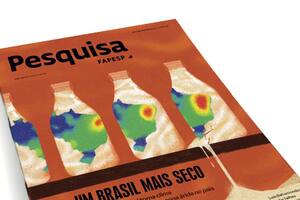
The water cycle is one of the first science subjects that children learn about at school. An image shows the absorption of water by plants, then transpiration, condensation, precipitation in the form of rain or snow, runoff, and evaporation. The same school lesson covers the basic concepts of a very worrying question: is Brazil getting... View Article
Letter from the editor | 337
Invisible work
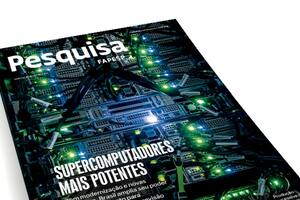
In a society that is increasingly reliant on data processing, supercomputers are becoming ever more important. Characterized by their high processing speed and large memory capacity, they can perform complex calculations in minimal amounts of time. They are used in various fields of research, including climate, astronomical, and pharmacological modeling, and to support many activities... View Article
Letter from the editor
Biomes and land use
The Tumucumaque Mountains National Park (PNMT) is one of the lesser known of Brazil’s 74 national parks, which are established by the country’s national legislation on conservation units and managed by ICMBio. Located in the states of Amapá and Pará on Brazil’s northern border, it is the largest national park in Brazil and the largest... View Article
Letter from the Editor | 335
Medications needed
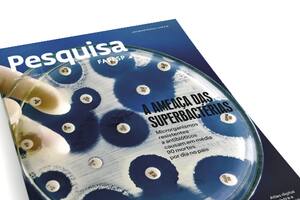
In the 1930s, pharmacologist Paulo Seabra from Rio de Janeiro developed a copper salt formulation (colloidal cupric morrhuate) that could be administered intravenously to treat tuberculosis. Sold under the brand name Gadusan, it was even exported to other countries. With the discovery of streptomycin — the first antibiotic effective against what was once known as... View Article
LETTER FROM THE EDITOR
Constant vigilance
The Amazon has been in the public eye this century. As one of the most important remaining biodiversity reserves, its value for life on Earth is incalculable. The region also has an essential role in climate regulation, with an influence that extends far beyond the frontiers of this biome. Fears regarding the destruction of the... View Article
Letter from the editor | 334

Keeping an eye on the forest
The importance of the Amazon has become increasingly evident in the twenty-first century. Firstly, for its biodiversity, which has incalculable value to life on Earth. Secondly, for its influence on climate dynamics, which we now know goes far beyond its own borders. Fears about ongoing destruction of the biome have sparked discussions about its occupation... View Article
Editorial
Chemical and symbolic elements
To “unsee” something is a term widely used on social media when a person wishes they had not seen something. This is the neologism that comes to mind when we are faced with images of grotesque “plastic rocks”: an involuntary human creation composed of minerals, polymers, and animal remains. The plastics contaminating our oceans and... View Article
Editorial

Professors wanted
According to the high school students who signed up for USP’s Knowledge and Opportunities Competition, encouragement from teachers is an important source of recognition. The prizes included additional preparatory training for university entrance exams and for many students, the offer of a place in public higher education. Taxidermist Paulo César Balduíno, who has prepared thousands... View Article
LETTER FROM THE EDITOR | 331
Heating up
July was the hottest month ever recorded since the world’s leading meteorological agencies began operating decades ago. The upward trend in global temperatures, first identified many years ago, has culminated in this new record, which will soon be broken again. A rise in the planet’s average temperature, even by as little as one decimal point,... View Article
Letter from the editor
Food on the table
Brazil is known for its agricultural activity. The country’s harvests break record after record, with growing productivity, and Brazil is a world leader in exports of various commodities. However, there is another agricultural reality that is less attractive. The area planted with rice and beans, the basis of the national diet, decreased by more than... View Article
LETTER FROM THE EDITOR | 330
Good questions
The Human Genome Project was a hot topic in science journalism at the turn of this century. Technological advances allowed an international consortium of 20 institutions to sequence and analyze the regions of human DNA that encode proteins — the project took 13 years of work and cost US$3 billion. To make the story even... View Article