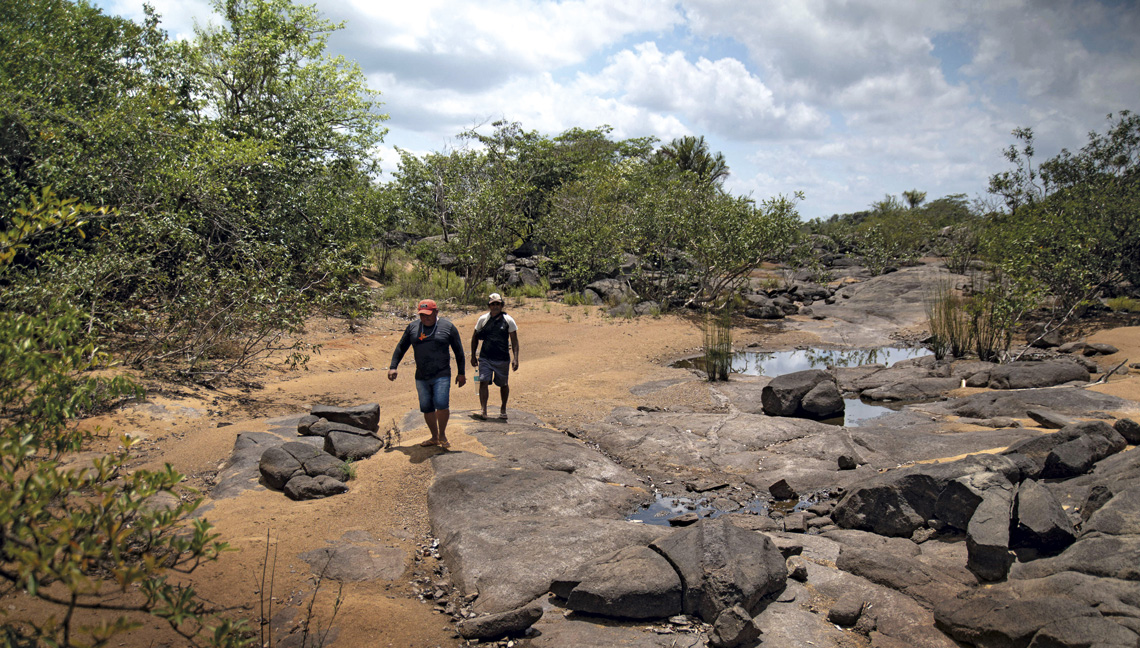
At the end of November, when the rains used to begin in the Xingu River basin, the vegetation that grows on the granite rocks on the bed of the river, known locally as sarobal, bloomed in the igapós (blackwater-flooded forests) and the pacu, curimata, peacock bass, and other fish began to prepare themselves for spawning in the Volta Grande section of the Xingu River (VGX), in the state of Pará. Inhabitants of the region—Indigenous people and riverside dwellers—planned the annual campsite in these areas to take advantage of the abundance of fish and mainly used speedboats, reserving the smaller boats for shallower waters. This description, full of terms that reflect an entire socioenvironmental system, has the verbs in the past tense because none of this has been happening in recent years. The reason is the devastating sum of the construction and operation of the Belo Monte hydroelectric plant with the successive extreme droughts that have plagued the Amazon.
Construction of the Belo Monte plant began in 2010, approved by the government before completion of the Environmental Impact Assessment (EIA) and against the recommendation of the Brazilian Institute of the Environment and Renewable Natural Resources (IBAMA). It is a run-of-river hydroelectric plant that does not require the formation of large reservoirs. But that does not mean little impact. In the case of the Belo Monte hydroelectric complex, a canal was dug that diverts water from Volta Grande to a reservoir from which the main plant generates almost all the energy for the complex (see infographic below). The dozens of river-dwelling communities and the three Indigenous peoples that live along the 130 kilometers (km) of VGX, have therefore begun sharing the river with energy generation for urban centers throughout Brazil.
According to geologist André Sawakuchi, of the University of São Paulo (USP), the original design already foresaw a reduction in the flow of the VGX of up to 80%. “It is a design that creates a situation of conflict over water.” As a result, Indigenous people realized that they had to monitor the impact. “We started the monitoring in 2013, before the closure of the dam,” says Josiel Juruna, vice leader of the Mïratu village, in the Paquiçamba Indigenous Reservation. With funding from the Socioenvironmental Institute (ISA), his group began recording the fish and game brought to the village and increased the action to another six Indigenous communities in the area. As a result, the Independent Environmental Territory Monitoring (MATI), coordinated by Juruna, came into existence. The hydroelectric plant began operating in 2016 and became fully operational in 2019.
Since 2019, at the request of the Federal Public Prosecutor’s Office (MPF), MATI also counts on participation from researchers from nine universities and research centers, including Sawakuchi. “The reports commissioned by Norte Energia are published in a format that the inhabitants of the communities do not understand,” says biologist Camila Ribas, of the National Institute of Amazonian Research (INPA), one of the coordinators. The role of these researchers is to track the daily monitoring activities from a distance, with occasional in-person visits, helping to systematize the data and to produce documents with scientific validity that can also support the fight for rights. Since the beginning of 2023, the work of the scientific team has received funding from FAPESP and from the Pará and Amazonas Research Support Foundations (FAPESPA and FAPEAM), under the scope of the Amazon+10 initiative.
In 2021, MATI added riverside communities. “We had never met, but we had to work together,” recalls Juruna, who—just like the river dwellers Raimundo Silva and Orcylene Reis—spoke with the reporter by video call at the end of a day on which new monitoring areas were established. Ribas explains that the inspections by MATI are daily and widespread, whereas the company monitors just a few points, four times a year.
Raimundo Silva, coordinator of the river-dwelling monitors, lives in the Goianinho community, at the end of VGX, and stresses that the low stature vegetation typical of the floodable areas, the sarobal, is dry. According to an article in the process of being published in the journal Perspectives in Ecology and Conservation, whose lead author is ecologist Adriano Quaresma, a postdoctoral researcher at INPA, the natural fluctuation of the level of the river reaches 4 meters (m), peaking between March and April and reaching its lowest level between July and August. However, in the impact zone of Belo Monte, this amplitude does not exceed 1.6 m, and the flooding of the igapós—areas that get submerged after the river floods—is delayed by up to four months. “We found that 70% of the igapós in the VGX region no longer get flooded during the high-water season,” affirms Ribas.
With the drastic reduction of flooding, as well as the death of the typical plants there, the researchers documented the growth of plant species that are intolerant to flooding. Ribas is an expert on birds and has already noted the presence of species that are not usually seen in flooded areas, another indicator of the change in the ecological characteristics of these areas.
Among 401 observations of fallen fruits, 327 (81%) did not find water. This means that the fish and tracajás (yellow-spotted Amazon river turtles) cannot find this food, even if they are able to enter the channels. In the areas above the Pimental reservoir, none of this happened.
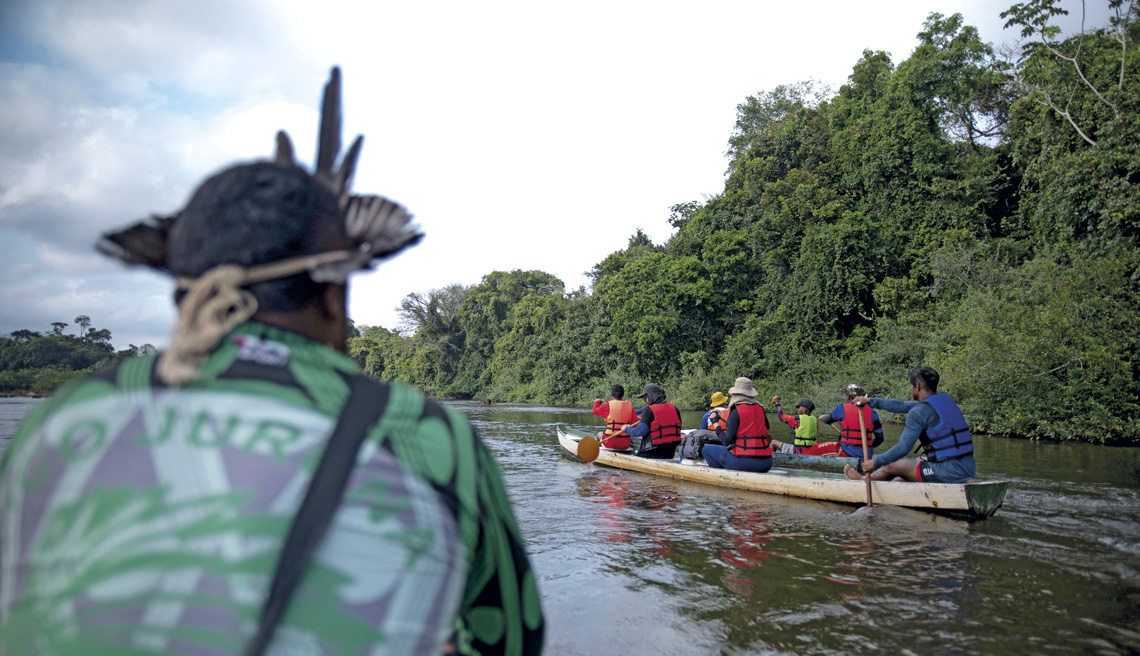
Carlos Fabal / AFP via Getty ImagesIt was on one of the canoe trips organized for visitors that the Yudjá Juruna invited researchers to participate in the monitoringCarlos Fabal / AFP via Getty Images
Orcylene Reis, from the Bacajá community, says that she has seen a rise in the presence of the aquatic insects known as piuns around the river. “This happens because there are less and less fish, which feed on them,” she explains. She is the coauthor of an article whose lead author is Josiel Juruna, also in the process of being published in Perspectives in Ecology and Conservation, which shows how the flow rate, measured by graduated rulers installed in all of the monitored spawning grounds, has been insufficient for the reproduction of the fish. The inhabitants of the Xingu refer to these sites, which are suitable for spawning and where the fry develop until they are large enough to move to the main body of the river, as piracema—a term commonly used to describe migratory movements of fish for reproduction.
“A flow rate of 10,000 to 15,000 cubic meters per second [m3/s] is required to trigger the hormonal metabolism that initiates the migration of the fish to the Zé Maria piracema,” biologist Janice Muriel-Cunha, of the Federal University of Pará (UFPA) and MATI, gives as an example. “This is no longer happening.” According to her, the piracemas flood at the wrong time, out of synch with the physiological reproduction period, occurring too late for the fish.
The same thing occurs in various monitored areas, and fish such as local favorites pacu and curimata have become rare—a sign that the reproductive cycle has been interrupted. The yellow-spotted Amazon river turtles, locally known as tracajás, are an important part of the diet and culture of the Indigenous communities and are also under threat.
“There is almost no fishing left in our river,” summarizes Raimundo Silva. The diet of the river dwellers has changed completely, they have to go to the supermarket and buy chicken, mortadella, and canned food. “We are forced to cause harm by expanding the farmland, and when we remove fruit trees, this drives away the game that eats the fruit,” he adds.
A traditional economic activity in the region was fishing for ornamental fish. “The riverbed is made up of rocks that are home to a variety of unique fish, such as zebra pleco,” says Muriel-Cunha, of UFPA, referring to the endangered species Hypancistrus zebra. This type of fishing has been drastically reduced.
Navigation has also been hindered, with no passage for the motorboats known as voadeiras. Rabetas—small boats with a small propeller at the end of a long shaft that can be adjusted to remain close to the surface—can still be used in certain situations, but small canoes with oars are becoming increasingly common.
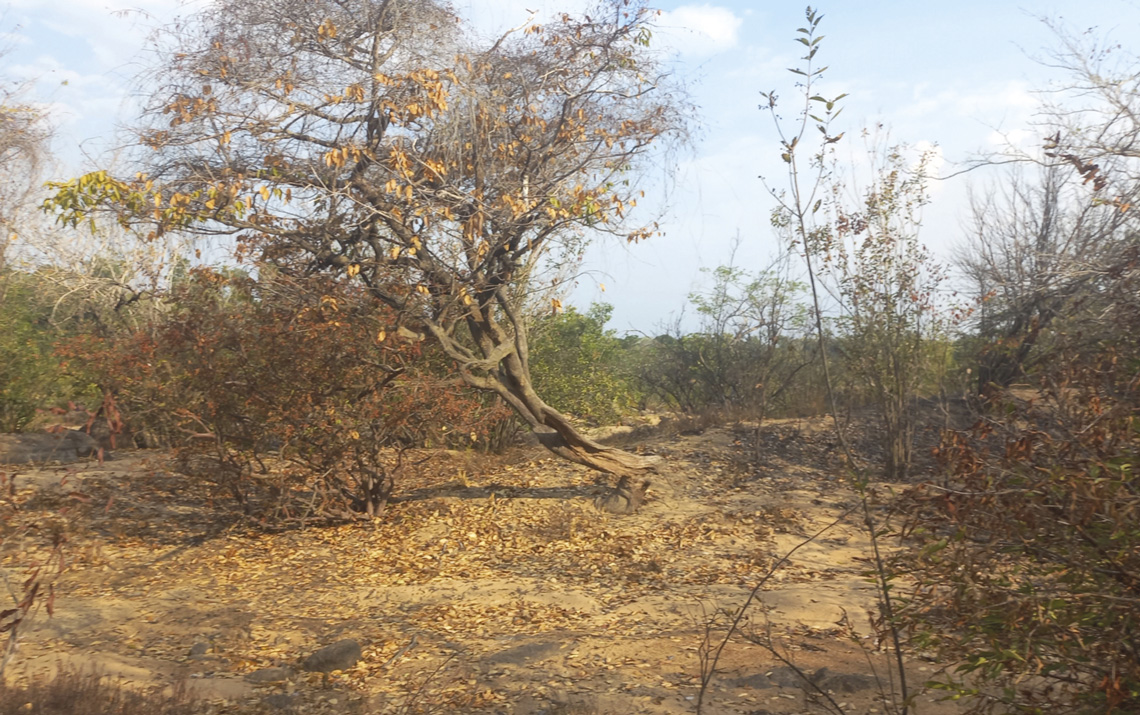
Mati-VGX With the lack of flooding for successive years, the fruits fall on dry ground and the sarobal is dyingMati-VGX
Socioenvironmental conflict
The researchers defend that the delivery of water to the Volta Grande, controlled by the Pimental dam, needs to follow the natural rhythm so that the igapós flood during the high-water season, between December and February, and remain long enough for the eggs to hatch and the young fish to develop, a process that takes around three months for a number of species. “Adjusting the hydrograph currently being used by Norte Energia is the only option,” states Sawakuchi. The total volume of water foreseen in the operational plan of the plant does not exist during the dry season, a situation made worse by the extreme droughts in 2023 and this year.
For the subsistence of the ecosystem, it would be essential to prioritize VGX when the flow rate increases. That is not Norte Energia’s plan. “Considering that the hydrograph was defined during the EIA that supported the implementation of the plant, determining the energy generation capacity for the National Interconnected System; considering that the impacts detected are those predicted in the EIA; and that Norte Energia has implemented the mitigation and compensatory actions; there is nothing to discuss regarding adjusting the hydrograph,” says Bruno Bahiana, superintendent of the Socioenvironmental and Indigenous Component of Norte Energia, by email.
The inhabitants of VGX assert that the sustainability projects have not been fulfilled. Orcylene Reis monitors the water quality of the wells installed in some communities and says that they are not drinkable. “The water is contaminated by ammonia.” According to her, the wells are not deep enough—and some have already dried up.
There is no possible solution, since the power plant is already built; the goal is to minimize the damage. “The ideal situation is for Brazil to become less dependent on hydroelectric power,” defends Sawakuchi. “I think it is completely wrong to talk about the hydroelectric power from large dams as clean energy,” says anthropologist Emilio Moran, of Michigan State University (see Pesquisa FAPESP issue nº 284). “Studies have already shown large carbon and methane emissions coming from power plants with reservoirs.” For him, the environmental and social damages of the dams are permanent and have created an unsustainable situation for both fishing and society.
The consequences exist even beyond the direct zone of impact, as shown by a study coordinated by Moran in a riverside community, published in July in the scientific journal Energy Research & Social Science. The inhabitants report the loss of top predators, such as large catfish, and the deterioration of the water quality, which, due to turbidity, has become unsuitable for washing clothes or for consumption.
For Josiel Juruna, MATI brings recognition of local populations as scientists. “We are not university students, but what we do is science.” They coauthor the articles together with academic researchers. “It has to be this way so that things change,” says Juruna.
Moran considers MATI an excellent example of integrated action between communities and academia. “These studies can give more strength to the purely scientific research by adding the daily experience of the populations to the scientific data,” says the anthropologist, who has already began incorporating citizen participation in his research in the Amazon.
The story above was published with the title “Dry spawning grounds” in issue 346 of December/2024.
Projects
1. Water sharing and resilience of a unique socio-ecological system in the Volta Grande do Xingu region (nº 22/10323-0); Grant Mechanism Regular Research Grant; Agreement National Council of State Research Funding Agencies (CONFAP); Principal Investigator André Oliveira Sawakuchi (USP); Investment R$405,370.17.
2. Sedimentary dynamics response to climate change and hydroelectric dams in the Xingu and Tapajós rivers: Risks to biodiversity conservation and energy production in the Amazon (nº 16/02656-9); Grant Mechanism Regular Research Grant – Research Program on Global Climate Change (GCCRP); Principal Investigator André Oliveira Sawakuchi (USP); Investment R$284,373.38.
Scientific articles
QUARESMA, A. et al. Belo Monte dam impacts: Protagonism of local people in research and monitoring reveals ecosystem service decay in Amazonian flooded vegetation. Research Square. Sept. 18, 2024.
JURUNA, J. J. P. et al. Community-based monitoring reveals the impacts of the permanent river drought imposed by the Belo Monte Hydroelectric Power Plant at Volta Grande do Xingu, Amazonia. Research Square. Sept. 18, 2024.
CASTRO-DIAZ, L. et al. Multidimensional and multitemporal energy injustices: Exploring the downstream impacts of the Belo Monte hydropower dam in the Amazon. Energy Research & Social Science. Vol. 113, 103568. July 2024.
Republish