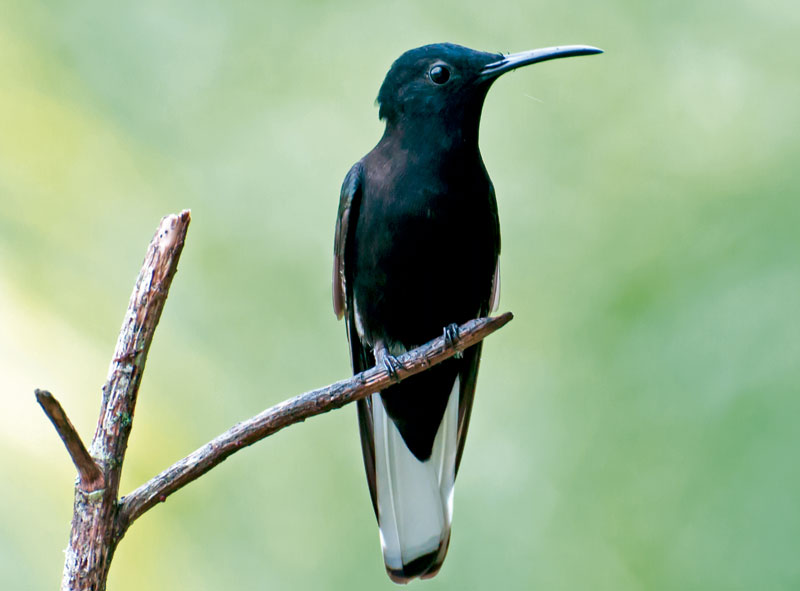
Dario Sanches / Wikimedia CommonsThe black jacobin is typical of the forests of PernambucoDario Sanches / Wikimedia Commons
Biologists from the University of São Paulo (USP) and the Federal Universities of Pernambuco (UFPE) and Paraíba (UFPB) did not receive good news after analyzing the proportion of carbon and nitrogen isotopes (variations of the same chemical element) in 1,778 feather samples from 89 species of birds collected in the Atlantic Forest between 1893 and 2023. “We observed an increase in feather flaws among birds from the centers of endemism in Pernambuco and Serra do Mar, indicating that feather quality has declined over the years,” says USP’s Ana Beatriz Navarro. Bird feathers from the Serra do Mar mountains also showed chemical evidence of increased pesticide use in recent decades. Among the species from Pernambuco affected are the sooty grassquit (Asemospiza fuliginosa), which feeds on seeds; and the rufous-breasted hermit (Glaucis hirsutus), the swallow-tailed hummingbird (Eupetomena macroura), and the black jacobin (Florisuga fusca), all of which are nectarivores. In the Serra do Mar mountains, the affected species include the white-bearded manakin (Manacus manacus), which eats fruit; the nectarivorous versicolored emerald (Chrysuronia versicolor) and violet-capped woodnymph (Thalurania glaucopis); and the white-necked thrush (Turdus albicollis), which is omnivorous (Oikos, July).
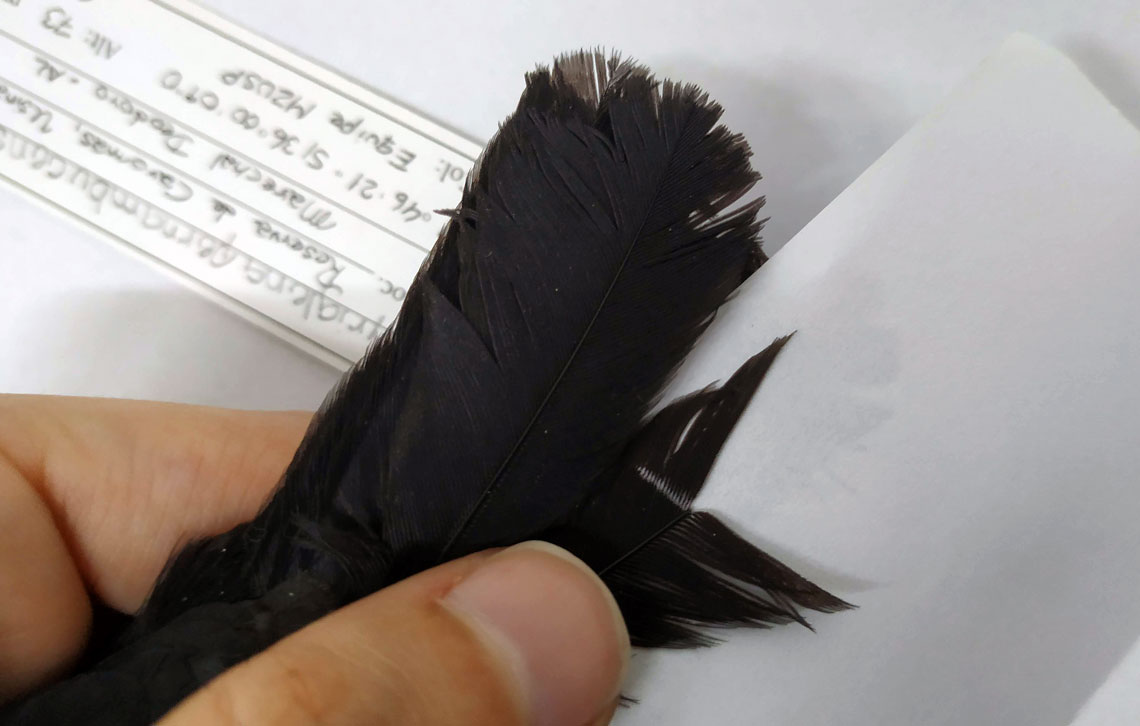
Ana Beatriz Navarro / USP Broken feathers of the Pernambuco fire-eye (Pyriglena pernambucensis)Ana Beatriz Navarro / USP