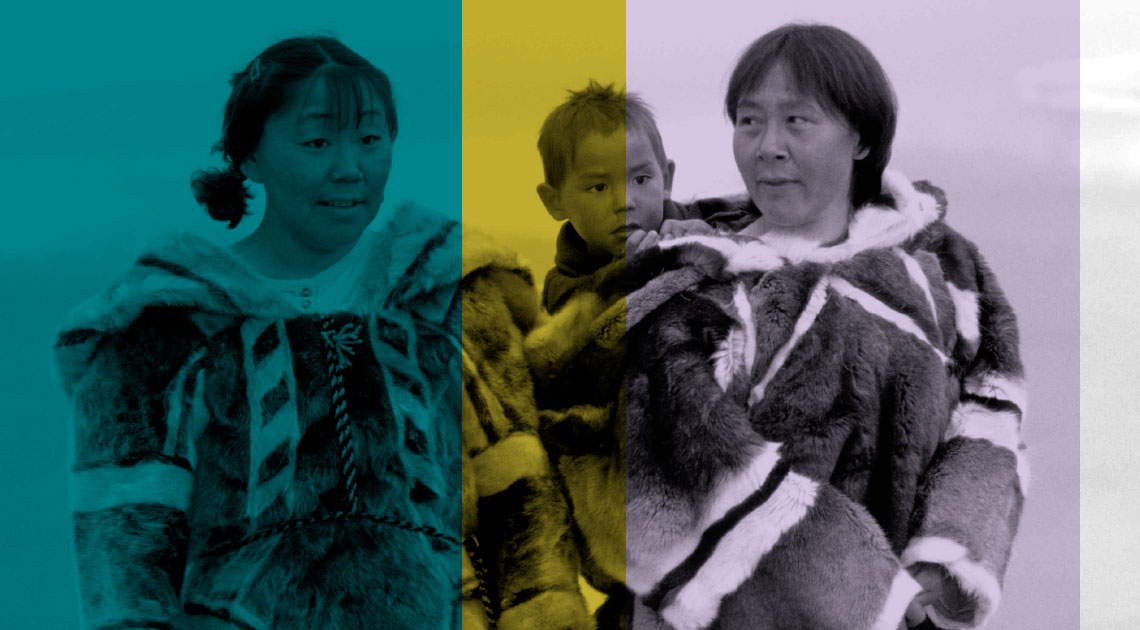
The Canadian Medical Association (CMA) has publicly apologized for the history of racism, cruelty, and neglect perpetrated by health professionals against the country’s three officially recognized Indigenous peoples: the Inuit, who inhabit the region closest to the Arctic; the Métis, a people of mixed European and Indigenous ancestry; and the First Nations, which comprises around 600 other communities. “We have not lived up to the ethical standards the medical profession is expected to uphold to ensure the highest standard of care is provided to patients and trust is fostered in physicians, residents, and medical students. We realize we have left Indigenous peoples out of that high standard of care,” acknowledged CMA president Dr. Joss Reimer at a ceremony held in the Lekwungen territory of the Canadian province of British Columbia in mid-September.
One of the most poignant moments of the ceremony, which in addition to speeches, featured dance and music performances by native communities, was a tribute to Sonny McDonald (1939–2021), a Métis man who spent two and a half years of his childhood in a sanatorium being treated for tuberculosis. To prevent him from circulating among other patients and potentially contaminating them, doctors immobilized him by restraining his legs in plaster casts and tying them together with a bar. McDonald’s case is described in a 47-page report, the result of more than three years of work by a group of doctors and Indigenous people who combed through 156 years of historical archives and parliamentary debates, as well as consulting with native communities.
This group looked into 44 known events of medical and scientific misconduct against Indigenous peoples. There was often no mention of the episodes in the associated records, which was interpreted as a deliberate omission. According to the document, Indigenous peoples received experimental vaccines and invasive therapies against tuberculosis that were not applied to the white population. Another of the cases described is that of John Pambrum, a patient at a sanatorium in the city of Saskatoon who had part of one of his lungs removed to treat the disease. This occurred in 1955, when this technique was no longer used and antibiotics had become the standard treatment.
Another shocking passage from the report describes the use of Indigenous people—including children—as human guinea pigs in unethical experiments, such as the research conducted by biochemist Lionel Bradley Pett (1909–2003) of the National Department of Health and Pensions, who helped formulate Canada’s nutritional guidelines in the 1940s. Pett fed Indigenous children an experimental bone meal and observed that they suffered a higher incidence of anemia. He also led a trial on the nutritional effects of milk consumption in children, dividing them into two groups: one was given half the recommended daily amount and the other was given three times the suggested amount. Indigenous children were also deprived of preventive dental care in an experiment to assess the relationship between oral health and nutritional well-being.
According to the report, thousands of Indigenous women were forced or coerced into undergoing tubal ligation surgery, even after the practice was banned in the 1970s. One doctor was punished for forcing a woman to undergo sterilization without her consent in 2019. “The appalling nature of these acts contributed to a deep-seeded distrust of the health system among Indigenous peoples,” the document states. It also highlights that the effects of prejudice persist to this day and can be seen in the medical neglect of Indigenous peoples. The life expectancy of Inuit men, for example, is 64 years, while the average for Canadian men is 80 years. The Inuit People, who live in inhospitably cold conditions, also suffer a higher prevalence of diabetes, hypertension, and mental health problems than non-Indigenous people.
In 2008, a 45-year-old Indigenous man named Brian Sinclair, who was a double amputee and suffered from various health problems, died in a Winnipeg hospital emergency room after waiting 34 hours for treatment—the cause of death was a bladder infection that could have easily been cleared with antibiotics.
The medical association’s apology comes a decade after the Canadian government’s Truth and Reconciliation Commission concluded its work of gathering testimonies from Indigenous people who were part of the country’s boarding school system between 1847 and 1996. Thousands of Indigenous children were forced to attend the schools—run by Christian religious groups—to isolate them from the influence of their cultures and beliefs. Children at the boarding schools were subjected to various unethical experiments.
It is not unheard of for institutions to apologize for historical racism, nor is it limited to doctors in Canada. At the end of last year, the New England Journal of Medicine published an essay acknowledging that in its early days, it had connections with figures linked to slavery in the USA and that it helped spread racist ideas (see Pesquisa FAPESP issue n° 336). Virginia Commonwealth University in Richmond, USA, recently unveiled a display commemorating 50 Black people whose remains were found in an abandoned well in 1994, having been discarded by doctors at the institution in 1800.
In addition to apologizing, the CMA announced a series of measures aimed at bridging the gap between the medical profession and Native peoples, such as investing in the training and recruitment of doctors of Indigenous origin and reviewing its Code of Ethics to curb prejudice. “Don’t apologize unless you’re actually ready to do things right,” anesthesiologist Dr. Alika Lafontaine, the first Indigenous president of the CMA, a position he held from 2022 to 2023, told the journal Science. Lafontaine, who helped deliver the apology, says he hopes other organizations in the country will also seek reconciliation with Indigenous peoples.
The story above was published with the title “Apologizing for wrongdoings” in issue 345 of November/2024.
Republish