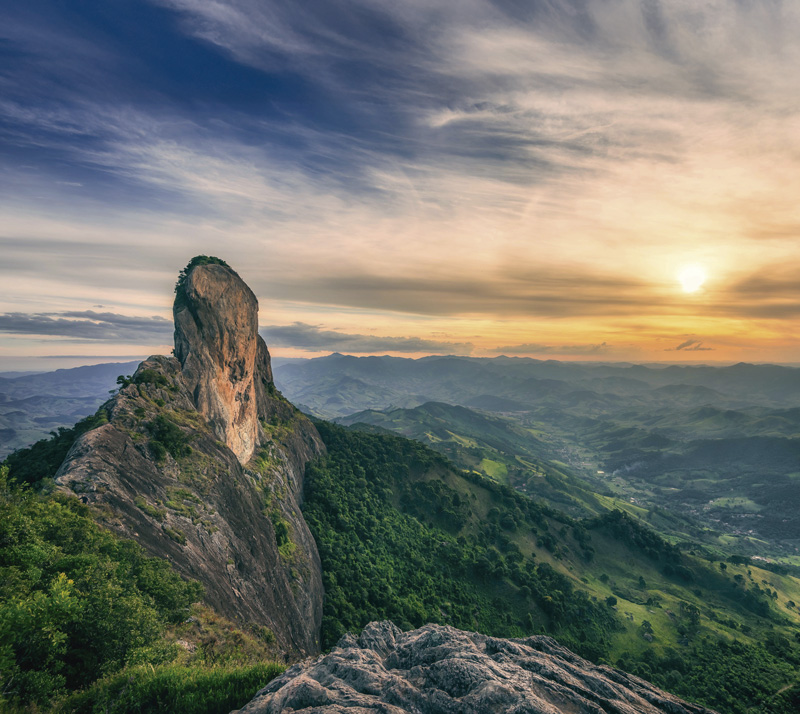
Rodrigorosa85 / Wikimedia CommonsPedra do Baú, 1,950 meters above sea level, in São Bento do SapucaíRodrigorosa85 / Wikimedia Commons
Geologists from the University of São Paulo (USP) identified 148 climbing sites across the state, ranging from prominent locations, such as Pedra da Mina on the border with Minas Gerais, with a height of 2,798.4 meters above sea level, to more modest sites like Fortaleza Beach, at sea level, in Ubatuba. The study found that 80% of the sites were located on private property outside conservation units, vulnerable to erosion, and lacking signage, environmental management plans, or visitor guidelines to help prevent environmental damage. “Some places, such as the Garcia Quarry in Campinas, allow dogs, but others—especially those in native forest or parks—should not, because they are areas that deserve to be preserved,” says João Paulo Monticelli, a climber since 2013 and the study’s lead author. The region of São José dos Campos is home to 31% of the state’s climbing sites and the greatest number of mountains in São Paulo. Campinas ranks second with 28%, followed by São Carlos with 15%. One of the most visible climbing points is Pico do Jaraguá, at 1,135 meters, in the municipality of São Paulo, the state’s most populous city. In another study, Monticelli emphasized the importance of inspecting and maintaining bolts—anchor points used to secure climbing ropes—at least every five years. The bolts he tested were unable to support the load required by international standards (Sustainability, April 2025; Engineering Geology, November 2024).
Republish