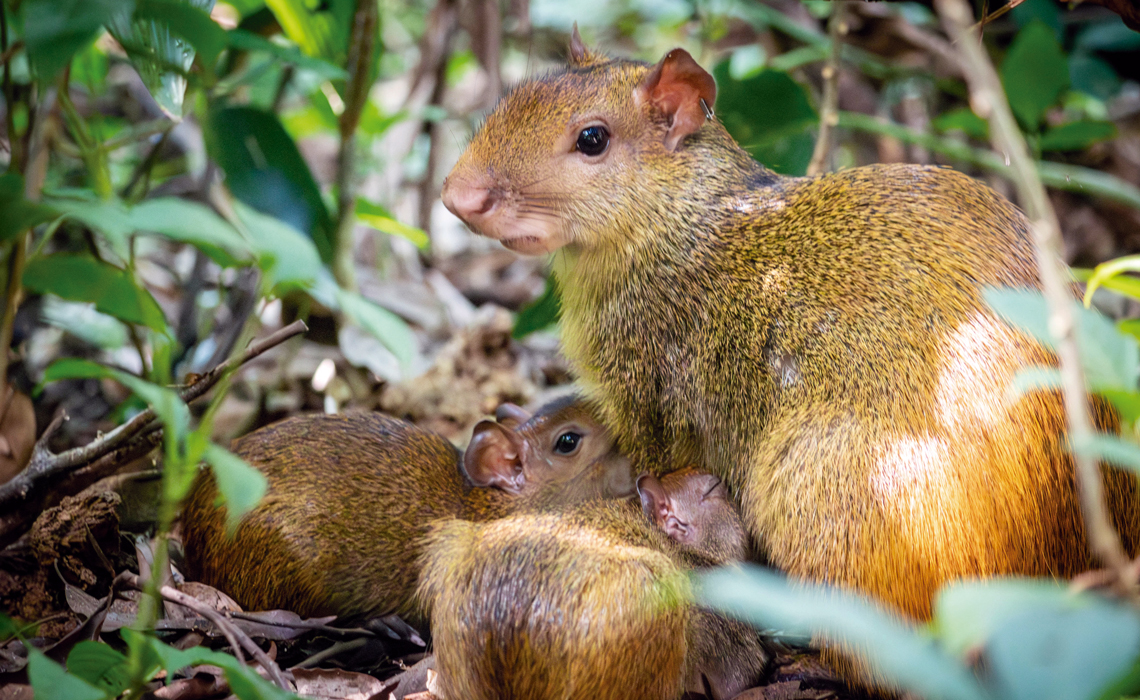
Tijuca National Park, situated in the heart of Rio de Janeiro, was reforested in the nineteenth century by order of Emperor Dom Pedro II (1825–1891). The result was a lush forest with plentiful water sources, its natural beauty enjoyed by locals and visitors alike. But the ecosystem was incomplete. “There was an avenue formed by two rows of arara nut-trees, but there were no agoutis,” says ecologist Alexandra Pires of the Federal Rural University of Rio de Janeiro (UFRRJ). Arara nut-trees (Joannesia princeps) produce large, hard fruits that few animals are able to open. The agouti (Dasyprocta leporina), a rodent the size of a cat, is one of them, and is therefore essential to the tree’s ecology. The quest to fill this gap—and others—led to the creation of the Refauna project in 2010, led by Pires and his former advisor, ecologist Fernando Fernandez of the Federal University of Rio de Janeiro (UFRJ). In 2021, the project became a nongovernmental organization (NGO).
Defaunation
Loss of animal species in a certain location
De-extinction
A method for bringing back extinct species by restoring some of their characteristics
Refaunation
Reintroduction of animals into a location
Rewilding
Restoring an area to its natural state by recovering its fauna
Abiotic rewilding
Preserving natural ecosystem processes, such as periodic fires and floods
The agouti was reintroduced in 2010 and followed by other species, based on ecological concepts that have changed in recent decades. “The idea is to reinsert key species and processes as a form of restoration, to make ecosystems more resilient and self-sufficient,” explains Spanish ecologist Nacho Villar, from the Netherlands Institute of Ecology (NIOO-KNAW). He points out that this approach differs fundamentally from classic ecological restoration, which is more centered on vegetation (like the original reforestation process in Tijuca), which does not address how to return important animals to the forest. Rewilding introduced the concept of three Cs: core areas, corridors between these areas, and carnivores, based on the idea that top predators have a wider impact. According to Villar, large and medium-sized herbivores like the agouti are also essential in processes such as seed dispersal, nutrient redistribution, and other ecosystem services, which he describes as “the things ecosystems do for us for free.” The researcher spoke to Pesquisa FAPESP via video call while doing fieldwork in the Pantanal, investigating how capybaras connect terrestrial and aquatic environments.
“Conservation used to focus on preserving species; now, the biggest concern is the consequences on ecosystem functioning,” explains Mathias Mistretta Pires, an ecologist from the University of Campinas (UNICAMP). In a yet unpublished review article, he and his group argue that rebuilding connections between organisms increases the complexity of an environment, restores its functionality, and improves its ability to adapt to new situations—something crucial in the era of climate change.
This effort can go beyond reintroducing species that still live elsewhere and extend to de-extinction, when characteristics that no longer exist are inserted into existing animals to replace lost ecological functions—a controversial strategy. That was the idea behind the genetically engineered dire wolf (Aenocyon dirus), supposedly rescued from extinction, and the woolly mice produced by American company Colossal Biosciences, though these animals were not intended to be released into the wild.
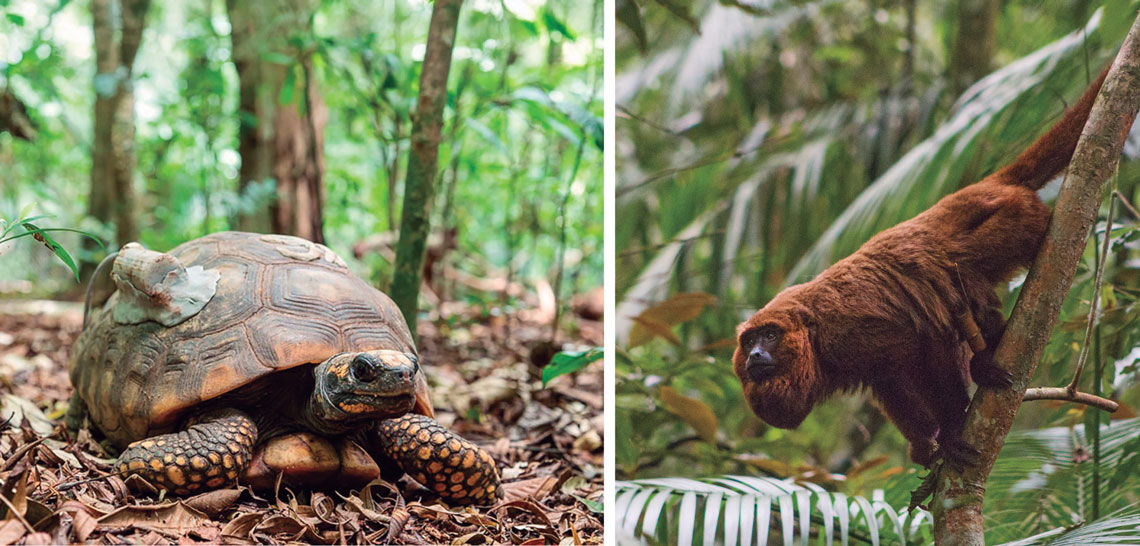
Vitor Marigo | Luísa Genes / Stanford University Tortoises and howler monkeys (right) contribute to forest functionalityVitor Marigo | Luísa Genes / Stanford University
To restore forest processes, Refauna begins by reintroducing generalist species (capable of restoring more connections) that disappeared during the decline of local fauna—a process known as defaunation. Bringing agoutis back to the Tijuca Forest was a challenge, says Alexandra Pires. “We thought it would be really easy to find the animals, but we looked in several places and only found them in Campo de Santana, in front of Central do Brasil,” she says, referring to an area of Rio de Janeiro surrounding the central train station. In the end, it worked. The agoutis began reproducing and contributing to the functioning of the ecosystem. “A student marked the nuts of the arara nut-trees and saw that where there were agoutis, 2% of the nuts germinated; in places where there were no agoutis, all the seeds had remained unmoved, rotten inside the fruits a year later,” according to a 2020 article in the scientific journal Biotropica. Encouraged by the results, the Refauna researchers pressed on. In 2015, Tijuca was reinhabited by howler monkeys (Alouatta guariba), whose calling and hollering once again filled the forest thanks to a partnership with the Primatology Center of Rio de Janeiro. The monkeys help spread tree seeds, as described in the team’s 2022 paper in the journal Biological Conservation. Their seed-filled feces attract dung beetles, which transport them, doing the job that gave them their name. The seeds end up buried, giving them a greater chance of germinating than those defecated by other animals. A pair of howler monkeys called Cala and Juvenal are reproducing and have had eight babies so far—one per year. The researchers recently introduced a new group into the area to increase the genetic diversity of the population.
With greater difficulty, yellow-footed tortoises (Chelonoidis denticulatus) were reintroduced in 2020. “At first, we did not know exactly which species existed there in past centuries,” says Alexandra Pires. “After much research, we brought the animals in from the Central-West region of Brazil, where the species still exists.” A UFRJ student researched the extent to which the tortoises contribute to soil fertilization. “They seem to be very efficient at spreading nutrients through the forest,” she says.
All Refauna animals are tracked with radio transmitters to monitor reproduction and health. The team is now introducing blue-and-yellow macaws (Ara ararauna) produced by licensed breeders.
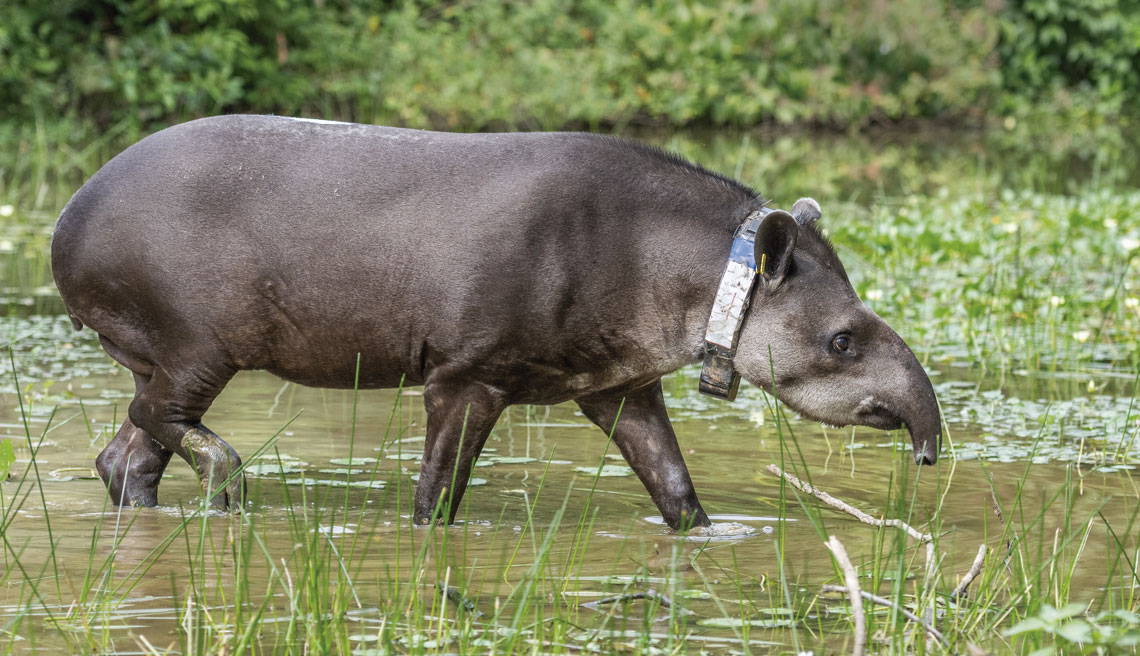
Vitor Marigo Tapirs in rewilding project are monitored using a radio transmitter collarVitor Marigo
According to Mathias Pires, who is not part of the Refauna team, the project is the most prominent of its kind in Brazil. In her laboratory, zoologist and postdoctoral researcher Érica Pacífico has been working on reintroducing the Lear’s macaw (Anodorhynchus leari) in Boqueirão da Onça National Park in northern Bahia for more than a decade. “There were only two individuals left; now there are more than 30, and the group is monitoring the consequences of this increase on the local ecosystem,” explains the researcher.
The UNICAMP ecologist also highlights the rewilding of Iberá National Park in northeastern Argentina, where a well-preserved area of the Gran Chaco region—an environment similar to Brazil’s Pantanal—has been repopulated over the past 12 years with deer, peccaries, giant anteaters, and jaguars, reestablishing the food chain. The initiative is especially ambitious because it is introducing several species at the same time, including predators.
One key precaution, Mathias Pires warns, is to have a contingency plan to prevent conflicts with human inhabitants. In 2017, he published an essay in Perspectives in Ecology and Conservation proposing an approach based on ecological network theory to minimize conflicts and increase the chances of success in rewilding projects. The idea is to combine ecological information with probabilistic models to predict how an animal will integrate into its environment, select the most promising species, and plan how to monitor them. The potential for interaction with human communities is part of that equation. Alexandra Pires agrees: that is why the collared peccary, a wild pig that can be confrontational, was not included in the Refauna project. “The area is near roads and communities, and we place a high importance on health issues and risks to local residents,” she says.
“To be sustainable, the reintroduction process needs to work economically, culturally, and socially,” adds Nacho Villar. “The cost-benefit has to be worth it.” Over the past decade, Europe has seen a wave of rewilding projects across several countries, grouped under the umbrella of Rewilding Europe, a nonprofit organization based in the Netherlands, founded in 2011. Villar is at the center of this explosion and is focusing his research on assessing the results of these initiatives. Having started two years ago, academic papers are on the way. “In the 1990s, devastating floods in the Netherlands forced mass evacuations of areas near rivers,” he says. “That led to a radical change in floodplain management policy. The government bought land to act as buffer areas against future floods and took the opportunity to reintroduce key species to restore their ecosystems.” Since then, the focus on ecosystems has only increased.
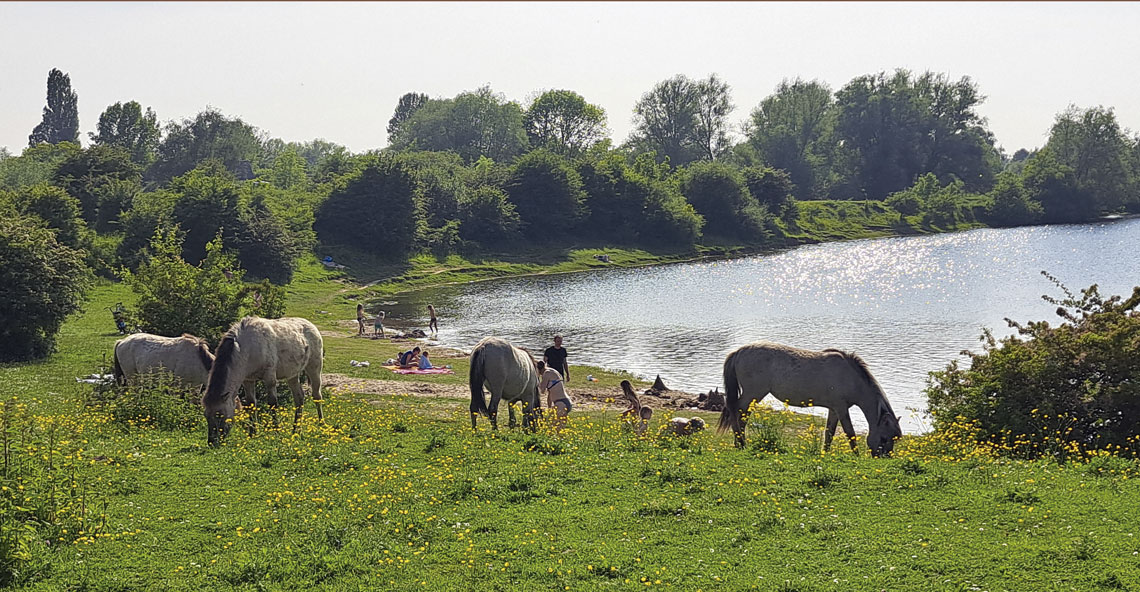
Nacho Villar / NIOO-KNAWClimate-smart rewilding with ancestral horses in Gelderse Poort, NetherlandsNacho Villar / NIOO-KNAW
Villar emphasizes the importance of large animals in maintaining ecological processes, and he was surprised by the public response. “People were more accepting of large animals than we expected,” he says, based on a study carried out in partnership with economists, and available on the SSRN repository. Examples include the introduction of ancient horse and cattle breeds, such as tauros, and even the highly endangered European bison, into areas of the Netherlands. Villar’s group is now assessing the results. According to him, the first rewilding projects involving such animals began 30 years ago, and only now is it possible to measure the processes and understand the impacts, thanks to modern theoretical ecology concepts that were missing from classical restoration. “Our objective, based on this assessment, is to refine the strategy in partnership with researchers from more social fields, who study how to maximize public acceptance, economic return, and the resulting social transformation,” he explains. “In addition to reintroducing herbivores, there is also abiotic rewilding, which involves allowing wildfires, dune movement, and flooding to occur naturally.”
Villar underscores the importance of rewilding given the current process of mass extinction, which has left him feeling pessimistic. “Today, nearly 60% of terrestrial vertebrate biomass is cattle,” he laments. He notes that research in the field of defaunation—understanding what happens when species are eliminated from an environment—is already advanced (see Pesquisa FAPESP issue n° 223). Rewilding is the other side: understanding how to rebuild ecosystems.
Defaunation
“The Atlantic Forest is a living laboratory,” says biologist Carine Emer of the Rio de Janeiro Botanical Garden Research Institute (JBRJ). “Some areas still have large animals, while others have been severely defaunated and no longer have them,” she says. Without them, the biologist explains, the forest becomes more homogeneous.
Microorganisms also affect the forest’s heterogeneity, according to an article published in the Journal of Ecology by Emer’s group in 2024. After measuring leaf damage on 3,350 understory plants in four protected areas of the Atlantic Forest in São Paulo State, the researchers found that in areas with large herbivores, such as peccaries and tapirs, there was more leaf damage caused by bacteria and microscopic fungi. This detailed interaction between forest organisms indicates that large herbivores, in partnership with pathogenic microorganisms, help regulate the diversity of plant species. When a plant community becomes less diverse, it becomes more vulnerable to pathogens. The study is part of the Defau-Biota project, led by ecologist Mauro Galetti of São Paulo State University (UNESP), Rio Claro campus, a long-time advocate of rewilding who has trained many of Brazil’s researchers in the field.
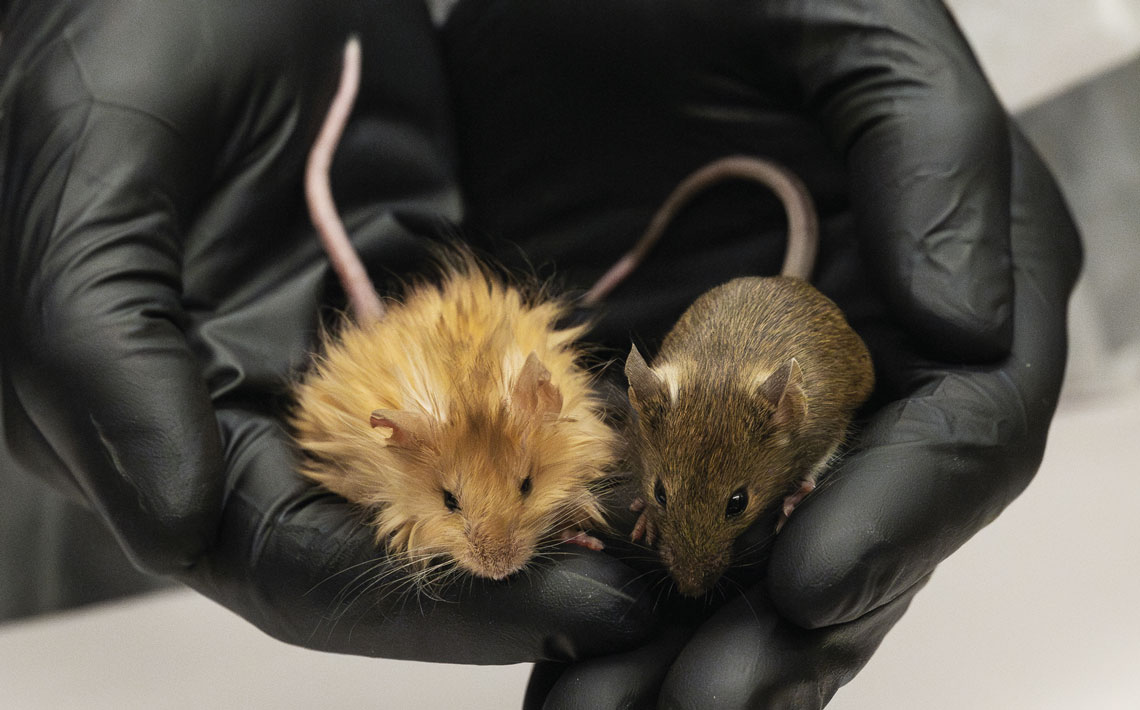
Colossal BiosciencesWoolly mice were created as part of research into reintroducing mammoth genes into elephantsColossal Biosciences
The falling number of trees with large seeds as a result of defaunation leads to homogenization of vegetation and has an impact on climate change, warns Emer. “The change in seed dispersal interactions can lead to the predominance of plants with smaller seeds that store less carbon,” she explains, as summarized in an article published in the February issue of Conservation Biology. The paper highlights the importance of considering animal dynamics in carbon cycle models and climate mitigation policies.
According to Nacho Villar, this perspective has inspired an approach known as climate-smart rewilding, through which ecosystem services help mitigate climate change. For example, by increasing carbon capture, as explained in a preprint he coauthored, shared on bioRxiv in March.
The European tauros are an example of a more extreme approach to rewilding, which in addition to reintroducing animals that no longer inhabit a given location, also involves recreating extinct species. They were created by crossbreeding to recover ancestral characteristics, but there are also more technological initiatives that use genetic engineering.
That was the approach taken by American company Colossal Biosciences, whose woolly mice and dire wolves have made headlines around the world. “I was fascinated by the idea of using ancient DNA to recreate lost species; it is like real-life science fiction,” says American geneticist Beth Shapiro, who studies extinct animals at the University of California, Santa Cruz (UCSC), and founded the company. Shapiro, who spoke to Pesquisa FAPESP via video call, says the species need help adapting to a changing environment if we are to live in a biodiverse world.
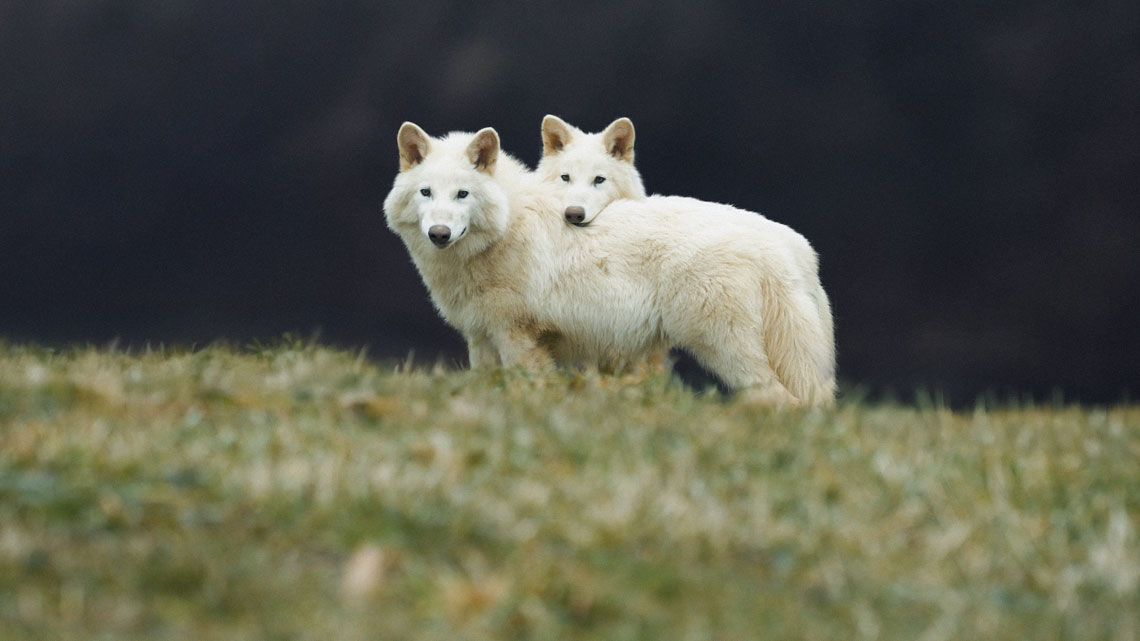
Colossal BiosciencesDire wolves were created by Colossal Biosciences as an example of de-extinctionColossal Biosciences
The mice were developed in collaboration with one of the world’s first rewilding projects, launched in the 1990s by Russian geophysicist Sergey Zimov of the Russian Academy of Sciences. In Siberia, Zimov created Pleistocene Park, where he has been studying how large animals influence the preservation of the icy environment known as the steppe. He theorized that their trampling prevents the snow from forming thick layers, which allows vegetation to sprout, thus preserving the ecosystem. Colossal Biosciences joined the effort to resurrect mammoths by creating its woolly mice, inserting mammoth genes to test the extent to which characteristics of one species can be introduced into another. With mice, the experiment is more feasible for laboratory testing than it would be with elephants.
Shapiro says the dire wolf pups created by the company are a successful example of de-extinction. Her team selected traits of the extinct species (primarily its large size and thick white fur) and inserted them into the genome of the modern gray wolf (Canis lupus). She stresses that the animals will never be introduced into the wild. The idea is to keep a group of six to eight of them in a secret location to be studied.
There is controversy over whether this form of genome manipulation counts as bringing a species back from extinction. The techniques have also been used in the conservation of the red wolf (Canis rufus), an endangered species that lives in southeastern USA. “We cloned them from blood cells and managed to increase their genetic diversity,” says the American researcher.
Mathias Pires, who met Shapiro at UCSC during his doctorate, is hopeful about the possibility of restoring genetic diversity in founding populations, but believes that reviving extinct traits may not be the best use of conservation efforts. “These initiatives involve lots of people and lots of money; to me, it seems more important to prevent further losses and restore what can still be restored.”
The story above was published with the title “From defaunation to de-extinction” in issue 356 of October/2025.
Projects
1. Ecological consequences of defaunation in the Atlantic Forest (n° 14/01986-0); Grant Mechanism Thematic Project; Principal Investigator Mauro Galetti Rodrigues (UNESP); Investment R$1,144,357.77.
2. DEFAU-BIOTA: Effects of defaunation on soil carbon and functional diversity of plants in the Atlantic Forest (n° 22/09561-4); Grant Mechanism Regular Research Grant; Program Biota; Principal Investigator Mauro Galetti Rodrigues (UNESP); Investment R$343,712.84.
3. Effects of defaunation and introduction of exotic species on plant/seed disperser interaction networks (n° 15/15172-7); Grant Mechanism Postdoctoral fellowship; Supervisor Mauro Galetti Rodrigues (UNESP); Beneficiary Carine Emer; Investment R$544,980.15.
4. Movement in defaunation: The role of animal behavior and spatial interactions in mediating trophic cascades, niche partitioning, and community dynamics in the Atlantic Forest (n° 15/11521-7); Grant Mechanism Postdoctoral fellowship; Supervisor Mauro Galetti Rodrigues (UNESP); Beneficiary Jose Ignacio Fernandez de La Pradilla Villar; Investment R$588,965.89.
5. Interactions between plants and animals and the cascading impacts of fragmentation in the Amazon rainforest (n° 23/03965-9); Grant Mechanism Thematic Project; Principal Investigator Mathias Mistretta Pires (UNICAMP); Agreement NSF – Dimensions of Biodiversity and Biota; Investment R$1,801,867.26.
Scientific articles
MITTELMAN, P. et al. Agouti reintroduction recovers seed dispersal of a large-seeded tropical tree. Biotropica. Vol. 52, no. 4, pp. 766–74. Apr. 20, 2020.
LANDIM, A. R. et al. Primate reintroduction promotes the recruitment of large-seeded plants via secondary dispersal. Biological Conservation. Vol. 269. May 2022.
PIRES, M. M. Rewilding ecological communities and rewiring ecological networks. Perspectives in Ecology and Conservation. Vol. 15, no. 4, pp. 257–65. Oct.–Dec. 2017.
EMER, C. et al. The interplay between defaunation and phylogenetic diversity affects leaf damage by natural enemies in tropical plants. Journal of Ecology. Vol. 112, no. 5, pp. 971–84. May 2024.
BRODIE, J. F. et al. Defaunation impacts on the carbon balance of tropical forests. Conservation Biology. Vol. 39, no. 1, e14414. Feb. 2025.
STARK, G. et al. Towards climate-smart rewilding: An integrated framework for biodiversity, climate change, and society. One Earth. Under review.
DE KRUIFF, T. Balancing Agriculture and Nature: Valuing rewilding in the dutch cultural river landscape. Ecological Economics. Under review.