Reproduction The Brazilian green racer (Philodryas aestiva), one of the species described in the guideReproduction
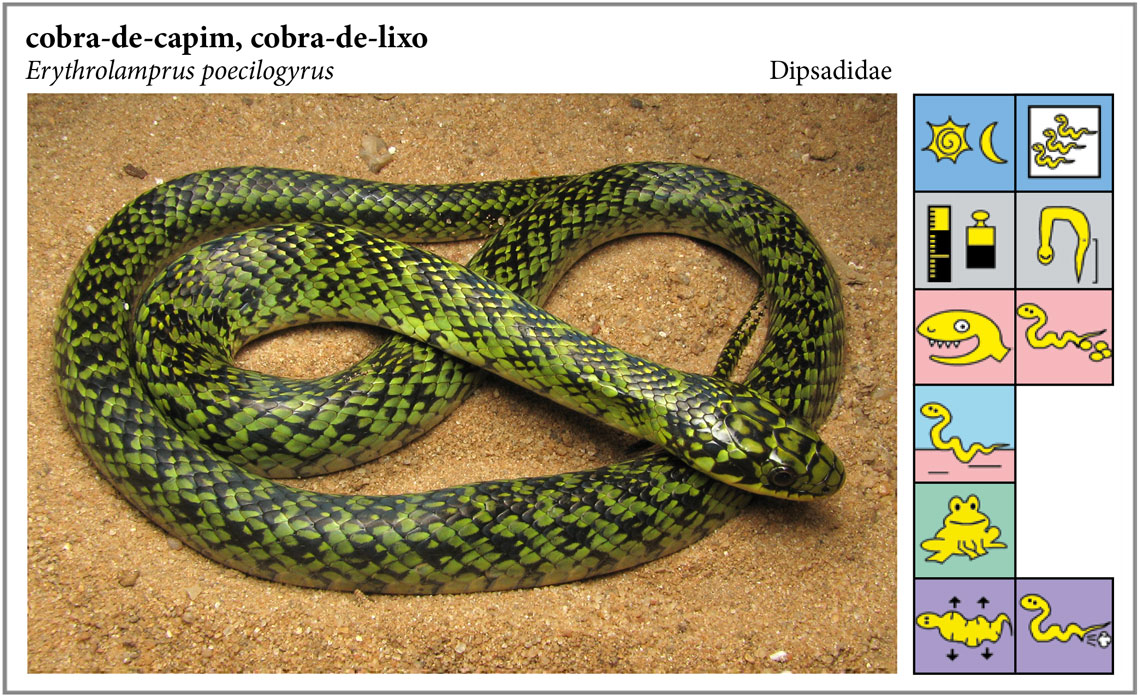
The Pampas are associated with wide open spaces, often used as pasture for cattle. But the biome’s fauna is surprisingly high in biodiversity, including many snakes, which have been listed in the book Serpentes do Pampa: Guia ilustrado (Snakes of the Pampas: An illustrated guide; Editora Ponto A), by herpetologists Otavio Marques of the Butantan Institute, André Eterovic of the Federal University of ABC, Márcio Borges-Martins of the Federal University of Rio Grande do Sul, and Ivan Sazima of the University of Campinas. There are 59 species, most of which are adapted to live on the ground rather than in trees, which are rare across most of the biome. “The Pampas cover just 2% of Brazil’s territory—in relative terms, the concentration of species is incredibly high,” says Eterovic. “We have inefficient legislation and a lack of conservation areas, while land is increasingly being converted into managed pasture and various forms of monoculture,” stresses Borges-Martins. Understanding these reptiles and their venomous potential is also important to public health in the region, where encounters between snakes and farmers are common.
Republish