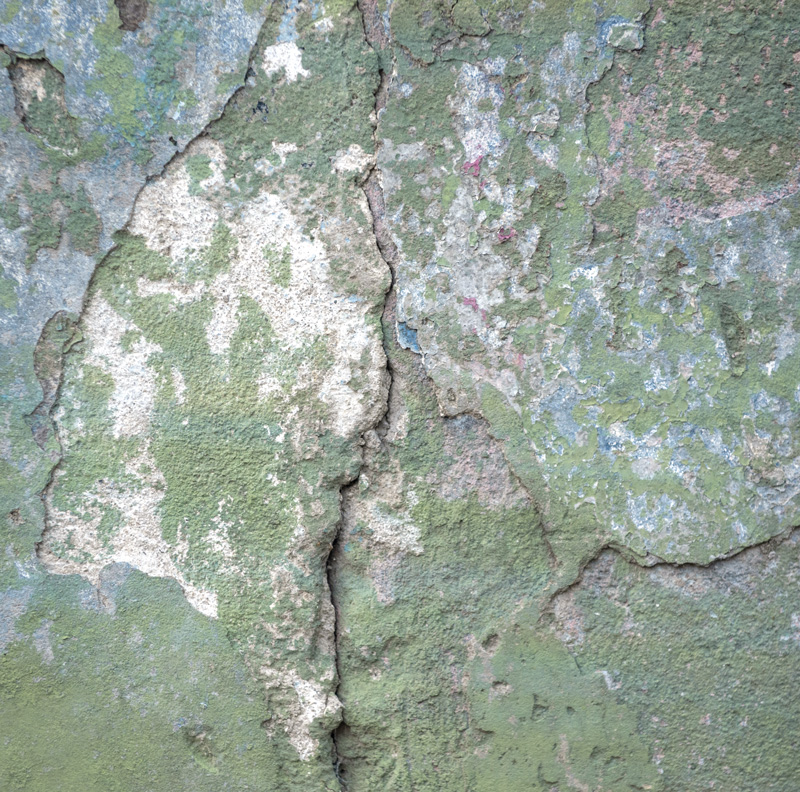
Léo Ramos Chaves / Pesquisa FAPESPMicroorganisms could seal gaps in concrete with calcium carbonateLéo Ramos Chaves / Pesquisa FAPESP
A team led by mechanical engineer Congrui Grace Jin of Texas A&M University, USA, selected microbial communities similar to lichens—which grow using only air and light—that when added to cement mixtures, can produce concrete capable of sealing its own cracks. The formulation includes three combinations of filamentous cyanobacteria (Anabaena inaequalis and Nostoc punctiforme) that fix carbon dioxide and nitrogen from the atmosphere, as well as a filamentous fungus (Trichoderma reesei), which attracts calcium ions and promotes the formation of calcium carbonate—the same material found in eggshells and seashells. In lab tests, this symbiotic combination was able to fix cracks in concrete by depositing large amounts of calcium carbonate, bonding the concrete and preventing the fissures from growing. Another approach to self-healing concrete is the use of bacteria, but they need to be sprayed directly onto the cracks (Materials Today Communications, March).
Republish