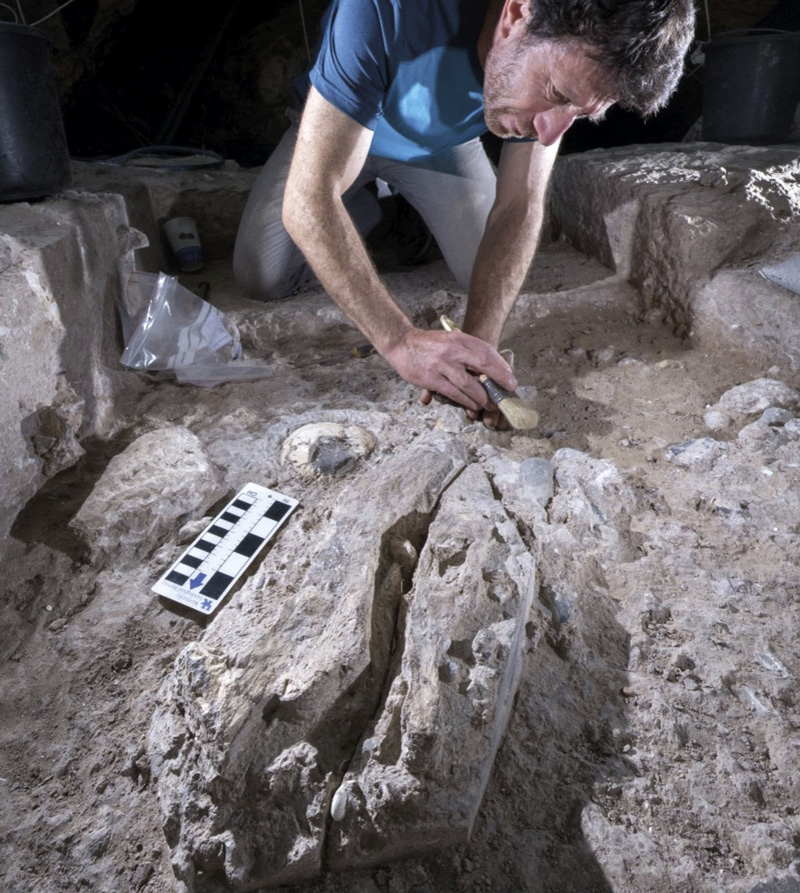
Boaz Langford / UHJYossi Zaidner of the Hebrew University of Jerusalem excavates a skull in Tinshemet CaveBoaz Langford / UHJ
Excavations at Tinshemet Cave in central Israel have uncovered signs of burials from the Middle Paleolithic period, from 130,000 to 80,000 years ago. Led by researchers from the Hebrew University of Jerusalem and Tel Aviv University, analyses of skeletal remains and stone tools indicated that two closely related hominid species, Homo neanderthalensis and H. sapiens, coexisted and shared technologies and social behaviors, such as intentional human burial. The five skeletal remains had been treated similarly to skeletons found in other caves, such as the fetal position of the body, the proximity to animal remains, and the presence of ochre pigments, possibly used to paint the bodies; more than 7,500 ochre fragments of various sizes, shapes, textures, and colors were found in the area. The Tinshemet, Qafzeh, and Skhul caves, all in Israel, are home to intentional hominid burials dating back around 110,000 years. No consensus has been reached, but hominids of the species homo naledi may have been buried in Africa even longer ago, between 335,000 and 241,000 years ago (Nature Human Behavior, March 11).
Republish