
When radical innovation projects aimed at major breakthroughs fail—regardless of the reason—they don’t just cause frustration. If poorly managed, they can also lead to layoffs, job relocations, career shifts, damage to the personal credibility of those involved, blame-shifting, disciplinary actions, financial losses, and the interruption of other projects—even those that had already produced products seemingly on a successful path.
“A few years ago,” says production engineer Leonardo Gomes, who has been studying the causes, consequences, and prevention of failures in radical innovation projects since 2012, “a certain biotechnology company made a significant investment in a project and implemented a new production process. At first, everything went well.”
A few years later, the yield of the fermentation process began to decline and eventually stabilized at a low, economically unviable level. No one understood why. “The company could have reversed the situation if it had resumed research, but the directors dismantled the innovation team, halted everything, and exited the market,” says Gomes. “Their patience with failure had run out.”
In one of his recent studies, published in January in the journal Research Policy, Gomes and his team from the School of Economics, Business, Accounting and Actuarial Science at the University of São Paulo (FEA-USP) examined real cases of failed projects in Brazil. The study was based on 63 interviews with directors and innovation managers from Brazilian companies with at least 2,000 employees across the automotive, cosmetics, energy, steel, and chemical sectors. Participants were granted anonymity.
Rafaela Ferreira Maniçoba, a business administrator and member of the research group, took part in some of the interviews. She observed that many participants were hesitant to talk about failures and reluctant to open up. Some expressed confusion (“the board never supported us”), disappointment (“the directors said we could try it, but then complained about the costs and delays”), and even uncertainty about their careers.
It’s good to have flexible planning and to be attentive to opportunities, says André Ferrarese, from Tupy
“An innovation director at a healthcare company was reassigned to a lower-ranking position in another department,” says the researcher. “She felt punished because the proof of concept for a failed project had cost more than expected. The result didn’t sit well with some people.”
Gomes and his team concluded that much of the discomfort and misunderstanding surrounding innovation efforts stems from a confusion between the concepts of error and failure. “An error is when I know what to do and what outcome to expect, but for some reason, the work doesn’t turn out as intended,” explains Gomes, who also serves as deputy director of Bridge: Ecosystem Management for Sustainable Transitions, one of the Research, Innovation and Dissemination Centers (CEPID) supported by FAPESP.
“Failure, on the other hand, occurs when I don’t know what to do—I form a hypothesis and test it, but the result falls short of expectations,” he says. “Failure is part of experimentation, when we don’t yet know exactly what might happen or how long it will take to reach the desired outcome.” His research shows that interpreting failure—something often unavoidable—as an avoidable error can lead to unnecessary punishment and discourage the pursuit of radical innovation. Differentiating between error and failure is the first of four stages in the radical innovation framework developed by the USP team (see table below).
“Uncertainty is always present,” says Henrique Pereira, a business administrator and innovation manager at Aço Cearense, a steel, metallurgy, forestry, and logistics group based in Fortaleza (CE)—this and other companies mentioned in this report did not participate in the USP study. “A company we hired once took a long time to test a technology we were interested in and then asked us to put the project on hold for a few months. Even so, the capital lost to delays always generates learning—at the very least, about what not to do.”
To avoid wasting time and resources, Pereira aims to test hypotheses quickly, evaluate the outcomes, and revise plans when things don’t go as expected. “Of our 24 furnaces, we use only three for experiments, and we never scale up a solution until we’re confident it will work,” he says. The group’s companies take on the risks of innovation while focusing on survival by also producing simple, standardized products—so-called commodities.
Even when working hypotheses are correct, tests succeed, and production scales up smoothly, what the USP group refers to as a profound failure can still occur—when problems emerge only years after a product developed through research has already been launched. This is what happened with the biotechnology company Gomes mentioned, and similar cases have affected automakers, pharmaceutical companies, and electronics manufacturers. Gomes cites Boeing and its 737-MAX models as an example. “Recently, the company had to reengineer planes that had already been sold and in operation for years,” he says.

EVE / EmbraerRepresentation of the air car designed by EmbraerEVE / Embraer
Opportunities
“It’s obvious that not all innovation projects are going to succeed,” says mechanical engineer André Ferrarese, Director of Research and Development at Tupy, who previously spent 21 years at Mahle, a major auto parts manufacturer, in both Brazil and Germany. “It’s important to have flexible planning and stay alert to opportunities that arise along the way,” he advises, recalling the case of the Post-it. Originally developed by 3M in the late 1960s as an industrial adhesive, the product was initially deemed a failure because it didn’t stick properly. But someone eventually realized the lightly adhesive paper could be used as bookmarks without leaving residue. Secretaries began requesting it, reviving the once-dismissed innovation. Another classic example is Viagra, initially developed for heart disease but later repurposed for erectile dysfunction.
Tupy, founded in 1938 in Joinville (SC), experienced something similar. While delivering biogas-powered generators to rural farmers, engineers noticed difficulties with operating the equipment and identified a business opportunity. Collaborating with other departments, they developed bioplants—large units manufactured and managed by Tupy that process pig and poultry waste collected twice daily to produce fertilizer, electricity, and biomethane, which is used to fuel farmers’ trucks.
Today, the company runs a plant in Toledo, western Paraná, serving 27 farmers and 65,000 pigs. Two more are in the works: one in Divinópolis, Minas Gerais, to serve a poultry farm, and another in Seara, Santa Catarina, to process waste from 200,000 pigs and 1.7 million birds.
After 30 years leading innovation teams at Aracruz and Suzano—two major pulp and paper producers—agronomist Fernando Bertolucci now heads the newly established consulting firm Inovitae in São Paulo. He reinforces the idea that achieving the desired outcome often takes time.
At Suzano, he was involved in the development of a new product called fluff, made from short cellulose fibers derived from eucalyptus. Traditionally, fluff used in diapers was made with long-fiber cellulose from conifers, which channels urine to an absorbent polymer. “When our product was ready in 2020, we sent it to diaper manufacturers, but the test results were disappointing,” he recalls. “It wasn’t exactly a surprise—we had anticipated the issue but couldn’t solve it alone. We needed input from potential customers to learn what to improve.”
Internal disputes and boycotts of new ideas occur all the time, warns Bruno Moreira, from Inventta
Based on the diaper manufacturers’ feedback, the team resumed research and, two years later, delivered a second version that met customer expectations. “Now, short-fiber cellulose has properties comparable to long-fiber, but at a competitive price,” Bertolucci says proudly.
In 20 years of consulting on innovation project management, mechatronics engineer Bruno Moreira, of Inventta, a consulting firm based in Campinas, São Paulo, has observed a recurring pattern: innovation leaders often generate high expectations without providing their teams with the necessary resources to meet them. At one chemical company he worked with, the business directors showed little interest in investing in innovation. As a result, the projects became less ambitious, shaped by pressure for immediate results.
Moreira addressed the issue by listening to all parties and helping implement a new management approach: each short-term project allocated 10% of its budget to supporting long-term initiatives. Within three years, the company succeeded in balancing simple and complex innovation efforts.
Another frequent challenge: “Internal disputes and boycotts of new ideas happen all the time,” says Moreira. In one case, a student of his identified a solution that could save a logistics company millions of reais each month. The head of the department he presented the idea to scolded him and refused to move forward with the proposal, arguing that if he did, he might be fired for having missed a solution that a newcomer had identified.

Raphael Gaillarde / Gamma-Rapho via Getty ImagesViagra, designed for one use and used for anotherRaphael Gaillarde / Gamma-Rapho via Getty Images
When leading discussions to evaluate projects that ended in disappointment, Moreira emphasizes that the goal is to learn from the experience and prevent future failures—without assigning blame or allowing participants to do so. “Listening to critics is important,” he notes. “Sometimes, they’re right.”
In addition to listening, an innovation leader must communicate with everyone constantly. Ongoing dialogue is essential to ease pressure around deadlines and results, and to ensure that other departments are prepared to receive and carry on the work. “Many projects never reach the market due to a lack of communication and alignment between the innovation, production, and marketing teams, which need to collaborate,” says business administrator Anapatrícia Morales Vilha, of the Federal University of ABC (UFABC) and an advisor to FAPESP’s Scientific Directorate in the field of innovation.
Open communication also stops failures from taking hold. “A couple of years ago,” recalls Moreira, “a company spent heavily on a project, and everything went wrong. The coordinator, who was from the board, didn’t take the opportunity to assess what had happened. The silence created a deep sense of unease, solidified the belief that nothing more could be done, and led to resistance against any future innovation efforts.”
Bertolucci, of Inovitae, adds: “Innovation only advances with a motivated team—one that isn’t afraid to speak up and say, ‘That’s not right,’ ‘You’re mistaken,’ or ‘I made a mistake.’” Vilha sums it up: “A culture of innovation cannot coexist with a culture of fear.”
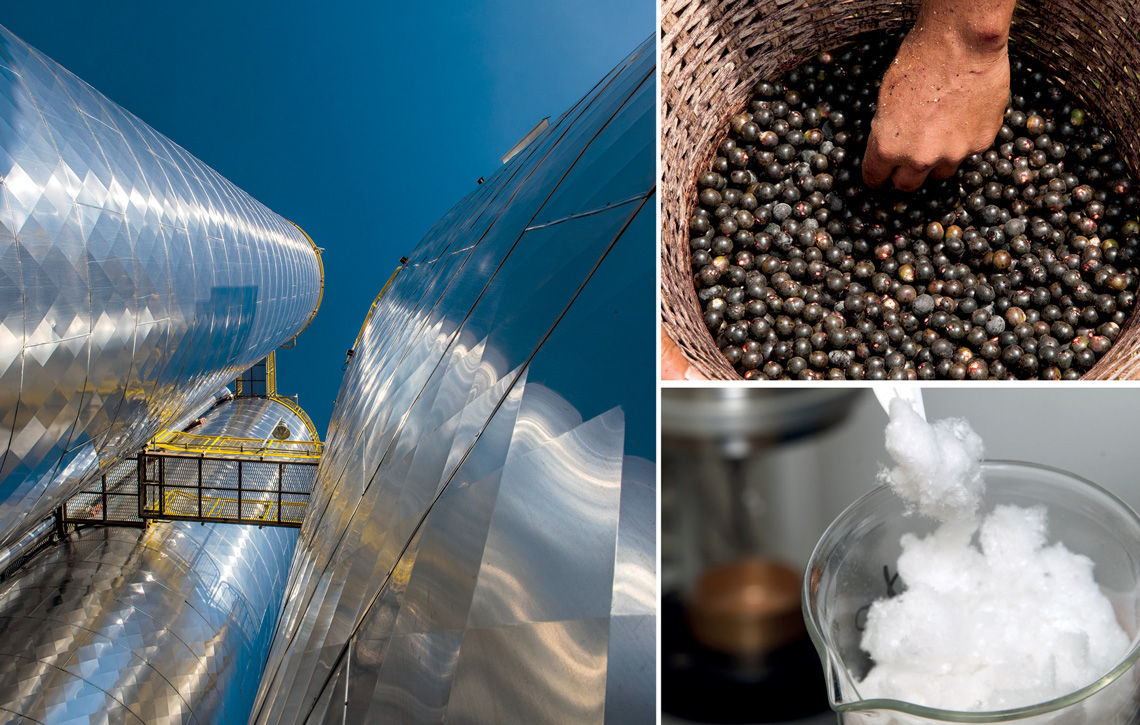
Suzano | Paulo Altafin / Raízen | Eduardo Cesar / Pesquisa FAPESPSuzano’s fluff pulp, Raízen’s ethanol production tanks, and açaí, the base for Natura cosmeticsSuzano | Paulo Altafin / Raízen | Eduardo Cesar / Pesquisa FAPESP
Perspectives
In addition to clarifying conceptual misunderstandings—such as the confusion between error and failure—and proposing strategies for innovation governance, the USP group is also exploring ways to encourage more companies to pursue bold, long-term innovation projects, rather than focusing solely on short-term results.
“There are still few companies engaging in radical innovation in Brazil,” notes Gomes. He names a few examples: “We have Weg in the electric motor sector, Natura with cosmetics derived from Brazilian biodiversity, Raízen with second-generation ethanol, and Embraer with the eVTOL [flying car]” (see Pesquisa FAPESP issues 329 and 337).
The challenge of promoting radical innovation isn’t unique to Brazil. Renate Kratochvil, of the Stockholm School of Economics, conducted 117 interviews with 37 executives from large Swedish companies between 2019 and 2023. In an article published in January in Research Policy, she shared her conclusion: “Strategic leaders tend to favor incremental innovation over radical innovation—not due to a lack of ideas, but because they fear failure.”
Based on an analysis of innovative companies operating in Brazil, the FEA-USP team developed a model for managing failures in radical innovation projects, outlined in four stages in an article published in Research Policy.
The first stage is recognition—understanding that error and failure are not the same and adopting new approaches to planning and evaluating innovation projects beyond the usual metrics of cost, deadlines, and results. “Radical innovation is a marathon,” says Leonardo Gomes, who led the study. “You can’t approach it with the mindset of a 100-meter sprint.”
The second stage is conceptual emancipation, in which the innovation leader defines new ways of structuring and managing projects, embraces risk, and helps senior leadership develop patience with failure. “The innovation manager must manage the expectations of their team, other departments, and top executives, explaining that the project is uncertain and that it might not succeed,” says business administrator Felipe Borini, a member of the USP team.
The third stage is understanding—establishing clear rules to prevent and manage failures while building a network of allies both inside and outside the company who will support the new approach. “Partnerships with other companies or research institutions must be built with care, clearly defining the rights and responsibilities of each party, because these are different worlds, with different rhythms and goals,” notes Anapatrícia Morales Vilha of UFABC.
At this stage, uncertainty and the need to tolerate setbacks become especially important, as it’s difficult to predict competitor actions or market shifts. “When a company fails, it still has the opportunity to recover and surpass those who may appear to be winning in the short term,” says Gomes. “Years ago, IBM introduced a new type of computer screen and built a factory for it. A competitor’s screen turned out to be superior, but IBM responded by launching a third version—and ended up dominating the market. Petrobras also demonstrated persistence and a capacity to learn, ultimately becoming one of the world’s leading companies in deep-water oil exploration.”
The fourth stage is the incorporation of new guidelines for managing radical innovation. This involves adopting practices tailored to the unique nature of such projects—ones that allow space to learn from failures, delays, and unexpected costs. “To avoid pressure for immediate results, it’s wise to balance the project portfolio with both radical and incremental innovations,” suggests Ferrarese, from Tupy. “That way, you always have short-term outcomes to present to senior leadership.” Projects that don’t meet initial expectations might still hold value and could be revisited months or even years later from a new perspective.
The story above was published with the title “We’ve failed. What now?” in issue 352 of April/2025.
Project
CEPID Bridge: Ecosystem management for sustainable transitions (n° 22/14561-3); Grant Mechanism Research, Innovation, and Dissemination Centers (RIDC); Principal Investigator José Afonso Mazzon (USP); Investment R$4,670,920.14.
Scientific articles
GOMES, L. A. de V. et al. Transformation of the governance of failure for radical innovation: The role of strategic leaders. Research Policy. Vol. 54, no. 1, 105108. Jan. 2025.
KRATOCHVIL, R. The process of framing innovation activities: How strategic leaders erode their ideas for radical innovations. Research Policy. Vol. 54, no. 1, 105107. Jan. 2025.