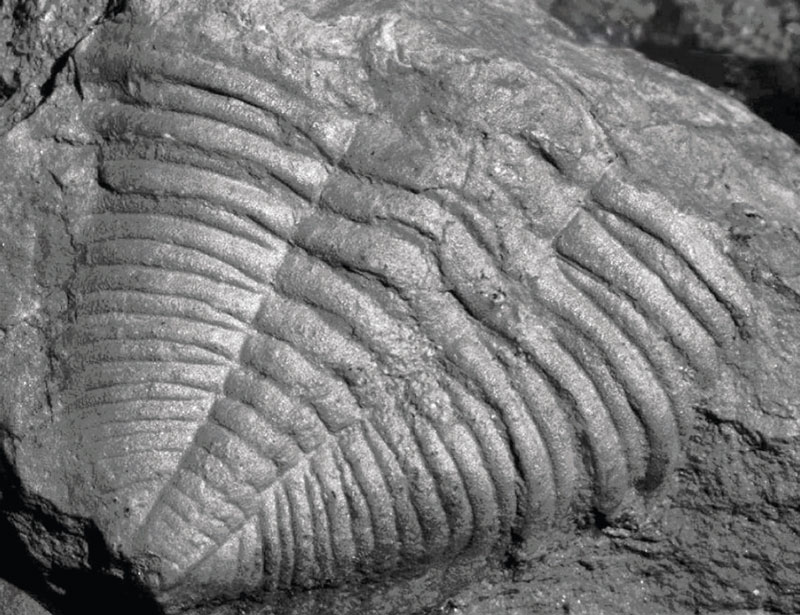
ZABINI, C. et al. Journal of South American Earth Sciences. 2025 Markings of 443-million-year-old trilobite in a rockZABINI, C. et al. Journal of South American Earth Sciences. 2025
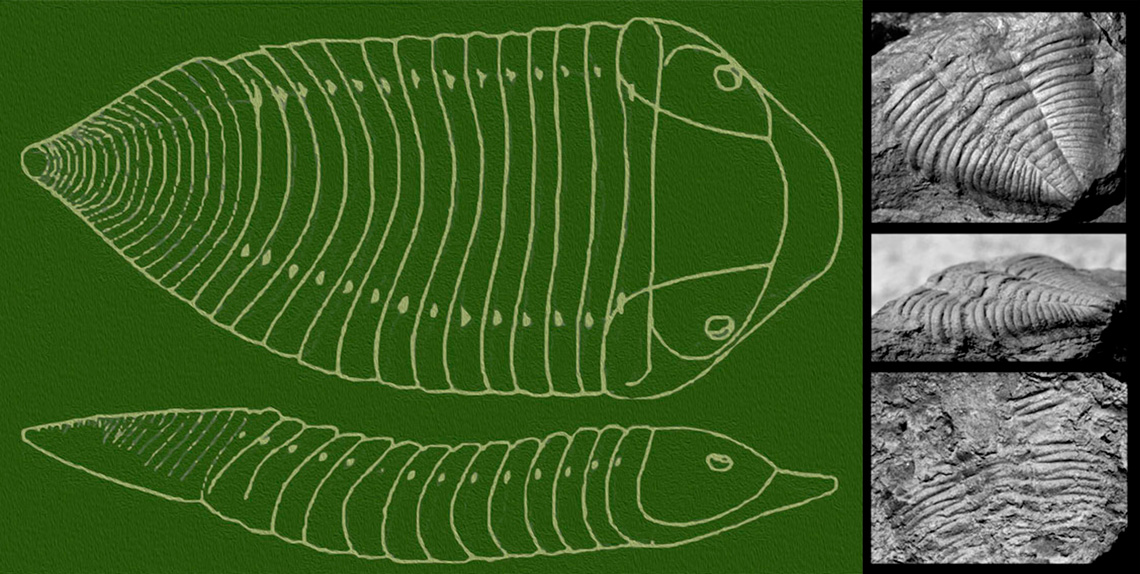
Among fine rocks interspersed with deposits left by ancient ice in what is now Barra do Garças, in eastern Mato Grosso, researchers from Brazil and Argentina found two specimens of a primitive marine arthropod: a trilobite of the genus Mucronaspis. Measuring 5 to 6 centimeters (cm) in length and shaped a little like a cockroach, they are the oldest trilobites ever found in Brazil. The creatures lived about 443 million years ago, during a period of intense glaciation that triggered abrupt temperature drops and contributed to the first mass extinction of the Paleozoic, which wiped out 85% of the species on Earth. “We were only able to identify the genus, because we usually need the head to determine the species,” said paleontologist Carolina Zabini of the University of Campinas (UNICAMP). The discovery backs up the hypothesis that the genus Mucronaspis was resistant to extreme climate conditions. Trilobites comprise around 1,500 genera and thousands of species. They emerged 521 million years ago and lived until 250 million years ago (Journal of South American Earth Sciences, June 16, 2025).
Republish