 During the COVID-19 pandemic, Dr. Maria Amélia de Sousa Mascena Veras, a physician from Pernambuco, and her team sought funding—not for research but to purchase and distribute care packages, water, and face masks to her research participants: trans women and sex workers from São Paulo and other cities. She recognized that, without this support, these individuals would be at increased risk of contracting the coronavirus and would be forced to rely on the streets for survival.
Since relocating from Recife to São Paulo in 1983, Maria Amélia, as she is widely known, has developed a comprehensive understanding of the behaviors, living conditions, and vulnerabilities of transgender individuals—a group totaling around 3 million, or 2% of Brazil’s adult population (see Pesquisa FAPESP issue nº 312). A professor at the School of Medical Sciences of the Santa Casa de São Paulo (FCM-SCSP), she also coordinates the Center for Studies in Human Rights and Health of the LGBTQIA+ Population (NUDHES), which was established 10 years ago. The center comprises anthropologists, nutritionists, social workers, biologists, psychologists, and medical professionals, all of whom have documented the consequences of prejudice and discrimination: the rates of suicidal ideation and suicide among travestis—a term used in Latin America and Brazil to refer to a person assigned male at birth who assumes a feminine gender expression yet doesn’t identify as a man or woman—and trans women are significantly higher than those in the general population of São Paulo.
Epidemiology of sexually transmitted diseases
Institution
School of Medical Sciences, Santa Casa of São Paulo
Educational background
Medical degree from the Federal University of Pernambuco (UFPE, 1983), Master’s degree in Preventive Medicine from the University of São Paulo (USP, 1996), Master’s degree in Public Health from the University of California, Berkeley (UCB, 2001), and PhD in Preventive Medicine from USP (2005).
At 66, Maria Amélia has pioneered new research methodologies and practices: NUDHES researchers present their findings first to the communities they study. Divorced and a mother of two, she has conducted research with populations most affected by HIV and has continued to engage directly in fieldwork to better understand the life contexts of the communities she serves. Her most recent trip took her to Itaituba, in the southwest of Pará, where, alongside other researchers, she gathered numerous personal stories and collected blood samples from nearly 600 miners and sex workers.
Tell us about your recent trip to the gold mines in the interior of Pará.
The work conducted there is part of research led by infectious disease specialist Paulo Abati, a doctoral candidate at the University of São Paulo’s School of Medicine (USP) and a physician at the University of Campinas (UNICAMP). He has worked for many years in the interior of Pará and has long been interested in studying sexually transmitted infections (STIs) in mining communities. Given my experience in designing studies for hard-to-reach populations, he and his advisor, Aluisio Segurado, invited me to join their team. The municipality in question is Itaituba, located in the Tapajós River region, which is home to Brazil’s largest gold mining area. Our journey from São Paulo to Itaituba took three days. In August 2024, I was accompanied by Paulo, Márcia Couto, a medical anthropologist from USP, Mariana Aschar, a postdoctoral researcher from the Institute of Tropical Medicine, Renan Viana, a medical student, and Criss de Paulo, an architect and illustrator who volunteered to document the study. We received local support from the municipal malaria control agents: Cezar Castro, Jadielson Vilela, and Adeuza Oliveira. It was the most desolate place I have ever encountered.
Why?
In 2023, Paulo, Márcia, Vilmar Gomes, an anthropologist from Santarém, and I, with guidance from Cezar, visited six mines in the region. We got to know the people, conducted interviews, assessed logistics, and designed a survey to be carried out in 2024. From the very first visit, we were already concerned about safety. At one point, Márcia looked at me and said, “If we disappear here, no one will ever find our bodies.” In 2023, we hadn’t witnessed the forest fires up close, but this time, there wasn’t a day without smoke. We asked, “It’s really difficult to breathe here, isn’t it bothering you?” One local responded, “I only wanted to burn a small area, but everything is so dry that the fire reached the edge of my house, almost burning everything.” They lack a comprehensive understanding of the environmental issues; the information they receive is incomplete and ideologically driven. I have never encountered a population where alcohol consumption is so prevalent.
What did you do there?
We interviewed and collected blood samples from nearly 600 individuals, including miners, sex workers, and others engaged in services related to mining. The original plan was to focus only on the miners, but in 2023, we revised the entire sampling strategy to include everyone. This proved to be the right approach. Women play an integral role in the mining system; they are essential to the mine’s existence. Around 90% of them are sex workers, while others contribute by performing tasks like cooking for the miners in the baixão, the area where gold is mined. A woman who cooks for the miners may have initially worked as a sex worker, but over time, she may form a relationship with a miner (pegar xodó, as they say) leading her to live with him and become somewhat exclusive. We conducted rapid STI tests on everyone.
Did you find many STIs?
We anticipated higher rates. Approximately a quarter of those tested had active syphilis, which is not significantly higher than the rates found among sex workers, travestis, and transgender individuals we recently studied in five Brazilian capitals. The issue, however, is that most of the villages—referred to as currutelas—lack health units. One of the villages has a building designated as a health post, but they cannot recruit health professionals to work there. Traveling to the nearest medical facility for an injection costs R$400 by motorcycle taxi, an expense most people cannot afford, so they forgo treatment. We found an average HIV prevalence of 2.5%, significantly higher than the national rate of 0.5%. Recent national studies indicated a prevalence of nearly 5% among sex workers, but we only observed this level in one of the locations we visited.
In medical schools, all dimensions of transsexuality should be addressed from the perspective of all specialties
Who is most infected, men or women?
The men, which suggests they are not the primary spreaders of STIs in the area. In the mine, we also encountered trans women, who do not appear to be victims of violence there. Interestingly, the leader of one of the currutelas is a trans woman. Another notable observation was the presence of many homosexual relationships among the women, which we had not anticipated. While relationships with men are commercial in nature, the pleasure often seems to lie elsewhere, with other people. Everyone deserves to be heard. Listening to their stories and understanding how they arrived at this point ultimately restores our sense of humanity. Some sex workers come to the mine because they are paid much more than they would be outside. Every year, they spend a season there to earn a living, while their children stay with relatives or others in the city. They go voluntarily, but many become trapped in a cycle, as they incur debts to cover travel expenses, room costs, and the need to maintain their appearance—clothing, hair, and nails. These debts quickly accumulate, and their only hope is that a gold miner will take an interest in them or help pay off their debt.
Since when have you worked with sexually transmitted diseases?
Since I graduated in 1983, during the first cases of HIV/AIDS in Recife, where I worked in epidemiological surveillance for the State Health Department. We were a small team, and for each case, we had to handle not only the infected individual but also their family and the associated prejudices. We would find a hospital willing to treat them and personally contact the doctors. I decided to move to São Paulo for my postgraduate studies, obtained a master’s degree at USP, and applied for a job at the city hall. I was appointed to a group tasked with exploring the possibility of conducting HIV vaccine studies in Brazil. This project, coordinated by José da Rocha Carvalheiro from USP in Ribeirão Preto and Mary-Jane Spink from PUC São Paulo, ultimately led to me coordinating the fieldwork for what became known as the Bela Vista project. It was my first real exposure to the so-called gay community, as my previous work in Pernambuco had been with individuals who were already infected. I knew nothing about the gay world.
What was it like to enter that world?
I had to let go of my prejudices and approach people with empathy and respect. They tested me. At one presentation of the Bela Vista project to a nongovernmental organization, one of the activists provocatively asked me what I would do if my son told me he was gay. I told him that I knew my son would face challenges in life, but that he would always be my son and have my full support. I brought my young children to the project’s activities, and they grew up with a natural, accepting attitude toward the communities I still work with today. It has been a great learning experience. The research led me to regularly engage with gay and trans spaces. Despite being a straight cisgender person, I feel accepted because, in some way, people recognize my attitude of respect, empathy, and social justice—values that have always driven me, and which inspired my desire to become a doctor.
How can we strengthen coexistence, or as you say, the naturalized relationship?
By accepting differences. We have developed the notion that those who are different threaten us, that they belong to another category of people and are somehow inferior. The roots of this prejudice are deeply ingrained. In recent years, the work of anthropologist Sonia Corrêa from the Observatory of Sexuality and Politics, along with jurist Rogério Junqueira, has highlighted the role of the Catholic Church and conservative evangelical groups in the promotion of what is now known as “gender ideology.” From the United States, philosopher Judith Butler, in her recent book Who’s Afraid of Gender? [Farrar, Straus, and Giroux, 2024], demonstrates how the issue of gender has become a rallying point for the far-right. The health system itself, which should be inclusive, often ends up being a place of discrimination and suffering.
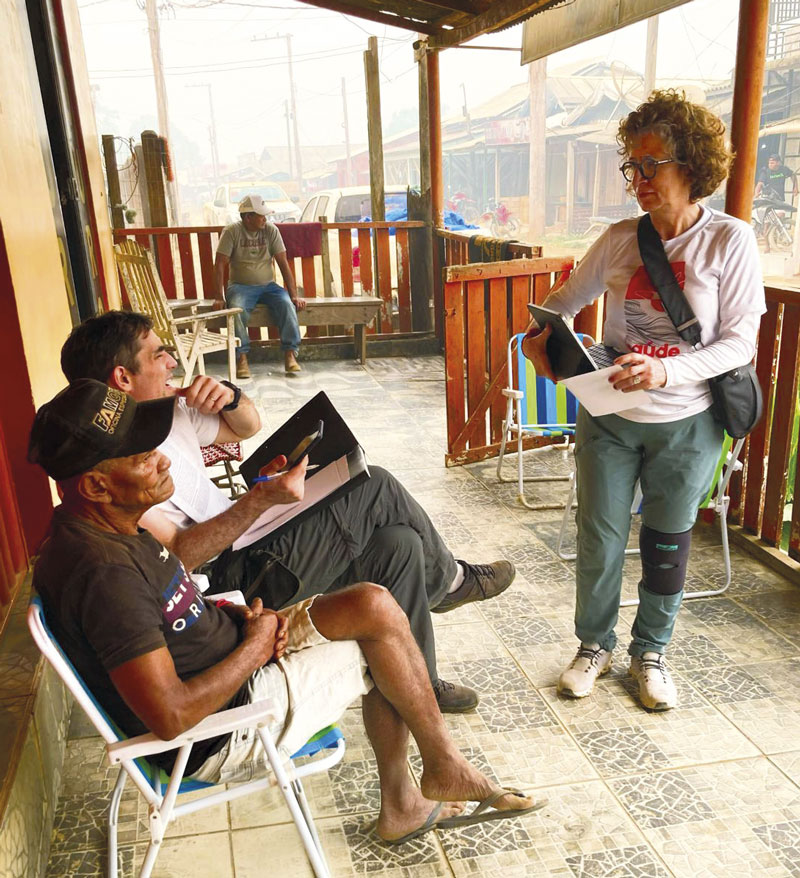
Criss de PauloMaria Amélia Veras, Paulo Abati (wearing white), and two miners in the Itaituba region (PA)Criss de Paulo
Why?
Medical training does not adequately prepare professionals to address the specific needs of trans bodies, and many healthcare providers struggle to communicate effectively with transgender individuals. This impacts adherence to care and treatment. If someone living with HIV faces discrimination at a healthcare facility, they are unlikely to return. Medical schools should address transsexuality across its many dimensions within all specialties—mental health, endocrinology, gynecology, obstetrics, ENT, surgery. At Santa Casa, we offer isolated classes in the first, second, and fifth years, but this is insufficient. A promising development came in 2024 with the creation of Santa Casa’s LGBT Population Health League by the students themselves. The league was formed to explore topics that aren’t fully covered in the curriculum. The students meet fortnightly or monthly in their free time and invite pediatricians, psychiatrists, surgeons, gynecologists, and other experts in trans care to engage with them.
If you could give one or two suggestions to someone who is going to serve this population, what would you say?
The first suggestion is to put yourself in the other person’s shoes, with empathy. This is a crucial and fundamental skill for any doctor. If you have empathy and are willing to ask questions about how to proceed, you will immediately break down the initial barrier. It’s not uncommon for transgender individuals to never have been thoroughly examined during consultations. Doctors often don’t ask them to disrobe and merely ask questions, hardly looking them in the eye. Trans people often arrive at health services already carrying a history of discrimination. They should be able to find professionals who are capable of looking them in the eye, showing respect, and asking what name or pronouns they wish to be called. I always tell medical students and colleagues that professionalism is about maintaining your values while delivering care in accordance with the ethical standards of your profession. The second piece of advice is that we need to give more attention to education at all levels. We should be talking about sexual health for children and adolescents in every school, but unfortunately, it has become a taboo topic. Instead, we mostly discuss the reproductive system. Students are eager to learn more about sex, and because they don’t receive proper education at school, they turn to social media for information.
What are the main health problems for trans people that the public health system needs to address?
There are general health issues that affect everyone, as well as more specific challenges related to gender affirmation. For general health concerns, individuals need comprehensive care, covering everything from blood pressure management to diet. The specific issues, however, are more complex. Various studies, including those from our group, show that many trans people, in order to undergo bodily transformations that align with their gender identity, self-administer hormones, which can pose significant risks. They often believe that higher doses may accelerate the transition process, but this can, in fact, increase the risk of strokes. Another issue is the limited access to surgical procedures. For genital surgeries, the wait time can extend for years, and this prolonged wait only exacerbates mental distress. On a more positive note, we are seeing a growing number of influential voices in Parliament advocating for these issues. Prominent trans figures such as Érica Malunguinho, the first transgender woman elected to the São Paulo Legislative Assembly [state deputy from 2019 to 2023], Erika Hilton [federal deputy for São Paulo since 2023], and Duda Salabert [federal deputy for Minas Gerais since 2023] are now speaking out in the National Congress. These strong trans parliamentarians inspire the communities they represent.
Homosexuals and trans people account for 2% of the Brazilian population. Is this correct?
This is an estimate that highlights the need for more precise data in the census, particularly to identify the number of transgender individuals. The needs of trans and nonbinary people are specific and must be considered when designing public policies. There are studies, including one by former doctoral student José Luis Gomez, that explore the experiences of these individuals during adolescence, particularly in schools. The issue is not just school dropout, but rather expulsion. Many are forced out due to bullying and harassment from their peers, and often, the institutions themselves do not want these students. This kind of segregation leads to fewer opportunities for them to access higher-skilled professional roles.
We should discuss sexual health, not just the reproductive system, with children and adolescents at all schools
For several years now, the municipality of São Paulo has implemented what I consider to be one of the most progressive public policies in this regard: the Transcidadania program. This initiative offers scholarships for two years to help trans individuals complete their education and prepare for the job market. Many large companies have also created spaces for hiring trans people. The real question, however, is whether these companies are truly committed to retention. While some companies hire trans employees to enhance their diversity image and gain corporate credit, they often fail to provide the necessary conditions for these individuals to stay. We have heard numerous testimonies from trans employees who, upon starting their jobs, find that no uniforms are available in their size, with no solution offered.
In 2014, you founded NUDHES. What was your motivation?
The primary motivation was to engage organically with HIV and the populations most affected by it. This is a complex issue, not only because of the biological aspects related to the infection but also due to the underlying social factors. HIV/AIDS is often stigmatized, particularly among the populations most at risk. Epidemiology aims to identify the causes of problems, known as determinants, and in the case of HIV, social determinants play a significant role. This is a problem that requires the input of multiple scientific disciplines and multi- and interdisciplinary approaches. We formed a diverse group of professionals from various fields—anthropologists, social psychologists, and other health experts—and have been working together since at least 2012. While there are other multidisciplinary groups in Brazil, many tend to be rooted in academic backgrounds. What sets NUDHES apart is its diversity, which is represented by the involvement of individuals from the populations we study. Our group is largely composed of young gay individuals, lesbians, trans people, and Black women. Not all of them have or aim for academic degrees, but they are researchers and bring invaluable knowledge to our studies. There is ongoing debate in various scientific fields about identity issues, questioning whether individuals from the studied groups should be the ones conducting the research. This perspective often assumes science to be neutral, which we know it is not. I believe we should be asking ourselves how to integrate the knowledge of these communities into the research conducted on them.
How do we address this situation?
Our approach has been to continue producing knowledge that is legitimized within the frameworks required by science. However, the perspectives of the communities we study are integral to this process. As a straight, cisgender, white woman, I cannot fully translate the subjective experiences of gay or transgender individuals. While I can describe and document these experiences using scientific methods, I cannot say, “I know what it’s like.” In reality, I do not know what it’s like. The separation between individuals and researchers in any field is challenging. What safeguards our work is the rigorous studies we conduct, which we submit to agencies and peer reviews, just as any scientist would. Yet, we strive to include the viewpoints of the populations we work with, being exceptionally careful not to do or say anything that could harm individuals, bodies, or identities.
What would you highlight among the research?
NUDHES’s first major project, funded by FAPESP in 2012, was SampaCentro. Prior to this, there was a lack of up-to-date data on the HIV epidemic among gay men and other men who have sex with men. We employed a highly innovative methodology for that time, known as Time Location Sampling (TLS), to study the spaces of sociability—referred to as the “gay scene”—in the República and Consolação neighborhoods in central São Paulo. We physically mapped all the streets, identifying the spaces where gay individuals gathered and the barriers they faced. Along with this mapping, conducted in collaboration with anthropologists Regina Fachini and Isadora Lins from UNICAMP, we carried out a random sampling of regulars who completed a questionnaire and underwent HIV testing. Understanding the HIV prevalence within the group of men who have sex with men was one of NUDHES’s significant contributions. In recent years, we have conducted several studies focused on the trans population, documenting the extent, forms, and consequences of the violence and discrimination they face. One of our studies revealed that the rates of suicidal ideation and suicide among travestis and trans women are alarmingly higher than those of the general population in São Paulo. We also pioneered the practice of presenting research results first to the communities we study. Additionally, we introduced innovative concepts, such as “peer navigation,” a term widely used in the United States.
On the bright side, we are seeing a growing number of influential trans figures in Parliament who are discussing these issues
What is peer navigation?
Peer navigation involves members of a community helping others from the same community navigate the healthcare system. These navigators accompany individuals throughout the process, from initial reception to consultations with doctors. We first tested this concept with women living with HIV to assess whether peer navigation could improve treatment adherence, in a project called Transamigas, funded by the NIH [US National Institutes of Health]. We conducted a rigorous trial in which women were randomly assigned to either receive peer navigators or not. The Peer Navigators (PNs) could, for instance, accompany someone who was struggling with treatment adherence and hesitant to return to the doctor: “You’re going back there, and I’m going with you. Together, we’ll face the doctor who dismissed you.” The PNs were supported by a team to provide additional assistance to the participants under their care. We provided extensive training, covering not only health issues and the importance of treatment adherence but also rights, communication, and other relevant topics. We demonstrated that this strategy helped people living with HIV, and now we are testing it with another group to see if it enhances adherence to prevention methods. By documenting these interventions, we are uncovering valuable mechanisms and drawing attention from policymakers to potentially incorporate effective strategies and address barriers to healthcare access.
Have you managed to change anything?
We’ve documented many challenging situations, but we’ve also witnessed progressive change. Some public services have started to incorporate trans people in their teams, even as health professionals. We now have trans doctors and nurses working within the health system. Of course, this change is not solely due to NUDHES’s efforts; it is the result of many struggles and broader social change. Since 2018, Brazil has offered pre-exposure prophylaxis for HIV, with a protocol that includes testing for other STIs like chlamydia, gonorrhea, and syphilis every three to four months. This is a positive development because it helps improve the diagnosis of these often-neglected conditions.
What are your plans?
In 2023, we established NUDHES as a civil society organization (CSO) in order to open up new funding possibilities and, more importantly, provide greater capacity for action. While we’ll continue our academic work, the nature of NUDHES’s activities aligns closely with that of a social organization. During the pandemic, we raised funds and distributed care packages, water, clothing, and masks to around a thousand people we work with. Among sex workers, those who had some support didn’t go to the streets during the pandemic to engage in sex without a mask. However, those who had no other option did. We can’t sustain this kind of intervention with project funds alone, so we must seek additional sources of funding. There are currently 12 of us involved in this new framework. Personally, my current priority is to travel to Barcelona, Spain, to be with my daughter as she welcomes my second granddaughter, Eva, who is due in January. My first granddaughter, Olivia, is 2 years old and is my son’s daughter.