


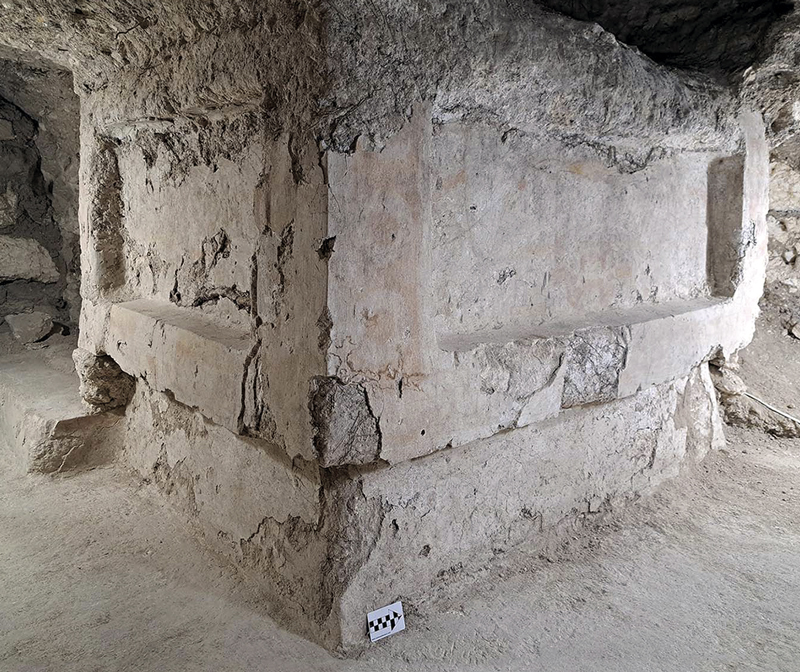
Edwin Román Ramírez / Brown UniversityBuilding unearthed in Guatemala is similar to others in MexicoEdwin Román Ramírez / Brown University
At a site near Tikal, a 2,400-year-old Mayan city in central modern-day Guatemala, a group of archaeologists unearthed an altar built around 300 AD, decorated with four panels painted red, black, and yellow, depicting a person wearing a feather headdress and flanked by shields or insignia. The face has almond-shaped eyes, a bar in the nose, and double earspools. It closely resembles other representations of a deity dubbed the Storm God in central Mexico. The experts from Guatemala and the USA who discovered the altar claim that it was not painted by a Mayan artist, but a skilled artisan trained in the city of Teotihuacan, located a thousand kilometers to the west. “The altar confirms that wealthy leaders from Teotihuacan came to Tikal and created replicas of ritual facilities that would have existed in their home city,” said Stephen Houston in a Brown University statement. The inhabitants of Tikal and the much more powerful Teotihuacan began interacting around 300 AD. Inside the altar, the archaeologists found a child buried in a sitting position, a rare practice in Tikal but common in Teotihuacan (Antiquity, April).
Republish