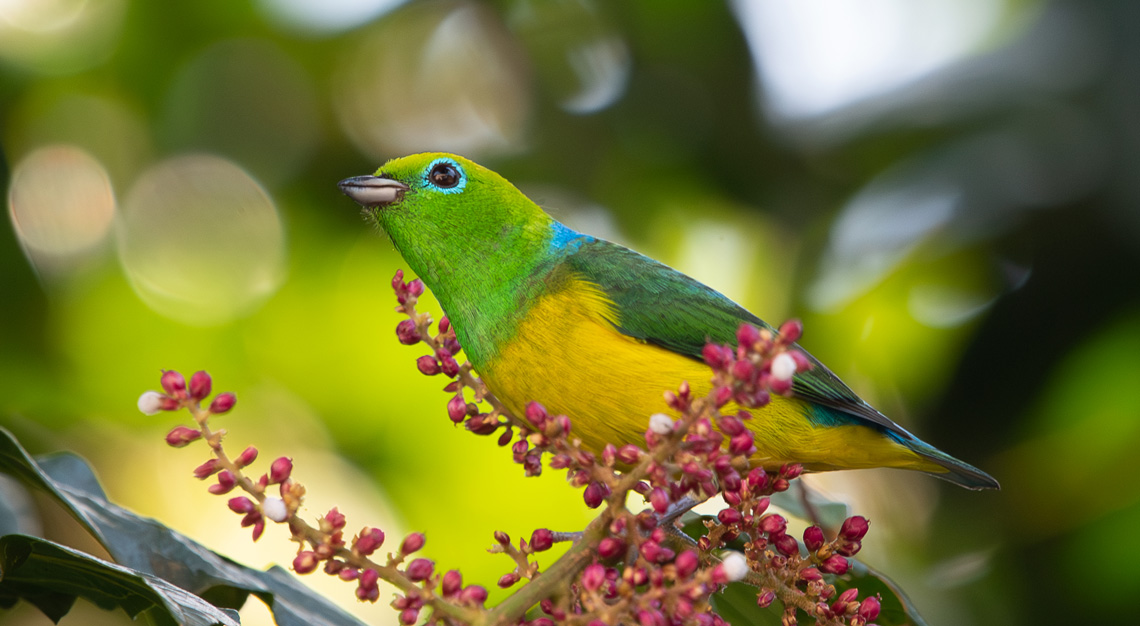
Just 13 centimeters (CM) long and with plumage ranging from bright orange-yellow to turquoise, the green-headed tanager (Tangara seledon) would struggle to survive in a large metropolis. Urban trees rarely produce the wild fruits it feeds on, and in the dull grays of the city landscape, its vivid plumage makes it an easy target for predators—dogs, cats, and even people—according to a study published in Global Change Biology in June. Instead, it is the adaptable, plain-feathered birds that thrive downtown. The rufous-bellied thrush (Turdus rufiventris) is one example, a species about 25 cm long with a rust-colored belly and a grayish-brown back. Its flexible diet includes insects, worms, cultivated fruits, and human leftovers.
“The more urbanization progresses, the more homogenized bird communities become,” says biologist Lucas Ferreira do Nascimento, a postdoctoral fellow at the University of São Paulo (USP) and lead author of the study. Nascimento explains that many of the showiest species owe their colors to carotenoid pigments. These come either directly from wild fruits or indirectly from eating small animals that feed on carotenoid-rich plants. “Take the greater flamingos (Phoenicopterus roseus),” he adds. “Their pink plumage comes from eating crustaceans loaded with red pigments. In captivity, on a diet of bird feed, they turn pale white.”
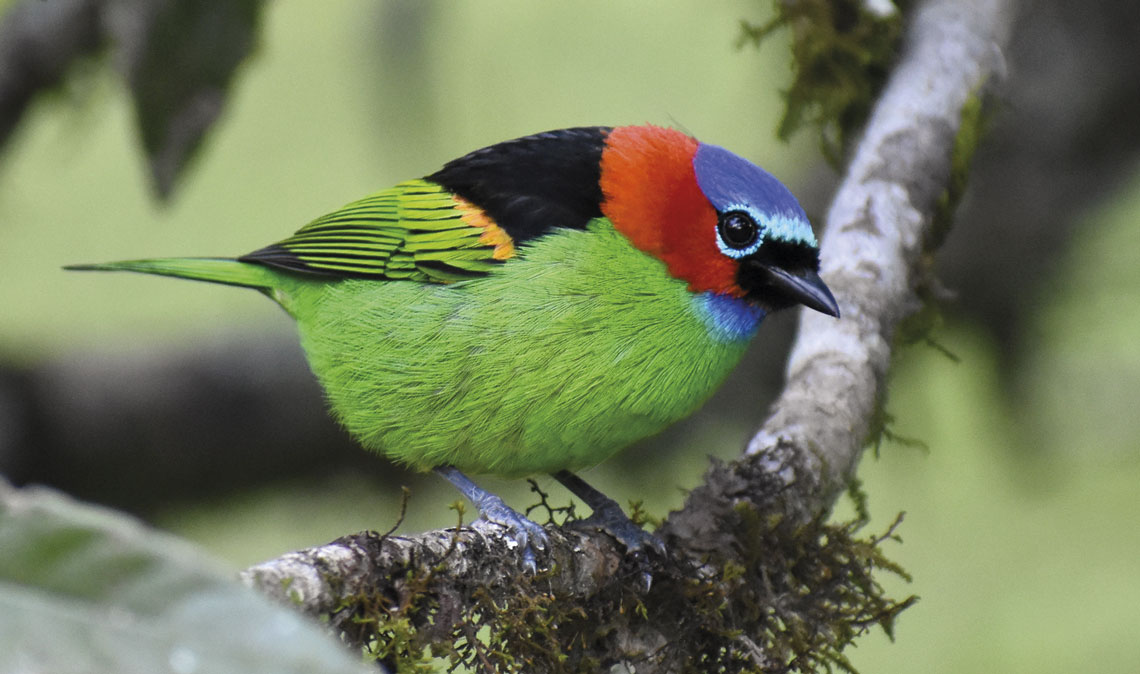
Mathias Pires / UNICAMPThe red-necked tanager (Tangara cyanocephala): in a concrete jungle, bright plumage becomes a liabilityMathias Pires / UNICAMP
Perching birds, or passerines, make up the largest order of birds—accounting for more than half of all known species. In his study, Nascimento combined data on plumage coloration, body size, and diet with geographic records from eBird, a citizen-science platform with information fed by birdwatchers across Brazil. He then overlaid these records with habitat maps from the MapBiomas project. This allowed him to build a nationwide dataset—classifying habitats into urban, rural, and natural vegetation zones—and then map how bird communities vary across these environments. He excluded non-passerines such as rock pigeons (Columba livia) and the blond-crested woodpecker (Celeus flavescens).
“This is a wide-ranging study that looks at whole bird communities rather than just one species—the usual approach in urban ornithology,” notes biologist Erika Hingst-Zaher, director of the Biological Museum at São Paulo’s Butantan Institute, who was not part of the research team. “It would be fascinating to complement this with museum records, to see how bird populations in cities have shifted over the decades,” she suggests. She notes that several institutions in São Paulo hold specimens collected from local neighborhoods dating back more than a hundred years.
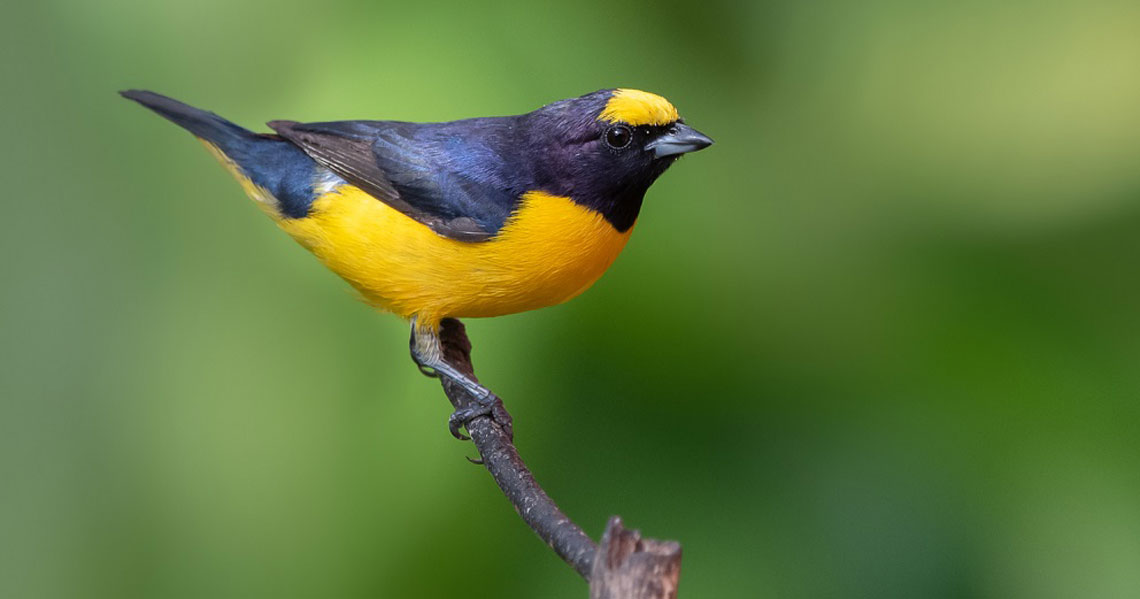
Mathias Pires / UNICAMP The purple-throated euphonia, with just two flashy colorsMathias Pires / UNICAMP
Nascimento was surprised to find saffron finches (Sicalis flaveola) thriving in cities. The males, with their vibrant yellow plumage that catches the eye of the less conspicuous females, must expend extra energy finding the right foods to keep that color bright, Nascimento explains. Given the challenging conditions of city life, such energy costs were thought to limit their chances of survival.
“Flashier birds can sometimes adapt to large cities, but they usually show only two or three strong colors,” Hingst-Zaher explains. She notes examples such as the purple-throated euphonia (Euphonia chlorotica), a tiny 10 cm bird with a dark blue-black back and yellow belly, and the red-crested cardinal (Paroaria coronata), about 18 cm long, with its vivid crimson head, white underside, and gray wings.
Hingst-Zaher and her team are currently studying purple martins (Progne subis), roughly 20 cm long, which migrate south from North America in September and spend the winter in South America, roosting by the thousands in both rural and urban landscapes until May. These birds are admired for their shimmering blue-black plumage and spectacular morning flights in huge flocks. But as Hingst-Zaher notes, their droppings and noise can be a nuisance for residents. As a result, city officials in places like Campinas and Ribeirão Preto have gone so far as to remove their nesting sites—driving the martins away. “We’ve discovered that these birds are contaminated with mercury, a likely factor behind their population decline in North America,” says Hingst-Zaher.
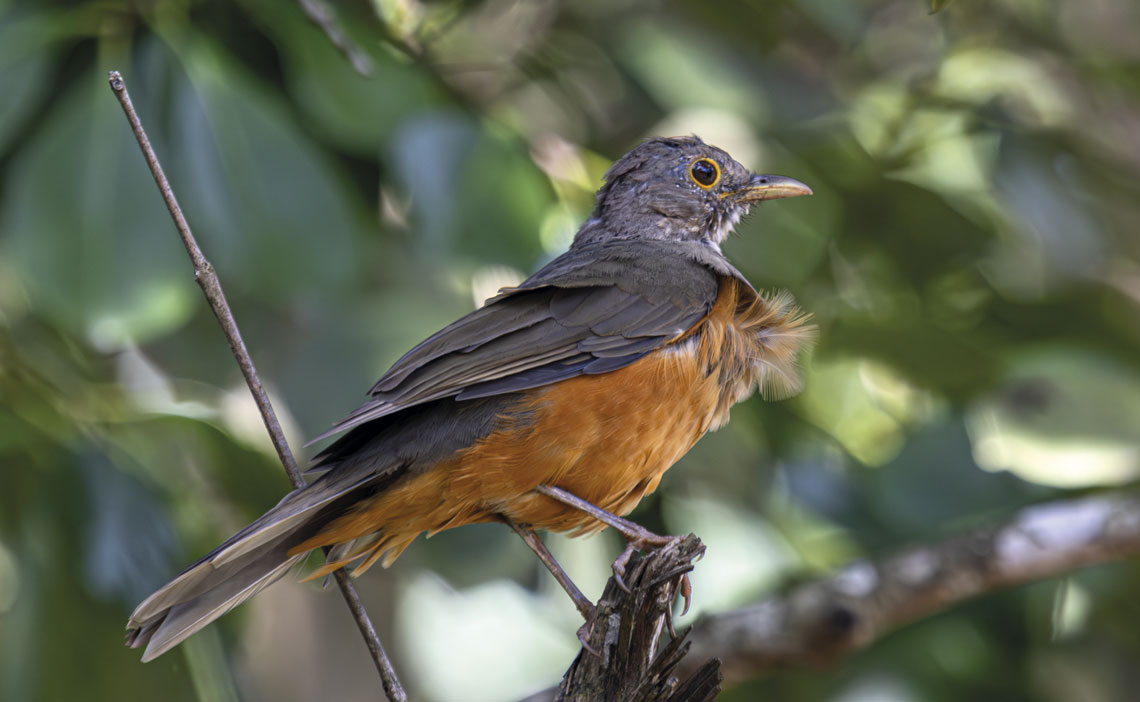
Leonardo Breder / USPThe modest rufous-bellied thrush are far better suited to city lifeLeonardo Breder / USP
“A diverse and colorful urban birdlife offers people both a direct connection with nature and a pleasant source of beauty,” Nascimento argues. He adds that birds’ beauty can inspire people to engage in conservation and value green spaces more. “Planting more fruit-bearing native trees could draw back brightly colored species—and make cities more inviting for everyone,” he suggests.
“Put down your phone and look up above the skyline—you just might spot a peregrine falcon (Falco peregrinus), the fastest bird on Earth,” says Hingst-Zaher, who also organizes Avistar, São Paulo’s annual birdwatching festival. About 50 cm long, the peregrine falcon is a migratory raptor that spends part of the year in Brazil. In a dive, it can reach 320 kilometers per hour, killing pigeons and other birds mid-air. “Once restricted to cliffs in North America and other regions, these falcons now roost on skyscrapers and even air-conditioning units—perfect launchpads for their aerial hunts,” Hingst-Zaher says.
The story above was published with the title “Urban palettes” in issue 354 of August/2025.
Projects
1. How do interactions between frugivorous birds and plants influence bird plumage coloration? (n° 20/09286-8); Grant Mechanism Doctoral Fellowship; Supervisor Paulo Roberto Guimarães Junior (USP); Beneficiary Lucas Ferreira do Nascimento; Investment R$101,515.75.
2. Urbanization as a potential environmental filter for passerine plumage coloration (n° 22/04217-3); Grant Mechanism Research Fellowship Abroad; Supervisor Paulo Roberto Guimarães Junior (USP); Beneficiary Lucas Ferreira do Nascimento; Investment R$162,677.95.
Scientific articles
NASCIMENTO, L. F. et al. Urbanization filters megacolorful, small-bodied, and diet-specialist species in tropical bird assemblages. Global Change Biology. Vol. 31, no. 6, e70263. June 11, 2025.