Recent studies suggest that what we eat can add or subtract years of healthy life, offering guidelines for an environmentally friendly diet
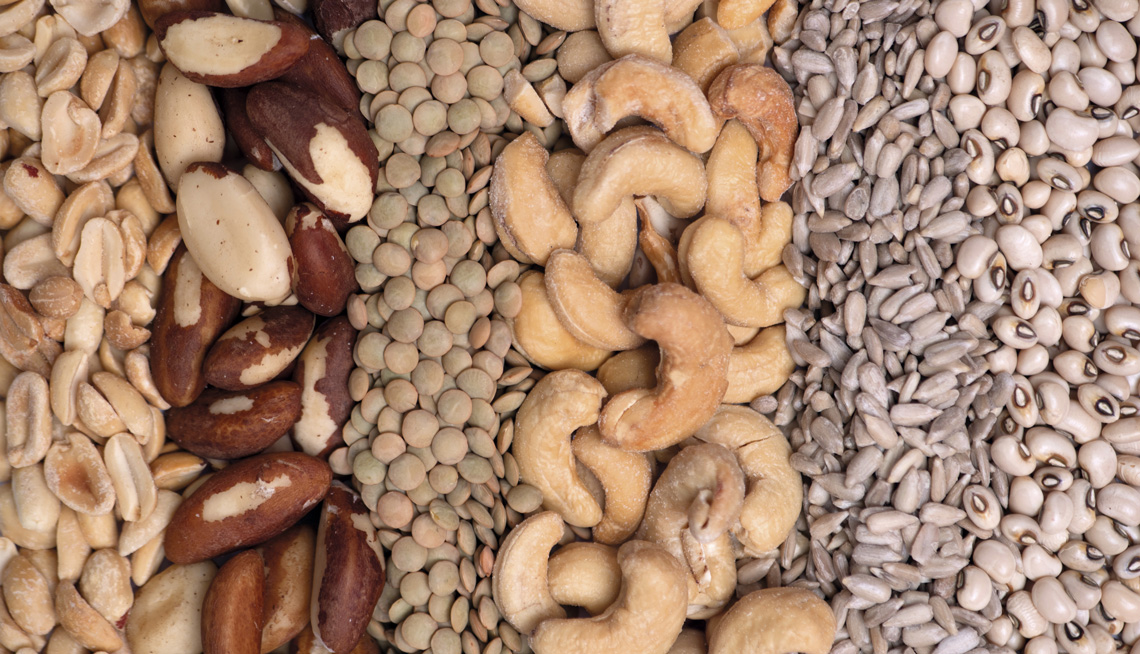
Grains and seeds have the highest scores on the Health Nutritional Index (HENI)
Léo Ramos Chaves / Pesquisa FAPESP
From 2010 to 2012, during her master’s degree, nutritionist Aline Martins Carvalho took the opportunity to speak with people waiting in line for the restaurant at the School of Public Health of the University of São Paulo (FSP-USP) about the possible negative effects of excessive red meat consumption. By administering questionnaires to those who ate at the restaurant, she found that one in every four people she spoke with had managed to reduce their meat consumption, both inside and outside the university.
Years later, during her postdoctoral fellowship at the University of Michigan (UM), in the USA, Carvalho discovered a methodology that could precisely calculate the impact of foods on health: the Health Nutritional Index (HENI), which associates frequent and prolonged consumption of certain foods with an increase or reduction, measured in minutes, of healthy life, defined as physical, mental, and social well-being.
In the last five years, now as a professor at FSP-USP, she has combined this approach, already applied in the USA, Switzerland, Denmark, and the Netherlands, with another developed by the nongovernmental organization World Wide Fund for Nature (WWF). This method assesses the environmental impact of food production through the emission of greenhouse gases (GHGs), land use, and water consumption, as detailed in a study published in May in the International Journal of Environmental Research and Public Health.
This study proposes that, in addition to price, calories, and the amounts of fat, protein, and sugar, it is also important to consider the potential environmental damage caused by the foods. By applying the HENI index to Brazilian food, the team from USP calculated the impact of specific quantities of different foods on the length of healthy life. Crackers, due to their excessive trans fat and sodium chloride content, are the most harmful food on the list: 100-gram (g) portions can reduce healthy life expectancy by 55.2 minutes (min) per day if consumed continuously over a five-year period. At the other extreme, the same quantity of freshwater fish can add 9.1 minutes per day.
“The HENI index calculates the composition of the foods considering 15 categories or ingredients, such as legumes, red meat, sodium, and omega 3,” said public health expert Olivier Jolliet, of the Technical University of Denmark (UTD), creator of the index and one of the authors of the article, to Pesquisa FAPESP. “Based on population studies, we estimate the health impact of each food, assigning positive values to foods associated with gains in healthy lifetime and negative values to those linked to its loss.” In an article from August 21, 2021, on the website The Conversation, Jolliet recognized that, day-to-day, it is difficult to know how the choice between a salad or a portion of fried chicken wings in a bar translates in terms of the general impact on health and on the environment. According to him, this methodology shows exactly what would be most beneficial.
Alexandre Affonso / Pesquisa FAPESP
The results can help identify the best foods for planning a daily diet, but they should not be applied on an individual level to calculate gains or losses in healthy life or environmental impact. “The index is calculated based on population averages,” explains Carvalho. She adds that the health impact of foods on each person depends on genetic and environmental factors, and preexisting conditions.
Carvalho and her team selected the 33 foods that provide the most energy in Brazil, based on a list of the 1,141 most commonly consumed items, compiled by the Brazilian Institute of Geography and Statistics (IBGE). Then, they applied the HENI to each item. In this study, 100 g of rice and beans, a staple of the Brazilian diet, added 1.4 min per day of healthy life if consumed frequently over a lifetime. However, data from the IBGE indicate that the typical Brazilian diet includes beef, sandwich cookies, and soda, items that reduce healthy life, by 24 min, 31.6 min, and 1.9 min per 100 g, respectively, making the overall impact of a typical meal negative.
“Unfortunately, the diets of many Brazilians, even those who consume rice and beans, have not adhered to the recommendations of the second edition of the Guia alimentar para a população brasileira (Dietary guidelines for the Brazilian population), released in 2014 by the Brazilian Ministry of Health,” adds nutritionist Helen Hermana Hermsdorff, from the Federal University of Viçosa, who did not participate in the study. In a survey of 7,560 participants, published in May in the International Journal of Environmental Research and Public Health, she describes the limitations and consequences of having limited variety in daily meals, with insufficient intake of vitamins B2, B3, C, E, and minerals such as magnesium, selenium, copper, and zinc. In her view, this pattern of a micronutrient-poor diet can weaken the body’s defenses against disease-causing microorganisms, increase the risk of inflammation, and reduce bone strength.
“The diet changes very little across different regions of the country, something that we call nutritional monotony,” warns Carvalho. The only fruit eaten regularly—and which made the list—is the banana, rich in carbohydrates but poor in other nutrients. Even so, each 100 g portion adds 8.2 minutes of healthy life. Vegetables didn’t make the list because they account for only a tiny part of the population’s regular diet.
Nutritionist Larissa Loures Mendes, of the Federal University of Minas Gerais (UFMG), who did not participate in the study, says she was surprised that the results of the study suggested a diet with low regional diversity: “I expected that at least the North would have greater variety, more than just fish and açaí.”
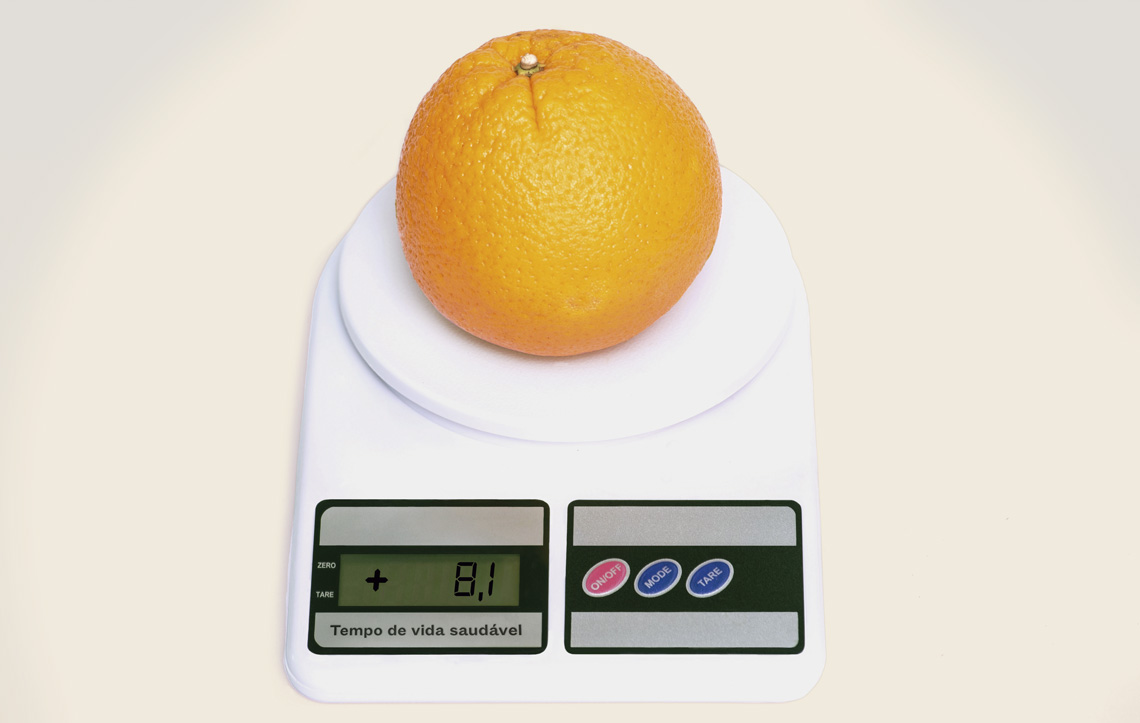
Léo Ramos Chaves / Pesquisa FAPESPFoods such as oranges, besides being nutritious, increase healthy lifeLéo Ramos Chaves / Pesquisa FAPESP
The HENI classifies red meat, with a negative index of 23.9, as one of the most harmful foods for health, second only to ultra-processed foods, and the most damaging to the environment (see table). It is a result that may be unsettling, given that most Brazilians consume this product regularly. According to the Brazilian Institute of Geography and Statistics (IBGE), vegetarians account for only 14% of the population.
For Hermsdorff, this result should be viewed with caution: “Beef is a source of essential amino acids that the body cannot produce, and milk [with a negative index of 0.1] is a source of calcium, which contributes to bone formation.” According to her, in the case of beef, the problem lies in excessive consumption, which increases the risk of heart and metabolic diseases, and the levels of low density cholesterol, known as bad cholesterol.
“Rather than eliminating beef consumption, we need to promote conscious consumption, which considers the environmental damage,” suggests the researcher from UFV. One of the possibilities would be swapping beef for another, less harmful type of meat: 100 g of pork subtracts 16.7 min, and chicken, 3.3 min.
So, would vegetarianism be the healthiest way of eating? “When not practiced carefully, a purely plant-based diet can also be harmful, especially if you are overreliant on ultra-processed vegetarian foods, such as cereal bars, vegetable drinks, cookies, savory snacks, and ready meals like meatballs, lasagnas, and pies. These foods, despite not containing ingredients of animal origin, can contain high levels of additives, artificial colorings, and saturated fat,” warns Hermsdorff. “Many use palm oil, cheaper than soybean oil, but with a higher level of saturated fat.”
The researchers are unanimous in indicating the importance of diversifying the diet, including vegetables, fruit, and whole cereals, and reducing the consumption of ultra-processed foods, which were responsible for almost 20% of the calories obtained by the Brazilian population in 2017 and 2018 according to a study published in Revista de Saúde Pública in April 2023 (see Pesquisa FAPESP issue n° 325).
Among the healthiest foods are seeds from oilseed plants, including chia and pinhão (araucaria pine nut): one 20 g portion adds 46.5 min and 44.7 min of healthy life, respectively. The same quantity of peanuts (44.4 min) or cashew nuts (44.6 min) is equally beneficent. Fruits also help: a 100 g portion of mango adds 8.2 min of healthy life.
Alexandre Affonso / Pesquisa FAPESP
The score for olive oil, on the other hand, may disappoint those who consider it a healthy product: its HENI is zero, in other words, it has no impact on healthy life. Hermsdorff points out that the benefits of olive oil have been observed in populations that follow what is known as the Mediterranean diet, which includes fish, cheese, whole grains, fruit, nuts, and a small amount of red meat, two or three times a week. Therefore, the benefit is more a result of the varied diet than the consumption of olive oil alone.
“Soybean and canola oils are also plant-based and rich in essential fatty acids,” Hermsdorff notes. “They should all be used in moderation, as cooking ingredients.” She recommends avoiding fried foods and prioritizing other ways of making food, such as grilling, boiling, and roasting.
The recommendations support the desire to eat better: a survey by Datafolha in 2017 showed that 63% of Brazilians want to reduce their beef consumption, which could be partially replaced by other sources of plant-based protein, such as beans, lentils, and chickpeas.
“Restricting the consumption of red and processed meat, such as ham, salami, and frankfurters, to 40 g a day, could reduce the price of each meal by 10% and avoid around 14,000 deaths per year from chronic illnesses, even if the effect takes a few years to be detected,” comments nutritionist Eliseu Verly Júnior, from the State University of Rio de Janeiro (UERJ), coauthor of the study coordinated by USP, who did a postdoctoral fellowship under the supervision of Jolliet. According to him, the simultaneous reduction of red and processed meat and sugary drinks with an increase in fruits, vegetables, and brown rice would make the meal 3% cheaper and avoid around 50,000 deaths per year.
Small dietary changes can be more effective than drastic changes and bring more health benefits, says the researcher, citing data from an article published in April 2024 in the European Journal of Nutrition, which had funding from the Rio de Janeiro State Research Foundation (FAPERJ). “The mere substitution of white rice for brown rice by 30% of the population would avoid around 2,000 deaths from chronic illnesses per year,” states Verly. For him, if the entire population included 125 g of vegetables and a small fruit in their diet each day, the cost of food would increase by around 8%, but the change would avoid around 16,000 deaths.
Changing habits “Changing eating habits is a lifelong process,” observes Verly. “But that doesn’t mean someone can’t enjoy the occasional barbecue,” he adds, classing himself as a weekend carnivore and a vegetarian the rest of the week. Mendes, from UFMG, stresses that the overall dietary balance is what counts. “Generally, people do not realize that eating something that gives them pleasure every day, such as candy, may not be good for them,” she says. “But continuous consumption is a classic risk factor for health, just like smoking, drinking alcohol, and a sedentary lifestyle.”
Alexandre Affonso / Pesquisa FAPESP
There are, however, limits to the positive effects of foods. A person who consumes 400 g of fruit per day, for example, will not become healthier by adding another 100 g. But for someone who doesn’t eat any fruit, 100 g can make a difference, although it is not advisable to eat lots of just one type of food.
According to Hermsdorff, unlike beef and ultra-processed foods, eating large amounts of fruit is unlikely to cause harm to your health, except in great excess, as with any other food. “Fruits have little fructose compared to a spoonful of sugar or a soda. They contain compounds with antioxidant and anti-inflammatory potential, which reduce the risk of illnesses, and fiber, which can modulate the microbiota,” she says.
In 2012, Carvalho founded Sustentarea, a sustainable food research and outreach center at USP. On its website, the center offers free games, recipes, dietary guidelines, educational materials, online courses, and cooking workshops. In one of the games, Susten-Trunfo, the winner is the person whose recipe has the smallest environmental footprint, is the cheapest, and the easiest to make. “We have 60 volunteers across Brazil disseminating our material and promoting discussions about nutrition and sustainability,” she says.
In order for the majority of the population to adopt healthier and more environmentally friendly eating habits, specialists in the field recognize the need for public policies that support and encourage shifts in eating patterns. Adjustments could also be made to the agrifood system, allocating more resources to healthy and sustainable foods. For Brazil, one of the world’s largest beef producers, with 210 million head of cattle, it would be no small feat.
Australia is one of the first countries to take a step in this direction by carrying out an assessment of its food system. Australia’s National Science Agency (CSIRO) assessed the hidden cost of the impact of food production on the environment and health at US$247 billion. In a statement from the agency, its director, Michael Robertson, emphasized that this type of assessment is the first step toward transforming the food system, improving public health, and preserving the environment.
Between beans and beef Due to environmental impacts, experts recommend reducing the consumption of meat
Beans, olive oil, and cassava flour are the foods with zero or almost zero environmental impact, since they produce little carbon dioxide (CO₂) and consume little water. On the other extreme, red meat generates the most greenhouse gases (GHGs) and has the greatest environmental impact. “The production of a 100 gram [g] steak generates 18 kilos [kg] of CO₂, the equivalent of 7.8 liters [L] of gasoline used as fuel,” explains Aline Carvalho, of the University of São Paulo (USP).
Mainly as a result of cutting down native vegetation to turn land into pastures, the emissions from beef are 11 times greater than those from pork, which contributes less to deforestation and produces 1.6 kg of CO₂ per 100 g. “The calculation includes all stages of the food production chain,” explains Carvalho.
Larissa Mendes, of the Federal University of Minas Gerais (UFMG), noticed a rarely seen concern in this type of research: calculating the water consumption in food production. The greatest consumption of water occurs in farming freshwater fish in captivity: it is 123.8 L for every 100 g. In second place is pizza, which consumes 109.4 L for every 100 g—most of which is from the production of cheese.
According to Olivier Jolliet, of the Technical University of Denmark, vegetables produced in greenhouses and exotic fruits transported by cargo planes result in the emission of large amounts of CO2 and should be avoided. Conversely, foods that are healthy and produced close to where they are consumed could reduce environmental impacts. “We need to adopt more vegetarian foods and, at the same time, reduce the environmental impact of production methods,” he stresses. “For this to be possible, we need more options of foods that are healthy and have low environmental impact.”
In a study published in March in the journal Nature Food, Jolliet and other researchers from Denmark and the USA, using another methodology for assessing environmental impacts, recommended limiting the consumption of meat to 255 g (the equivalent of two chicken breasts) per week or 36 g per day, the equivalent to two soup spoons—and only poultry and pork. They did not even include beef, as it is considered too harmful to be part of an environmentally friendly diet. North Americans and Europeans eat between six and 10 times more than the proposed value.
The story above was published with the title “New criteria for eating well” in issue 354 of August/2025.
Project The complexity of Brazilian food systems and the global syndemic: Simulations and proposals (n° 22/03091-6); Grant Mechanism Research Grant ‒ Initial Project; Principal Investigator Aline Martins de Carvalho (USP); Investment R$587,429.00.
This article may be republished online under the CC-BY-NC-ND Creative Commons license. The Pesquisa FAPESP Digital Content Republishing Policy, specified here, must be followed. In summary, the text must not be edited and the author(s) and source (Pesquisa FAPESP) must be credited. Using the HTML button will ensure that these standards are followed. If reproducing only the text, please consult the Digital Republishing Policy.