


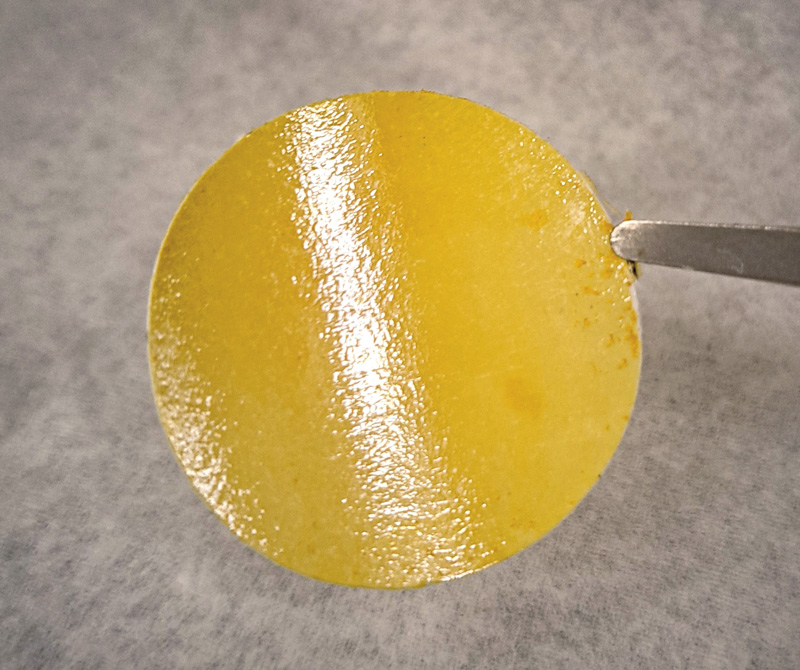
LEE, T. H. et al. Science. 2025Microporous membrane separates hydrocarbons by their molecular weightLEE, T. H. et al. Science. 2025
Engineers at the Massachusetts Institute of Technology (MIT) have developed a membrane capable of filtering crude oil components based on their molecular size. The film is made by the reaction between two molecules: MPD dissolved in water, and TMC dissolved in hexane. Together they form a thin polyamide film. The researchers modified the chemical bonds that connect the molecules and incorporated triptycene, which promotes the formation of pores sized precisely to allow hydrocarbons to pass through. The membrane was used with good results to separate a mixture of toluene and triisopropylbenzene and another of naphtha, kerosene, and diesel. “With a membrane like this, you could have an initial stage that replaces a crude oil fractionation column. You could partition heavy and light molecules and then use different membranes in a cascade to purify complex mixtures to isolate the chemicals that you need,” said Zachary Smith, lead author of the study, in an MIT statement. If proven viable on a large scale, the innovation could reduce the amount of energy needed to break down hydrocarbon mixtures into products like gasoline and diesel (Science, May 22).
Republish