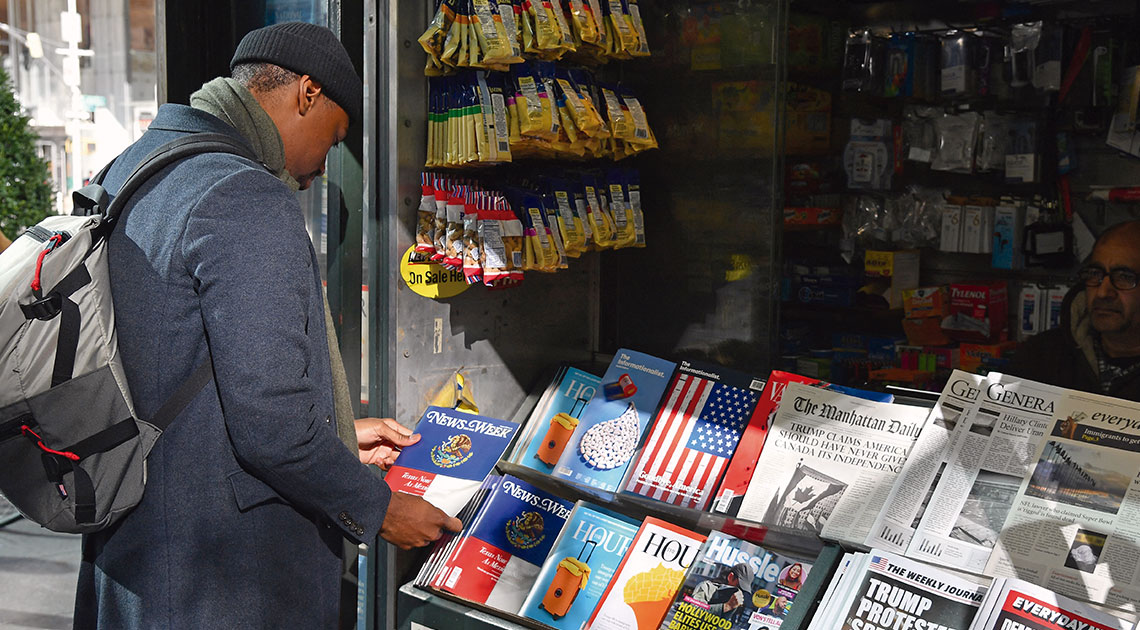
Angela Weiss / AFP via Getty Images A newsstand in New York City, set up by Columbia Journalism Review on the eve of the 2018 elections, displayed fake news to warn about the dangers of misinformationAngela Weiss / AFP via Getty Images
Warning voters in advance about the lies, rumors, and fake news spread during election campaigns, rather than trying to address the issue afterward, can help prevent people from being deceived, according to a study that analyzed recent national elections in the USA and Brazil. A team led by Dartmouth College, USA, which included Brazilian researcher Marília Gehrke of the University of Groningen in the Netherlands, reached these conclusions after conducting three experiments. The first, involving 2,643 people who interacted with reliable short articles or neutral information, examined how so-called prebunking (warning people about misinformation in advance) and corrections from reliable sources restored voter confidence ahead of the 2022 midterm elections in the USA. The second study, with 2,949 participants, analyzed the effects of prebunking and corrections by reliable sources after the 2022 presidential election in Brazil. In both cases, prebunking proved the more effective strategy for restoring confidence in the elections and reducing concerns about electoral fraud. The third experiment, involving 2,030 participants, focused on the 2022 midterm elections in the USA and showed that warnings that did not mention conspiracies or insurrections were more effective than those that did, probably because highlighting the risk induced skepticism toward factual articles (Science Advances, August 29).
Republish