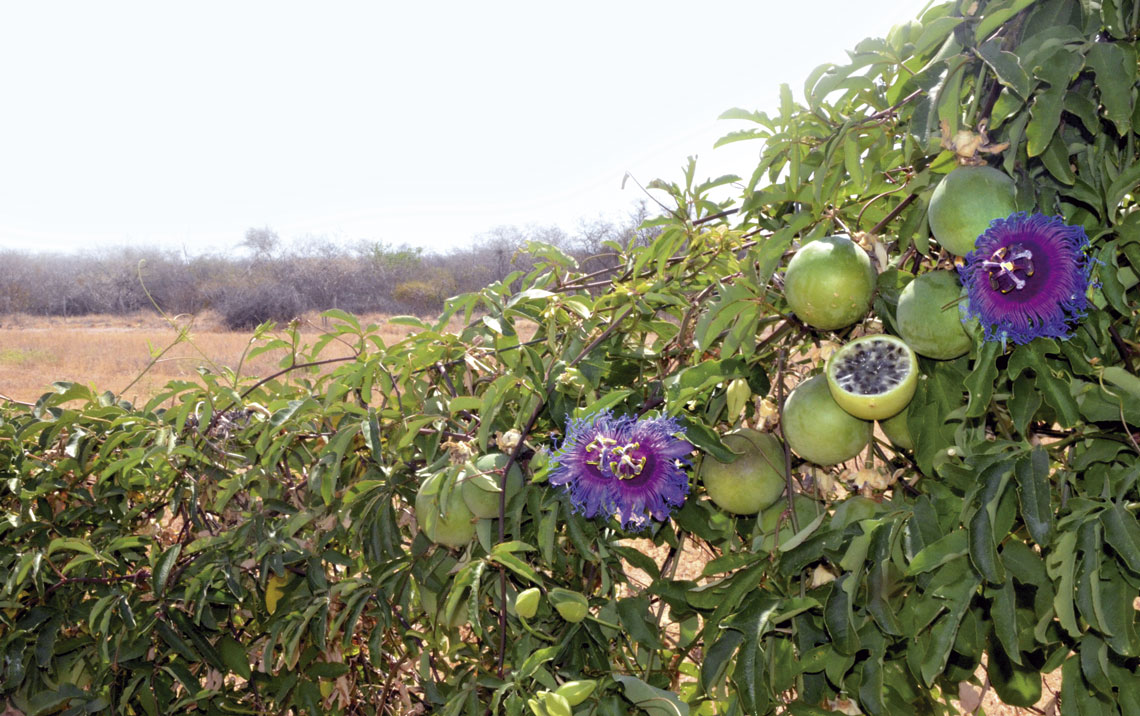
Fernanda Muniz Bez Birolo / Embrapa SemiáridoWild passion fruit, a source of income that helps preserve native vegetationFernanda Muniz Bez Birolo / Embrapa Semiárido
Ecologists from the federal universities of Pernambuco (UFPE) and Paraíba (UFPB) have proposed a strategy dubbed “multifunctional landscapes” to curb degradation in the Caatinga (a semiarid scrubland biome) while addressing the needs of rural communities. The approach is based on the observation that conventional land use in Brazil’s semiarid Northeast—extensive livestock farming (particularly goats), extraction of forest products, and slash-and-burn agriculture—results in environmental degradation and increased desertification. This could be reversed by implementing techniques that improve water storage, soil preservation, and agricultural productivity, which would also improve rural living conditions. “Even on small properties, multifunctional landscapes can help maintain forest integrity, retain biodiversity, and promote significant socioeconomic improvements through increased production,” says Marcelo Tabarelli of UFPE, who led the proposal. Change will require a joint effort from local communities, nongovernmental organizations, research centers, and government agencies, with support from public policies (Conservation Biology, June).
Republish