newsletter printed editions
español português
  • Science
  • S&T Policy
  • Technology
  • Humanities
  • Health
  • Videos
  • Print issue
  • newsletter
  • português español

Issue # 337 _ March 2024
Browse the magazine

Cover

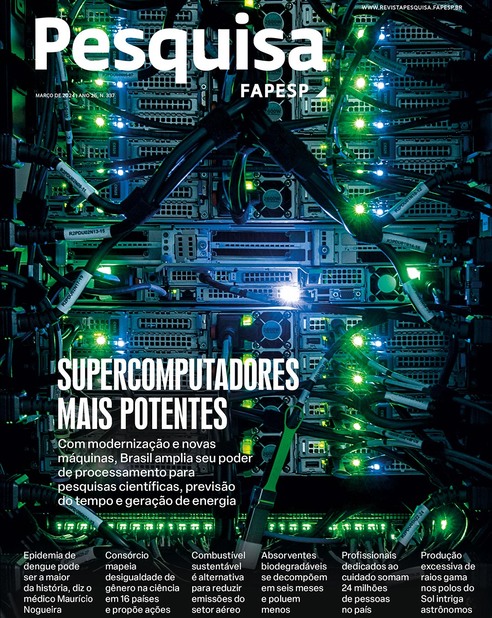
Brazil improves its supercomputer infrastructure
Upgrades to the Santos Dumont supercomputer and acquisition of new machines by UNICAMP, INPE, and a consortium of São Paulo universities will increase the country’s high-performance computing power By Domingos Zaparolli
The exaflop era
With the power to perform 1 quintillion mathematical operations per second, Frontier has set a new standard in data processing By Domingos Zaparolli

Interview

Barbara Weinstein: A Brazilianist in transformation

Part of the first group of women to graduate from Princeton University, the American historian analyzed the leading role of regional elites and workers in business dynamics in Brazil By Christina Queiroz


Sections

Data

Editorial

Good practices

Notes

Research Itineraries

Retrospect


Equality

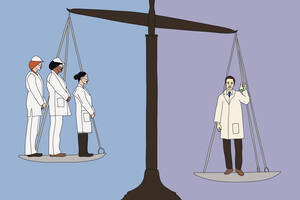
Consortium maps gender inequality in science across 16 countries and proposes response

Researchers seek to remove structural obstacles that are harmful to women

By Fabrício Marques

Funding

Fund to identify organizations that support the Black population with Black leadership

Initiative seeks to collect data on inequality and philanthropy

By Maurício Oliveira
Human resources

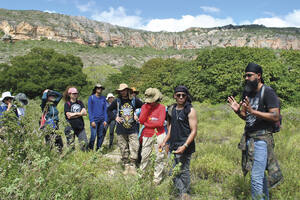
Field courses in ecology encounter obstacles in Brazil

Practical disciplines, essential to the training of future researchers, suffer from a lack of funding

By Sarah Schmidt

Interview

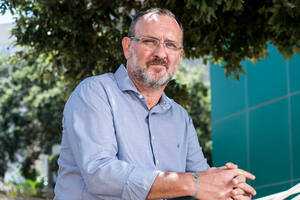
2024 could become the year with the highest number of dengue cases

FAMERP virologist Maurício Nogueira discusses the characteristics of the current epidemic and the need for the health system to prepare for more patients

By Ricardo Zorzetto

Immunology

Mechanism that keeps the immune response in check also aggravates malaria

The protozoan that causes the disease multiplies freely when certain immune cells are taken out of the fight

By Renata Fontanetto

Neurology

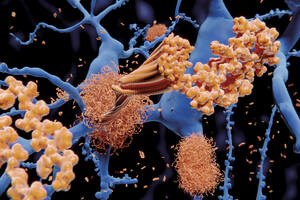
Study identifies rare form of Alzheimer's acquired through treatment no longer used

Individuals were given a hormone extracted from cadavers, contaminated with protein fragments associated with the onset of the disease

By Ricardo Zorzetto

Ethnobotany

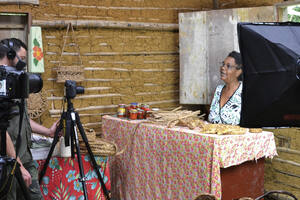
Quilombola communities reveal the use of plants

Participatory research contributes to knowledge and university students develop cattail management plan

By Letícia Naísa

Zoology

Wildcats from the Andes and Central America differ to those found in Brazil

Complex that includes Leopardus tigrinus and L. guttulus gains new species, L. pardinoides, all in danger of extinction

By Maria Guimarães

Paleontology

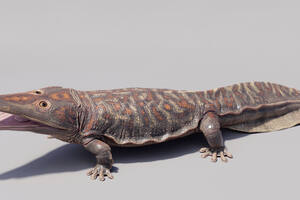
Fossil lineage found in Rio Grande do Sul survived the world’s biggest extinction event

Predator lived 252 million years ago and had relatives in the region of present-day Eastern Europe, in what is now Russia

By Gilberto Stam

Computing

AI systems could monitor animals crossing highways

Study tested the performance of computer vision models

By Giselle Soares

Astrophysics

Sun emitted more high-energy gamma rays than usual during its last peak of activity

Much of the radiation was produced at the star's magnetic poles in June 2014

By Marcos Pivetta

Astrophysics

Merging of neutron stars generates second-largest gamma-ray burst

Phenomenon produced rare earth metals in space

By Marcos Pivetta


Sustainability

Brazil prepares to produce sustainable aviation fuel

In the global race to decarbonize the airline sector, Brazil wants to play a leading role in offering an alternative to fossil kerosene

By Frances Jones

Sustainability

SAF Studies advance in the country

Universities and research centers are investigating new methods, processes, and raw materials to increase biofuel production and reduce costs

By Frances Jones

Energy

Brazilian research center develops prototype nuclear battery

Device can generate energy for hundreds of years without needing to be recharged

By Yuri Vasconcelos

Technology

Biodegradable menstrual pad offers a less polluting alternative

Decomposing in up to six months, the product aims to reduce plastic waste and pollution

By Carolina Schwartz
Innovation

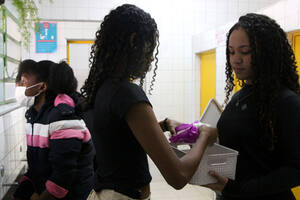
The challenge of period poverty

The inability to manage menstruation properly due to poverty causes significant social and economic hardship for millions of women globally

By Carolina Schwartz

Sociology

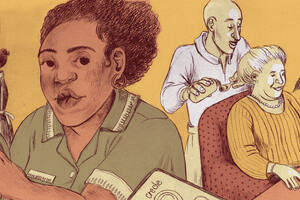
24 million people work in the care sector in Brazil

Figure corresponds to 25% of the employed population and was released as the country draws up its first national policy on the topic

By Christina Queiroz

Visual arts

Mário Pedrosa highlighted the artwork of marginalized groups

The story of one of Brazil's most important critics is intertwined with the history of the twentieth century

By Juliana Vaz

Musicology

Collection explores musical diversity across regions of Brazil

Books combine the study of sound with the social history of parties, concerts, and bands

By Diego Viana
Follow Us
Home About us Contact
FAPESP Agência FAPESP Biblioteca Virtual

© Revista Pesquisa FAPESP - All rights reserved.

>