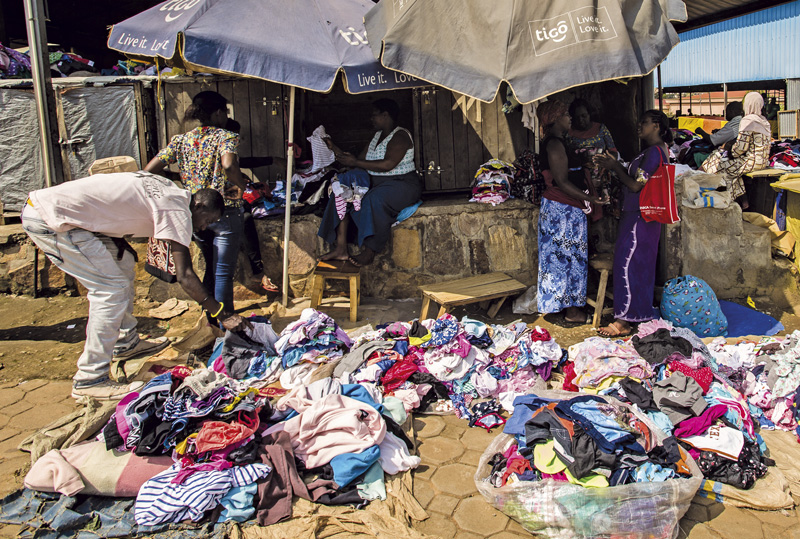
Jacques Nkinzingabo / AFP via Getty Images Second-hand clothing market in Kigali, RwandaJacques Nkinzingabo / AFP via Getty Images
On March 30, the United Nations International Day of Zero Waste, Inger Andersen, head of the United Nations Environment Programme (UNEP), based in Nairobi, Kenya, warned that waste from the textile industry is creating an environmental crisis in Africa. Due to limited waste management infrastructure, second-hand clothes sent to Africa from the US, Europe, and China under the pretext of charity are increasingly ending up in landfills, burned in open piles, or dumped in rivers. “Every second, a truckload of clothes is thrown away or incinerated,” said Andersen. “Land, rivers, and oceans are becoming more polluted with cheap, disposable garments.” According to Greenpeace, a market in Accra, the capital of Ghana, receives 1,500 tons of second-hand clothing every week, almost all of which contain synthetic fibers that break down into microplastics. The entire textile chain, from fiber production to use, contributes to environmental degradation, UNEP warns. Scraps from manufacturing in clothing-producing countries like Kenya also contribute to the problem. Andersen has urged consumers to reuse clothing and reduce overconsumption (Nature Africa, July 4).
Republish