São Paulo–born ecologist Gustavo Paterno first visited Sumatra, Indonesia, in 2021 as coordinator of a forest restoration project managed by the University of Göttingen, Germany. He observed islands of trees in the midst of a vast oil palm plantation and remembered an experiment he had conducted in the Caatinga (a semiarid scrublands biome in Brazil) 10 years earlier.
During a spell at the Federal University of Rio Grande do Norte (UFRN), Paterno planted trees under other trees in a pasture area in Petrolina, Pernambuco, to see how they established an interaction known as ecological facilitation—when one plant benefits another, protecting it from unfavorable environmental conditions. Some trees, such as the Poincianella microphylla and the Cnidoscolus quercifolius (known locally as the catingueira-rasteira and the faveleiro respectively) helped others grow by creating shade with their canopies and dropping leaves that maintained soil moisture and replenished it with nutrients for the younger plants.
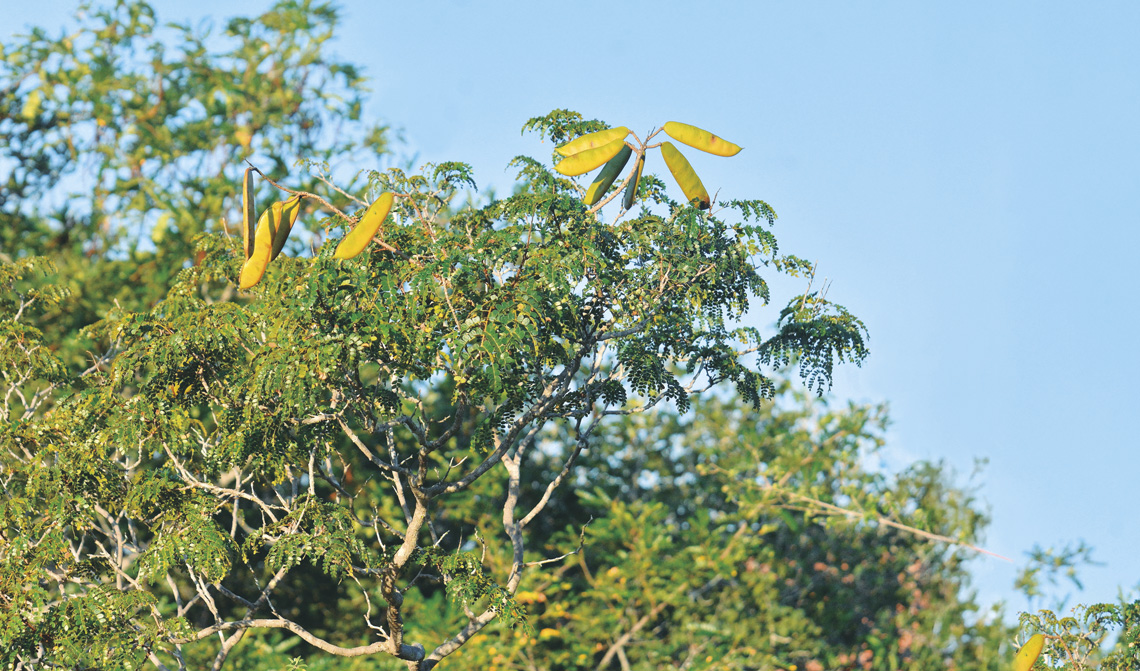
Together with his master’s advisor, Gislene Ganade, and the leader of the Petrolina experiment, José Alves Siqueira Filho, he hypothesized that this interaction may occur between different species; that greater initial tree diversity may promote greater diversity of beneficiary plants; and that the impact may vary—for example by initially favoring germination, but later hindering growth. He theorized that these phenomena could be more widespread and not only local, but he had no way to prove it. His research in Sumatra, described in Science in November 2024, confirmed his ideas by showing similar relationships even in a different environment, where trees grow up to 40 meters tall.
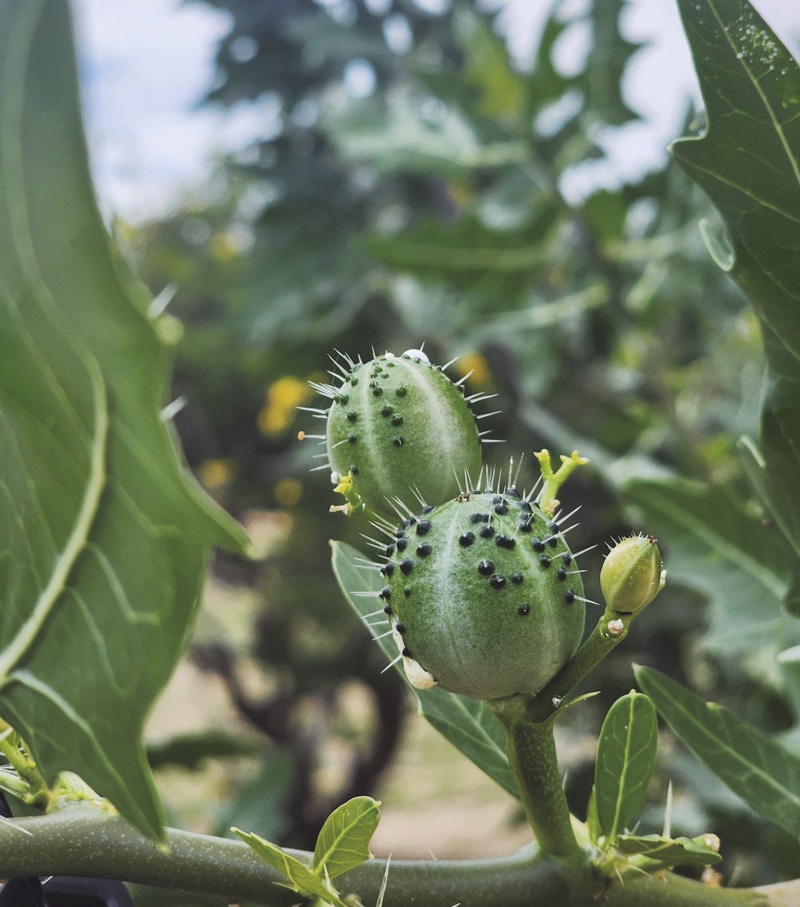
Renato Bandeira / iNaturalist A faveleiro from Curaçá, Bahia: the primary facilitator species in the Caatinga biomeRenato Bandeira / iNaturalist
Paterno later observed interactions between pairs of trees on a much larger scale, influenced by light or chemical compounds that can benefit or hinder plant growth. At the invitation of ecologist Miguel Verdú of the University of Valencia, Spain, who had read about his work in the Caatinga in a January 2016 article in the Journal of Vegetation Science, the Brazilian ecologist joined RecruitNet, a global network created by Verdú in 2018 that applied the concept of tree recruitment networks. He divided the species into two groups: recruiters or facilitators, which are the first to arrive in new environments and create favorable conditions for other species; and recruits, which initially grow under the canopy of the recruiters.
Described in the journal Ecology in February 2023, RecruitNet stores information from 2,355 plots (or sampling points) in 143 desert, temperate, and tropical locations across 23 countries in five continents. The dataset accompanying the article, comprised of 135,211 rows, details the sampling locations of 118,411 interactions between pairs of recruiters and recruits, covering 3,318 tree species. The researchers studied tropical and subtropical rainforests similar to the Amazon in Panama, Peru, China, Papua New Guinea, and the Philippines. Papua New Guinea, high in biodiversity, had the most interactions, at 557 species and 40,365 interactions.
The Brazilian data detailing tree interactions in the Caatinga were collected by Paterno, while those from two areas of the Atlantic Forest in Paraná were collected by biologist Vinícius Marcílio-Silva, now at North Dakota State University (NDSU), USA. His work was the result of his master’s degree at the Federal University of Paraná (UFPR), published in Austral Ecology in May 2015.
In the Caatinga and the Atlantic Forest, Paterno and Marcílio-Silva recorded 258 interactions, 29 recruiter species, and 56 recruits. The most protective was a tree found in the Atlantic Forest, from Minas Gerais to Rio Grande do Sul, known locally as the capororoca (Myrsine umbellata), which formed 57 pairs with recruited species, including itself. The second, known locally as the pixirica (Miconia sellowiana) and found in the Atlantic Forest and the Cerrado (a wooded savanna biome), fostered the growth of 43 other species, including itself. Plants of the same species do not always help each other, since they may compete for the same nutrients or attract herbivorous insects that attack both adults and young plants.
In 2013, while counting plants growing under the shade of others in the Guartelá and Vila Velha state parks, located 150 km apart, Marcílio-Silva was impressed by the capororoca’s ability to grow in different environments—among Araucaria moist forests, open plains, or in rocky areas with little soil. “This species manages to outcompete grasses, produces simple flowers that can be pollinated by many insect species, and disperses seeds widely,” he noted.
Curiously, the capororoca was predominant in Guartelá but not in Vila Velha, where it ranked third among recruiters. “The most abundant species is not necessarily the first to arrive, but the most aggressive, capable of occupying the space of others,” Marcílio-Silva reflected. He asked the same question as Paterno: where else might the same phenomena be observed? The question went unanswered for many years, until Verdú invited him to also join RecruitNet.
In the Caatinga, the main recruiters were the catingueira-rasteira—common in degraded areas—with 41 interactions, and the faveleiro, with 40. The total number of recruited species in the Caatinga was lower than in the Atlantic Forest, but recruitment capacity was three times higher, taking each biome’s diversity into account. The same effect was observed in semiarid areas of the western USA, Mexico, Argentina, and Saudi Arabia. Generally, as described in the June issue of Biological Review, the number of interactions between trees is higher in drier regions than in wet areas, because plants depend on each other more in less hospitable environments.
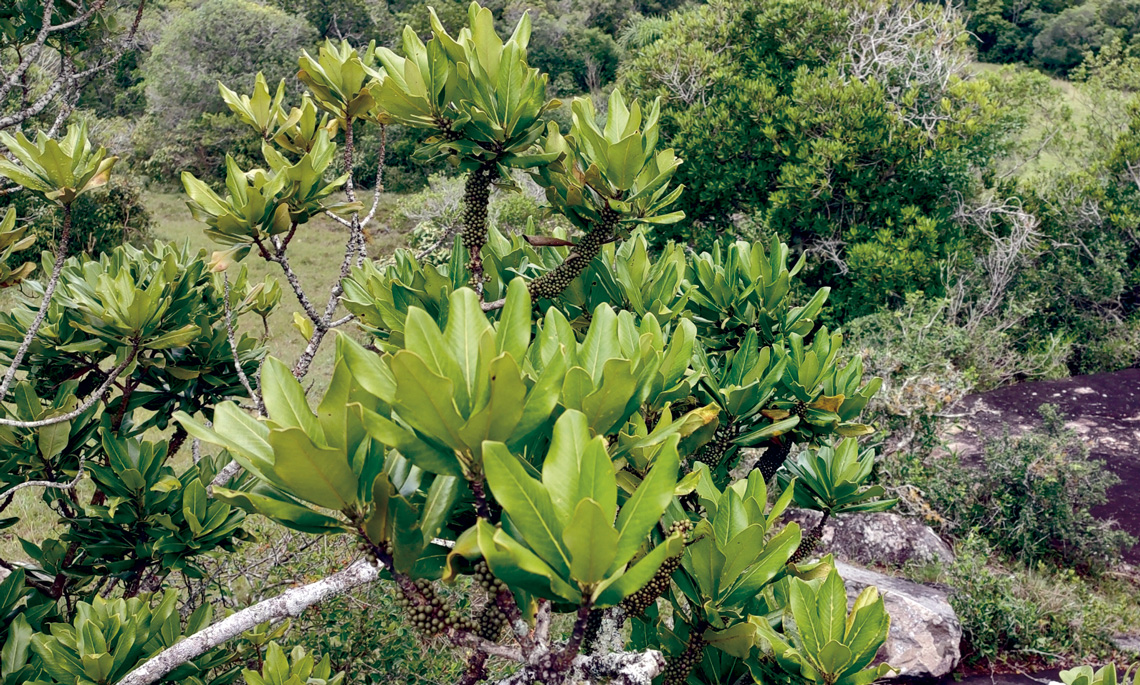
Enrique Salazar / iNaturalist A capororoca from Capão do Leão, Rio Grande do Sul, the main recruiter of other tree species in the Atlantic ForestEnrique Salazar / iNaturalist
Generalizations, however, do not always hold true. “Depending on which tree is taller, providing shade, and which is below, the outcome can vary,” Paterno cautioned. In the field, he noticed that the catingueira favored the germination and growth of the aroeira (Myracrodruon urundeuva), but its effect on the pereiro (Aspidosperma pyrifolium) was not positive in all growth stages. The black jurema (Mimosa tenuiflora) only helped the aroeira during germination; during later stages, it struggled to grow. Some interactions can be surprising: although it likes the Sun, the cactus Melocactus zehntneri appreciates the shade of the catingueira.
The species that make up a forest can vary from one place to another. “The catingueira had a more positive effect than the black jurema in terms of colonizing degraded environments, but it may not be the best choice everywhere in the Caatinga,” Paterno points out. Studies carried out at the Açu National Forest in Rio Grande do Norte identified the main recruiters as the pereiro, white jurema (Piptadenia stipulacea), and black jurema (see Pesquisa FAPESP issue n° 346).
“Because species diversity can vary within the same biome, we need to study those typical of each location to understand the interactions,” explained botanist Aretha Guimarães, who is currently doing a postdoctorate at the Brazilian National Institute of Amazonian Research (INPA) and did not participate in the study. “In highly diverse environments like the Amazon, it is very hard to distinguish between these groups of species, as well as finding those that attract target species and outcompete invasive species such as grasses, bamboos, and other widely dispersed species.”
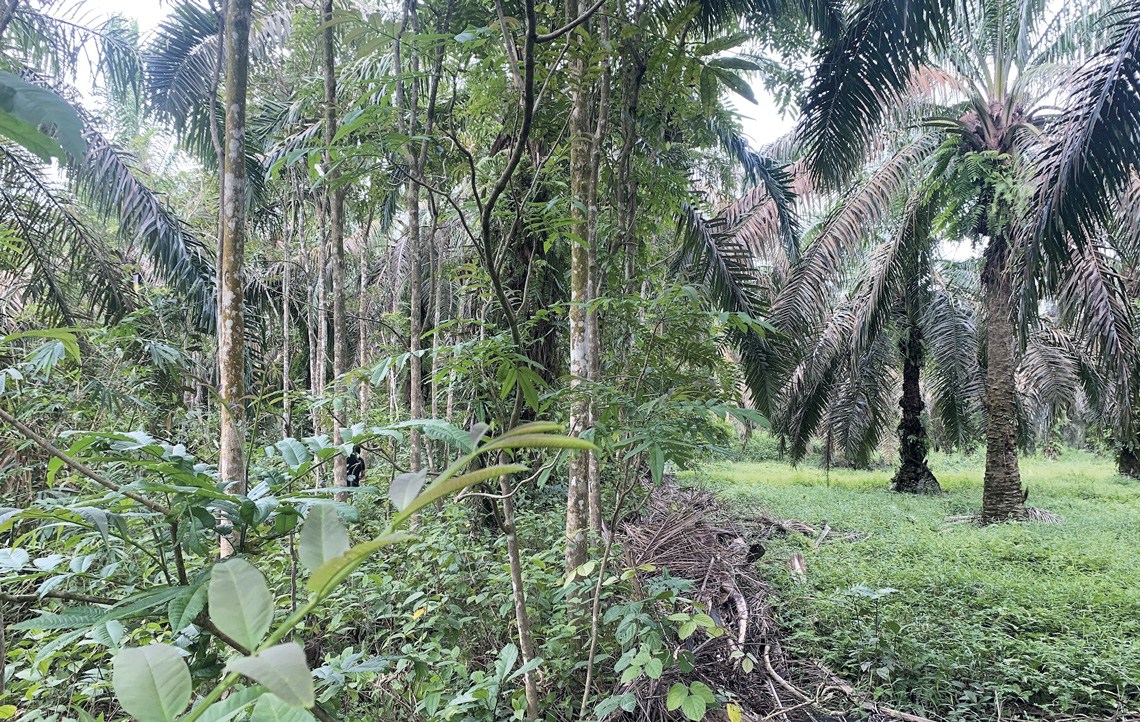
Gustavo Paterno An example of a restoration island in an oil palm plantation in Sumatra, IndonesiaGustavo Paterno
Agronomist Pedro Brancalion of the Luiz de Queiroz College of Agriculture at the University of São Paulo (ESALQ-USP), who did not take part in the study, believes that identifying interactions between species is a sign of the trend away from older restoration approaches—planting as many species as possible, even if many may not thrive—toward a clearer vision of the ecological roles of trees.
He himself employs a similar approach, based on two groups: cover species, such as the West Indian elm (Guazuma ulmifolia), the white moho (Heliocarpus popayanensis), and the capixingui (Croton floribundus), which grow quickly and form large canopies that hinder invasive grasses; and diversity species, which number in the dozens and grow more slowly. “In five years, several species have already grown significantly, and in 10 years some of the cover comes from the others, with the natural, gradual death of cover species,” he explains. “The approaches need to be tested in the field, because restoration environments, where the soil is usually degraded, differ from natural ones.”
Paterno intends to return to Brazil in early 2026 to create restoration islands in agricultural landscapes dominated by eucalyptus, coffee, soy, or sugarcane monocultures, based on his experiments in Indonesia. “We need to go beyond plants and evaluate how recruitment networks influence other ecological levels, such as pollinator networks, seed dispersers, and underground interactions with fungi and bacteria,” he says.
The story above was published with the title “Trees protecting trees” in issue 354 of August/2025.
Scientific articles
ALCANTARA, J. M. et al. Key concepts and a world-wide look at plant recruitment networks. Biological Review. Vol. 100, no. 3, pp. 1127–51. June 2025.
FAGUNDES, M. et al. The role of nurse successional stages on species-specific facilitation in drylands: Nurse traits and facilitation skills. Ecology and Evolution. Vol. 8, no. 10. Apr. 27, 2018.
MARCILIO-SILVA, V. et al. Nurse abundance determines plant facilitation networks of subtropical forest – grassland ecotone. Austral Ecology. Vol. 40, no. 8, pp. 898–908. May 21, 2015.
PATERNO, G. B. et al. Diverse and larger tree islands promote native tree diversity in oil palm landscapes. Science. Vol. 386, no. 6723, pp. 795–802. Nov. 14, 2024.
PATERNO, G. B. et al. Species-specific facilitation, ontogenetic shifts and consequences for plant community succession. Journal of Vegetation Science. Vol. 27, no. 3, pp. 606–15. Jan. 29, 2016.
VERDÚ, M. et al. RecruitNet: A global database of plant recruitment networks. Ecology. Vol. 104, no. 2, e3923. Feb. 2023.
Republish