Microscopic particles of the material contaminate soil, water, and air and have already been found in several other organs and tissues in the human body
Léo Ramos Chaves/Revista Pesquisa FAPESP
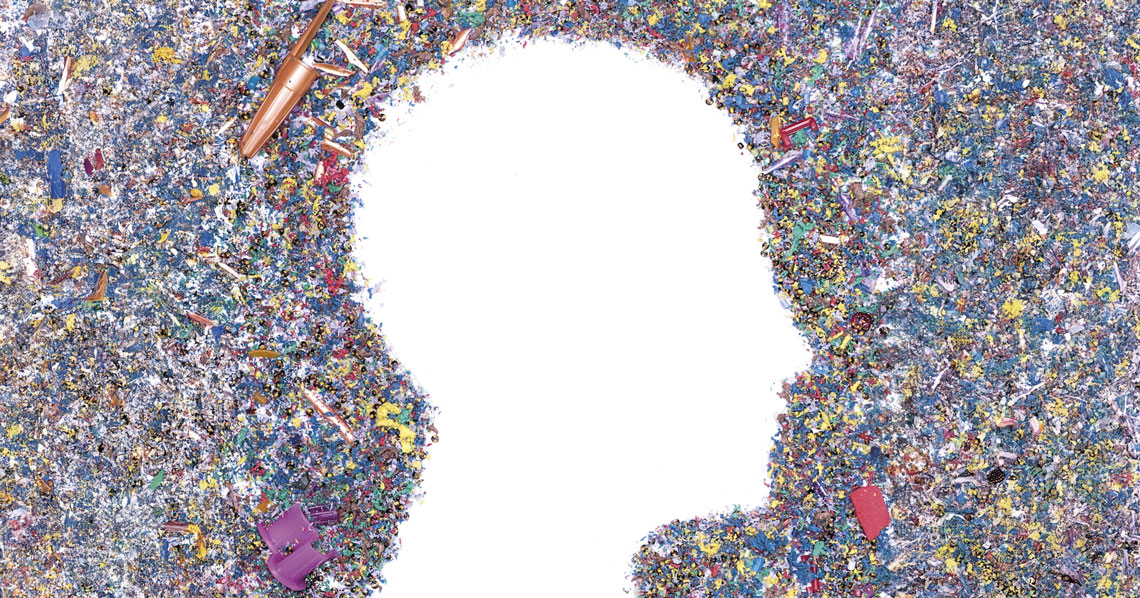
They are so small that they are impossible to see with the naked eye. But they exist, and they are everywhere: in mussels bought directly from fishermen, in fruits and vegetables at the market, or in processed foods. They have also been found in beer, tea, milk, water (especially bottled water), and in the soil and air. Shaped like spheres, threads, or fragments of film or foam, microscopic plastic particles are more abundant than ever on the planet. With life immersed in plastics, it was expected that, at some point, tiny fragments of the material would be found even in the most protected of human organs—the brain. And now, they have.
At the University of São Paulo’s School of Medicine (FM-USP), pathologist Thais Mauad, environmental engineer Luís Fernando Amato Lourenço, and biologist Regiani Carvalho de Oliveira identified, in a project supported by FAPESP and the Dutch nongovernmental organization Plastic Soup, microplastic particles in the brains of eight people who had lived in São Paulo for at least five years. After their deaths, they underwent autopsies at the Capital’s Death Verification Service, where the researchers took samples from a structure called the olfactory bulb. Located inside the skull just above the nose, the olfactory bulbs—two in total, one in each cerebral hemisphere—are the first part of the central nervous system that receives information about smells. They are in contact with neurons that detect odor molecules at the bottom of the nose and act as a potential entry route for these and other particles, as well as microorganisms, into the brain.
The researchers had to retrieve equipment that hadn’t been used for more than 40 years, such as glass syringes, to handle this biological material. They also had to follow a strict protocol for cleaning the utensils—washing them three times with filtered water and using acetone—as well as replacing plastic with aluminum foil or glass to cover or seal the containers. On the days when the material was handled, only cotton clothing was allowed.
The olfactory bulb samples were frozen and sliced into 10-micrometer (µm) slides—each micrometer corresponds to one-thousandth of a millimeter. Part of the material was digested with enzymes to detect particles that might be located deep within the samples. Once prepared, the material was transported to the National Center for Research in Energy and Materials (CNPEM) in Campinas, 110 kilometers from São Paulo. Home to Sirius, one of the brightest sources of synchrotron radiation in the world (see Pesquisa FAPESP issue nº 269), CNPEM produces a special type of highly energetic light that powers 10 workstations. With the assistance of physicist Raul de Oliveira Freitas and chemist Ohanna Menezes from CNPEM, the USP team used one of these stations—Imbuia—for a week to illuminate the samples with a beam of infrared radiation and characterize the composition of the plastic particles found in them.
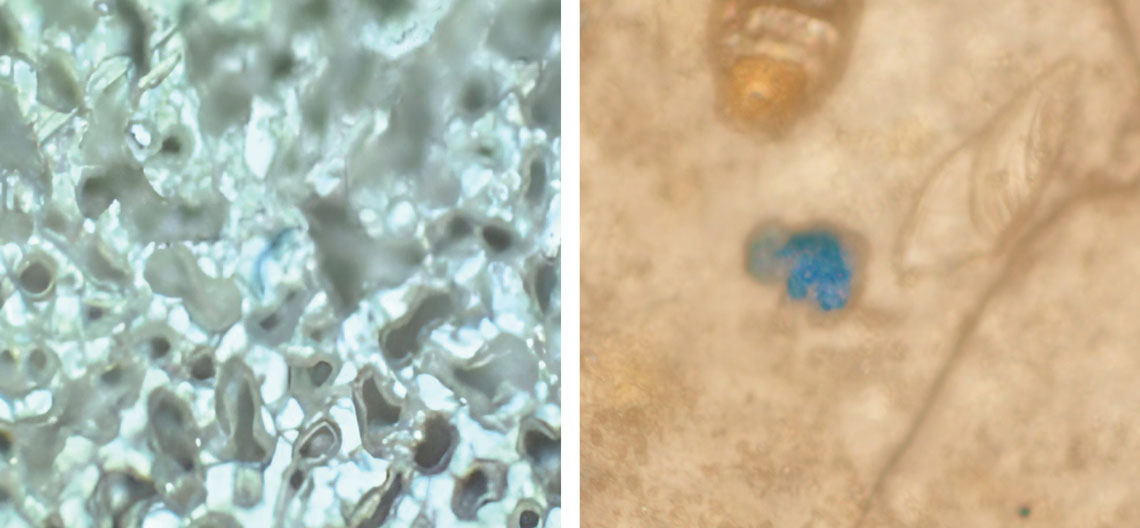
Luís Fernando Amato Lourenço / Free University of Berlin Microscopy image of microplastic particle (blue) in lung (on the left) and brain tissue (on the right)Luís Fernando Amato Lourenço / Free University of Berlin
In each fragment of the olfactory bulb analyzed, 1 to 4 microplastic particles were found. They ranged in size from 5.5 µm to 26.4 µm—roughly the size of most bacteria and sometimes smaller than a human cell. The majority (75%) were in the form of fragments or spheres, and 25% were fibers. The researchers described these findings in September in an article published in the journal JAMA Network Open. In 44% of the cases, the microplastics were composed of polypropylene (PP), the second most widely produced plastic polymer in the world (16% of the total). Derived from petroleum, it produces a hard, translucent plastic that can be molded with heat and is commonly used in packaging, plastic vehicle parts, personal products like disposable diapers and masks, and medical equipment. To a lesser extent, polyamide (PA), polyethylene vinyl acetate (PEVA), and polyethylene (PE) microplastics were also found.
There weren’t large quantities of microplastics in the olfactory bulb samples, but they were present,” says Mauad, who has been researching the effects of pollution on health for over 15 years. For a while, she suspected that the microplastics detected had not penetrated the brain, but were instead the result of sample contamination, since this material is ubiquitous and found in significant quantities in the air. She was only convinced when, during analysis, she saw that the particles were very fragmented and small, and were located inside cells or near blood vessels.
“The detection of microplastics in the brain is concerning because it is the most protected organ in the body,” says chemist Henrique Eisi Toma, from USP’s Chemistry Institute and a nanomaterials expert, who was not involved in the study. In order to reach the brain, molecules and infectious agents must be able to cross the so-called blood-brain barrier, a membrane formed by three types of tightly connected cells that prevent the passage of most compounds carried by the blood. “Many molecules can only cross the barrier using complex transport mechanisms,” explains Toma, who coordinates a group that, in December, published a paper in Micron on a strategy using magnetic nanoparticles coated with a kind of glue to remove microplastics from water.
Four months before Mauad and Lourenço presented their findings in JAMA Network Open, an unpublished US study suggested that microplastics might not only reach the brain but could accumulate there more than in other organs. In the study, published in May in Research Square, a repository of articles not yet reviewed by experts, biochemist Matthew Campen from the University of New Mexico and colleagues compared the concentration of microscopic plastic particles in the brain, liver, and kidneys of 30 individuals (17 who died in 2016 and 13 in 2024).
Alexandre Affonso / Revista Pesquisa FAPESP
One key difference in this study was that it used techniques capable of quantifying plastic fragments at the nanometer (nm) scale—up to a thousand times smaller than the particles analyzed by the USP group. By convention, microplastics include fibers, particles, and spheres ranging in size from 5 mm to 1 µm, while those smaller than this are called nanoplastics (1 nm equals one-thousandth of a µm). Another distinction is that the brain region analyzed was the cortex, which is more protected from the external environment than the olfactory bulb.
When comparing the amount of micro- and nanoplastics (MNP) in the three organs, the researchers observed that the concentration was up to 20 times higher in the brain than in the liver, where the lowest concentration was found. They also noted that the amount of micro- and nanoplastics more than doubled between the two periods. In the 2024 samples, there were, on average, 8,861 micrograms (µg) of micro- and nanoplastics per gram (g) of brain tissue. Eight years earlier, the average concentration was 3,057 µg/g. In the liver, the concentration was 145 µg/g in 2016 and rose to 465 µg/g in 2024. In the kidneys, the amount was intermediate (around 600 µg/g) in both periods. In all cases, the most abundant material detected was polyethylene. Also derived from petroleum, this plastic polymer was first synthesized in 1898 by the German chemist Hans von Pechmann (1850–1902) and is now the most produced plastic in the world (34% of the total), commonly used in bags, bottles, cups, and plastic films.
Not yet published or reviewed by experts in the field—who would ensure that proper methods were used, and the results are reliable—the work has some limitations. One such limitation is that the samples were stored in plastic containers. However, the authors claim that several quality control steps were implemented to prevent the incorporation of external contaminants into the sample calculations. While contamination cannot be completely ruled out, one argument the authors present in their favor is that the older samples, from 2016, were stored in plastic containers for a longer period (84 to 96 months) and still contained much smaller amounts of micro- and nanoplastics compared to the more recent 2024 samples. If contamination had a significant impact, the opposite would be expected.
According to Toma, from IQ-USP, the detection of plastic nanoparticles in the human body is even more concerning than microplastics, as nanoparticles are roughly the size of viruses and can interact with the biomolecules of cells, which share a similar chemical composition—consisting of carbon, oxygen, hydrogen, and nitrogen atoms. “Micro- and nanoplastics are important topics that should be treated with caution. While everyone is exposed to them, their effects on human health are still not well understood,” he says.
It has only been about two decades since research into microplastics gained momentum, and it is only more recently that studies on their impact on health have begun. The term “microplastics” was introduced into the scientific literature in 2004 by marine biologist Richard Thompson, from the University of Plymouth in the United Kingdom, although the presence of this material in the oceans had been known for longer (see Pesquisa FAPESP issue nº 281). Since then, micro- and nanoplastics have been detected in a variety of environments, and according to a review article led by Thompson, published in October in Science, they have been found in the bodies of more than 1,300 animal species—from crustaceans and filter-feeding mollusks to fish, worms, insects, and mammals, including humans.
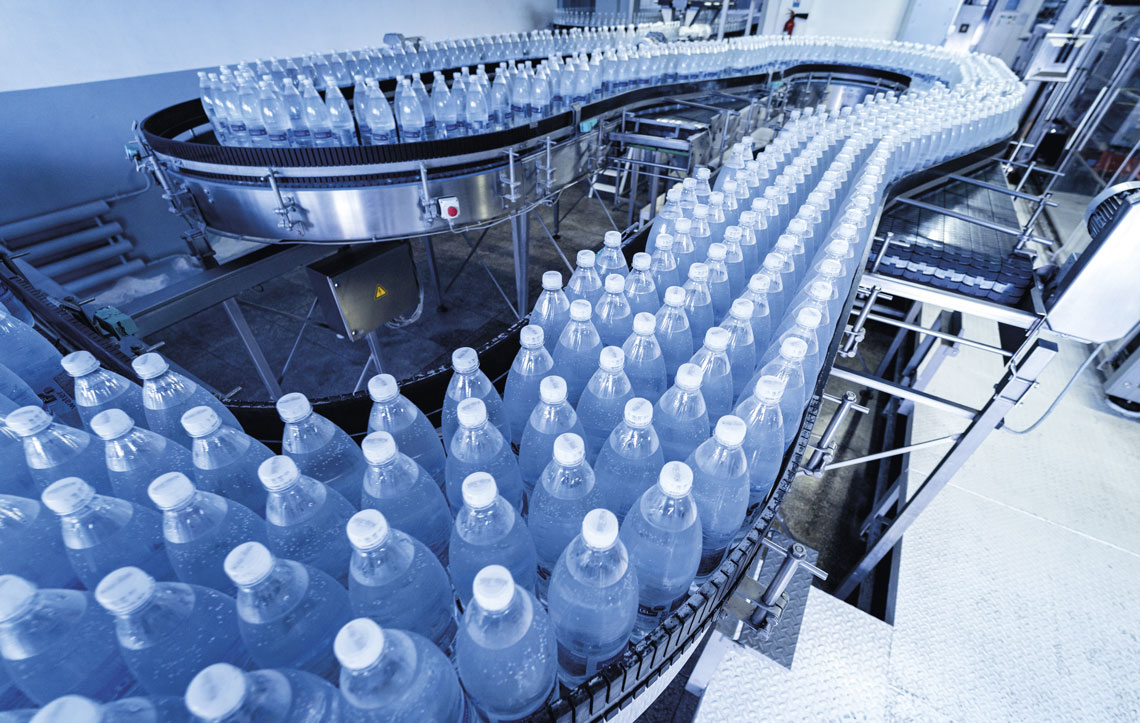
Romaset / Getty Images PlusThe packaging industry uses almost a third of the plastics produced in the worldRomaset / Getty Images Plus
There are two main sources of these pollutants: plastics originally produced in very small sizes, used in cosmetics, paints, or as raw materials for other plastics; and those that result from the degradation of larger plastic pieces through light, heat, humidity, and abrasion. According to some estimates, the latter group accounts for 70% to 80% of the microplastics that reach nature.
In the human body, microplastics have been found in nearly every organ and tissue examined, including the heart, liver, kidneys, intestines, lungs, testicles, endometrium, placenta, and, more recently, the brain. They have also been detected in various body fluids, such as saliva, blood, breast milk, semen, and even meconium—the baby’s first feces, produced in utero.
The main routes of entry into the body are through the ingestion of food and drink containing micro- and nanoplastics or through inhalation, although a small proportion can also cross the skin. Studies involving cultured tissues and laboratory animals suggest that “only a small fraction of administered microplastics can cross the epithelial barriers of the lungs and intestines,” wrote researchers Andre Dick Vethaak, from the Free University of Amsterdam (who passed away in June 2024), and Juliette Legler, from Utrecht University, both in the Netherlands, in a short review article published in 2021 in Science. However, the smaller the particles, especially those in the tens or hundreds of nanometer range, the more easily they cross these barriers and enter the blood and lymphatic vessels. From there, they are distributed throughout the body and can accumulate in organs.
What is known about their potential effects on the body has been observed in numerous experiments with animals, particularly rats and mice, or human cells grown in the lab. Several of these studies have been mentioned in recent reviews published in eBioMedicine and Science of the Total Environment. In nearly every tissue where they have been detected, the micro- and nanoparticles triggered similar reactions: inflammation, an increase in reactive oxygen species inside the cells, as well as cell damage and death. Some of these effects can disrupt the formation of developing organs or impair the regenerative capacity of mature ones (see infographic).
Alexandre Affonso / Revista Pesquisa FAPESP
“Animal studies provide clues as to what might happen, but it’s difficult to know how much of these biological effects can be applied to humans,” says Lourenço, first author of the article in JAMA Network Open, who is currently conducting postdoctoral research at the Free University of Berlin, Germany. He was the one who suggested Mauad begin researching microplastics at USP years ago, and prior to detecting these particles in the human brain, he had already identified them in the lungs of people living in São Paulo.
Critics and researchers investigating the effects of micro- and nanoplastics on health point to several gaps in current studies. These synthetic materials can affect organs and tissues due to their chemical composition, geometry, or the microorganisms they can carry. However, the impact of each of these factors remains unknown. It is also unclear whether there is a concentration threshold above which they become toxic to the body—many animal studies use doses far higher than those found in the environment—or what the minimum exposure time would be for damage to begin to manifest.
“It’s very complicated to evaluate all these parameters at once in a single study,” says Lourenço, who, in an experiment conducted in the main FM-USP building and reported in Science of the Total Environment, found that the concentration of microplastics indoors was around three times higher than outdoors.
Another criticism is that studies with cells and animals are almost always conducted with pure particles, without the chemical additives that are widely used in plastics and which alter their characteristics. At the beginning of 2024, researchers from the PlastChem project, which compiles data on chemicals in plastics and their effects on the environment and health, published a report listing 16,000 compounds (raw ingredients and additives) found or believed to be used in plastics. Of these, 4,200 raise concerns because they are persistent, bioaccumulative, easily spread, or toxic.
“Robust scientific evidence of adverse impacts on human health is only available for a few plastic chemicals, because studying this is very difficult,” explained toxicologist Jane Muncke, executive director and scientific director of the Swiss nongovernmental organization Food Packaging Forum, to Pesquisa FAPESP. “Most of what is known is about bisphenol A and other bisphenols; diethylhexylphthalate and other phthalates; polybrominated diphenyl ethers, used as flame retardants; and per- and polyfluoroalkyl substances. All of these are known to harm human health at very low levels. No safe exposure level is known or should be assumed,” she added.
Md. Akhlas Uddin / Pacific Press / Lightrocket via Getty ImagesInadequate disposal contributes to the spread of microplastics in the environmentMd. Akhlas Uddin / Pacific Press / Lightrocket via Getty Images
For now, the most direct effect on human health comes from a study by Italian researchers, published in March 2024 in The New England Journal of Medicine. In the study, Dr. Raffaele Marfella, from the University of Campânia in Italy, and his collaborators followed the health of 257 individuals who had undergone surgery to remove fatty plaques (atheromas) from their carotid arteries—the main arteries supplying blood to the brain—over a period of about three years. The plaques of 150 participants contained microplastics (mostly polyethylene), while the other 107 were free of these contaminants. At the end of the study, the proportion of people who suffered a heart attack, stroke, or died from any cause was 4.5 times higher in the first group than in the second.
Although the study is associative and does not establish a cause-and-effect relationship, the researchers suspect that the increase in cardiovascular problems is partly due to the presence of micro- and nanoplastics. “Our study suggests that micro- and nanoplastics in atheromatous plaques may exacerbate inflammation and oxidative stress in the vascular endothelium. These effects can destabilize the plaques, making them more vulnerable to rupture, which can lead to acute cardiovascular events such as myocardial infarction or stroke,” Marfella told Pesquisa FAPESP.
He and his colleagues do not rule out other possible explanations for the increase in cardiovascular issues. “Alternative mechanisms include the possibility that microplastics serve as carriers for other harmful substances, which can further contribute to systemic inflammation and endothelial dysfunction. Additionally, preexisting conditions such as metabolic syndrome or diabetes may predispose individuals to both greater accumulation of microplastics and increased cardiovascular risks,” he added.
In an effort to determine whether microplastics can aggravate atheroma formation, cardiologist Kleber Franchini and his team at the Dante Pazzanese Institute of Cardiology in São Paulo began the pilot phase of a study in October. The study aims to follow 2,000 people over two years to investigate whether the presence of micro- and nanoplastics in the blood—and at what concentration—affects the extent of atheroma plaques in the heart’s arteries. “Recent studies show that atheroma plaque formation has an inflammatory origin, and that an increase in cholesterol alone may not be enough to cause the problem,” explains Franchini. “If micro- and nanoplastics are inflammatory, they could increase or accelerate the formation of plaques,” he says.
Until more studies are conducted to assess the impact of micro- and nanoplastics on human health, one practical step everyone can take is to minimize their exposure to these particles by reducing the use of plastic utensils and objects at home, avoiding clothing made from synthetic fibers, and consuming food and drinks packaged in plastic—especially when heated, as this can release even more particles. A 2019 study found that a tea bag immersed in water at 95 degrees Celsius releases 11.6 billion microplastic particles and 3.1 billion nanoplastic particles per cup.
Completely eliminating exposure to micro- and nanoplastics is currently impossible—and may remain so for a long time. Global plastic production has been growing steadily since the 1950s, with a 50% increase in the last two decades alone, reaching 460 million tons in 2019. A recent estimate by the nongovernmental organization Earth Action suggests that each year, 3.8 million tons of micro- and nanoplastics enter the seas, and another 8.9 million tons reach terrestrial environments (see graph). Even if global plastic production were to stop today, the amount of macro-, micro-, and nanoplastics entering the environment would continue to rise for a long time to come.
Alexandre Affonso / Revista Pesquisa FAPESP
Hopes for international action to begin addressing the problem were dashed at the end of the year. From November 25 to December 1, around 3,000 delegates from more than 170 countries gathered in Busan, South Korea, in an attempt to approve a global treaty to combat plastic pollution. The document, which had been under discussion for two years, aimed to establish legally binding global rules to reduce plastic pollution worldwide, considering the full life cycle of plastics—from oil extraction and production to disposal and recycling. However, due to pressure from oil-producing countries, the meeting ended without a consensus.
In the Science review, Thompson highlighted that even though there are still gaps in knowledge and data regarding the risks of microplastics, political action should not be delayed. “It can be justified on the basis of the precautionary principle, and therefore measures can, and possibly should, be taken now to reduce emissions,” he stated.
“There are those who argue that we need to ban plastics, but that’s not a reasonable solution,” says chemist Walter Waldman from the Federal University of São Carlos (UFSCar), Sorocaba campus. “Plastics help protect food from contamination and have enabled disposable materials in medical practice, reducing infections. They are lightweight, inexpensive, and versatile. The problem is that plastics have overtaken the market, and a culture has developed around the idea that plastic is disposable. We need to use plastics where they work well and replace them where management is challenging,” says Waldman, who recently launched a FAPESP-funded project to track microplastics in the human body. “The system is in place, and the industry must take responsibility for helping to find a solution, rather than just shifting the burden onto consumers,” he adds. “What we can’t do is leave the situation as it is.”
The story above was published with the title “Life immersed in microplastics” in issue 347 of january/2025.
Projects 1.Evaluation of the effects of secondary microplastic on the respiratory system of BALB/c mice and on BEAS-2B human bronchial epithelial cell culture (nº 21/10724-2); Grant Mechanism Regular Research Grant; Principal Investigator Regiani Carvalho de Oliveira (FM-USP); Investment R$234,607.10. 2.Airborne microplastics:Detection in ambient air samples and lung tissue and the effects on cultured pulmonary epithelial cells (nº 19/02898-0); Grant Mechanism Regular Research Grant; Principal Investigator Thais Mauad (USP); Investment R$40,949.36. 3.Identification and physical and chemical characterization of environmental microplastics in the atmosphere and in human lung tissue (nº 19/03397-5); Grant Mechanism Postdoctoral Fellowship; Supervisor Thais Mauad (USP); Beneficiary Luís Fernando Amato Lourenço; Investment R$254,097.97. 4.Spatial tracking of microplastics in biological systems and tissues (nº 23/18229-6); Grant Mechanism Regular Research Grant; Principal Investigator Walter Ruggeri Waldman (UFSCar); Investment R$285,237.79. 5.Supramolecular nanotechnology:Design, materials, and devices (nº 18/21489-1); Grant Mechanism Thematic Project; Principal Investigator Henrique Eisi Toma (IQ-USP); Investment R$2,233,694.64.
This article may be republished online under the CC-BY-NC-ND Creative Commons license. The Pesquisa FAPESP Digital Content Republishing Policy, specified here, must be followed. In summary, the text must not be edited and the author(s) and source (Pesquisa FAPESP) must be credited. Using the HTML button will ensure that these standards are followed. If reproducing only the text, please consult the Digital Republishing Policy.