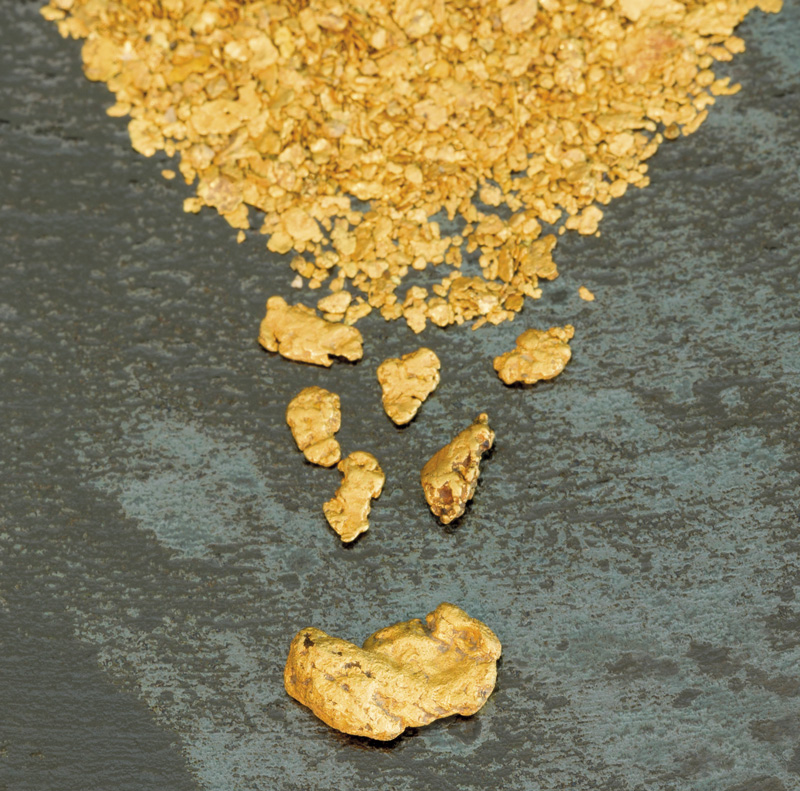
Robert Kacpura / Getty ImagesBismuth proportions reveal the origin of the precious mineralRobert Kacpura / Getty Images
Small proportions of specific chemical elements can indicate the origin of gold in legal or criminal cases. Geologists from the University of Brasilia (UnB) and Brazil’s Geological Service, together with experts from the federal police, analyzed 98 gold samples collected in six areas of the Yanomami Indigenous Reserve in Roraima (Maloca da Pista, Parima, Mutum, Xitei, Alto Catrimani, and Rangel), where illegal mining is rife. The gold obtained from each sample was melted and examined via binocular lenses, electron microscopy, X-ray fluorescence, electron microprobe, scanning electron microscopy, and compositional mapping. When compared with ingots of unknown origin seized by the federal police, the study found that bismuth was a key chemical element for determining the geological origin of gold and determining whether or not it was extracted legally. The analyses also revealed different proportions of silver (higher in the samples from Catrimani, Xitei, and Rangel), mercury (mainly in Parima and Mutum), cadmium, nickel, cobalt, zinc, and tungsten. The Brazilian government is seeking to tackle illegal mining in the region, which is responsible for destruction of the rainforest (Journal of the Geological Society, March).
Republish