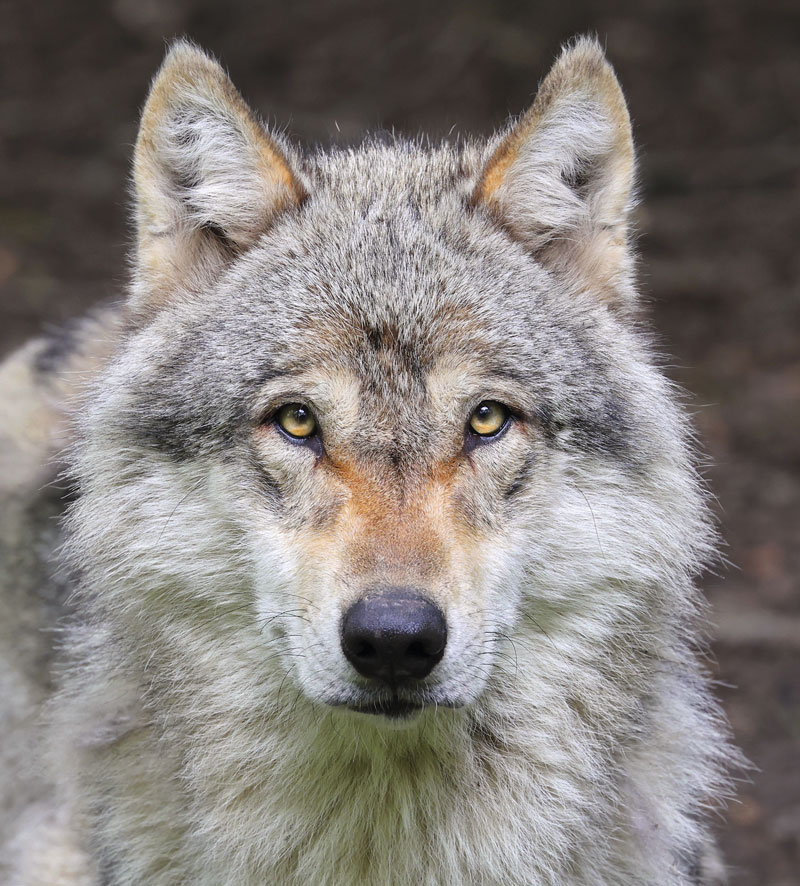
Clément Bardot / Wikimedia CommonsCanis lupus, the wild ancestor of domesticated dogsClément Bardot / Wikimedia Commons
Did humans engage with wild wolves (Canis lupus), giving rise to domestic dogs (Canis familiaris), or did wolves domesticate themselves by approaching human settlements in search of food? The second hypothesis was reinforced by statistical models analyzed by researchers from the University of Wisconsin–La Crosse, the University of Virginia, the University of Tennessee, and Valparaiso University, all in the USA. Taking variables such as fertility and survival rates into account, the conclusion they reached is that some wolves began to scavenge for food from human settlements between 30,000 and 15,000 years ago. As these wolves grew accustomed to being around people, they became less aggressive. “When females were selecting mates, they also had to select males that had a similar tameness to themselves,” study coauthor Alex Capaldi, a mathematician at James Madison University in Virginia, told the website Live Science. Over the last 15,000 years, humans have driven artificial selection, choosing the most domesticated wolves for hunting and companionship and encouraging the less wild wolves to breed, producing a new species entirely: the domestic dog, which was used to herd cattle in early human societies (Proceedings of the Royal Society B, February 12).
Republish