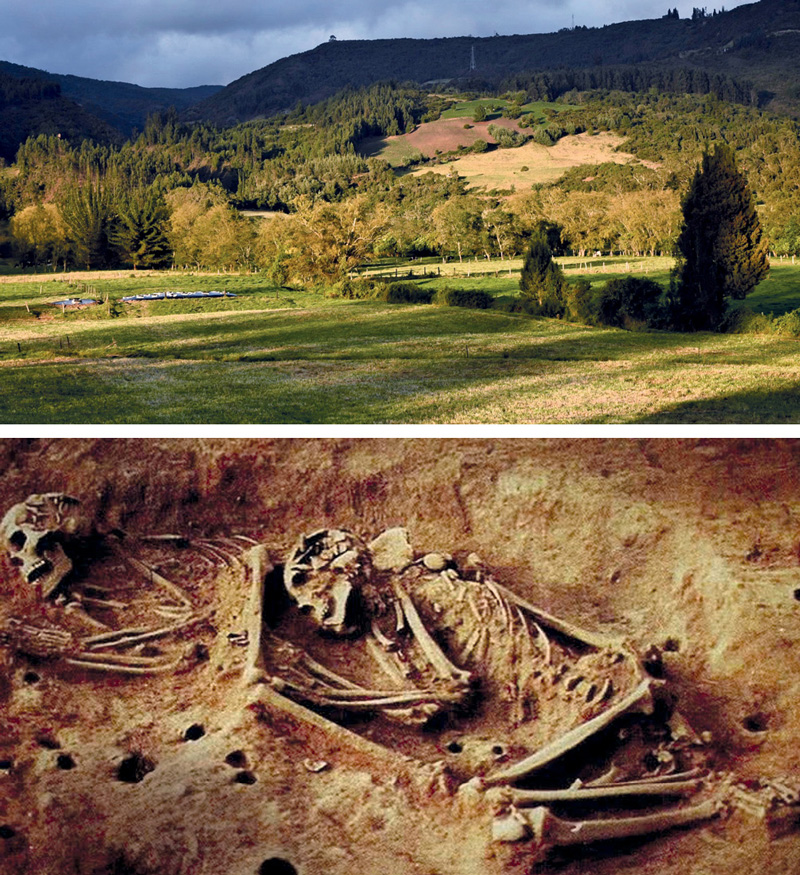
William Usaquen / National University of Colombia | Ana María Groot / National University of Colombia Panoramic view of the Bogotá plateau and two hunter-gatherer skeletonsWilliam Usaquen / National University of Colombia | Ana María Groot / National University of Colombia
A mysterious Indigenous hunter-gatherer population may have lived in central Colombia 6,000 years ago, according to DNA analysis of 21 sets of bones and teeth found at five sites in the Bogotá Altiplano plateau. Led by institutions in Germany and Colombia and approved by Indigenous representatives of the Muisca people who currently occupy the region, the research revealed that the group left no descendants and had no genetic link with modern inhabitants of North America. It is not known where they came from or what exactly happened to them. Their genetic lineage was replaced 2,000 years ago by a mass migration of agricultural groups from Central America that spoke Chibcha, produced Herrera pottery, were genetically related to peoples from Panama and Venezuela, and eventually gave rise to the Muisca. The discovery supports the hypothesis that the Chibcha language originated in Central America before spreading south via the Isthmus of Panama and Colombia (Science Advances, May 28).
Republish